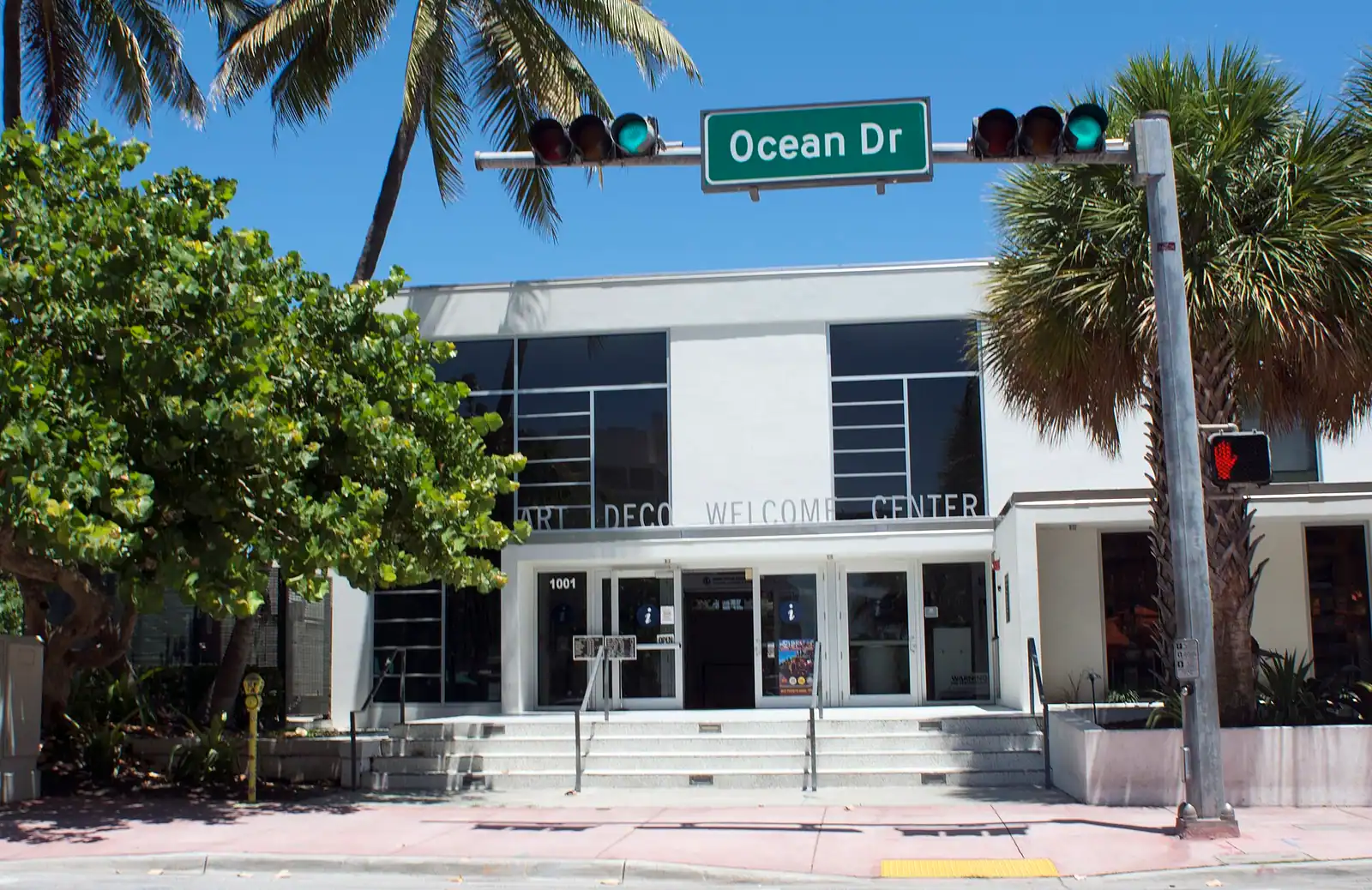
The subject of this page is about six blocks wide and twenty-three blocks long. That is the whole of it. The Miami Beach Architectural District — everyone calls it the Art Deco district — runs roughly from 5th or 6th Street north to Dade Boulevard along the Collins Canal, and from the Atlantic west to Lenox Court. Inside that rectangle sit somewhere in the region of 800 contributing buildings from the 1920s to the 1940s, which is the largest concentration of the period anywhere. You can walk the length of it in forty minutes without stopping, and nobody ever does, because the whole point is stopping.
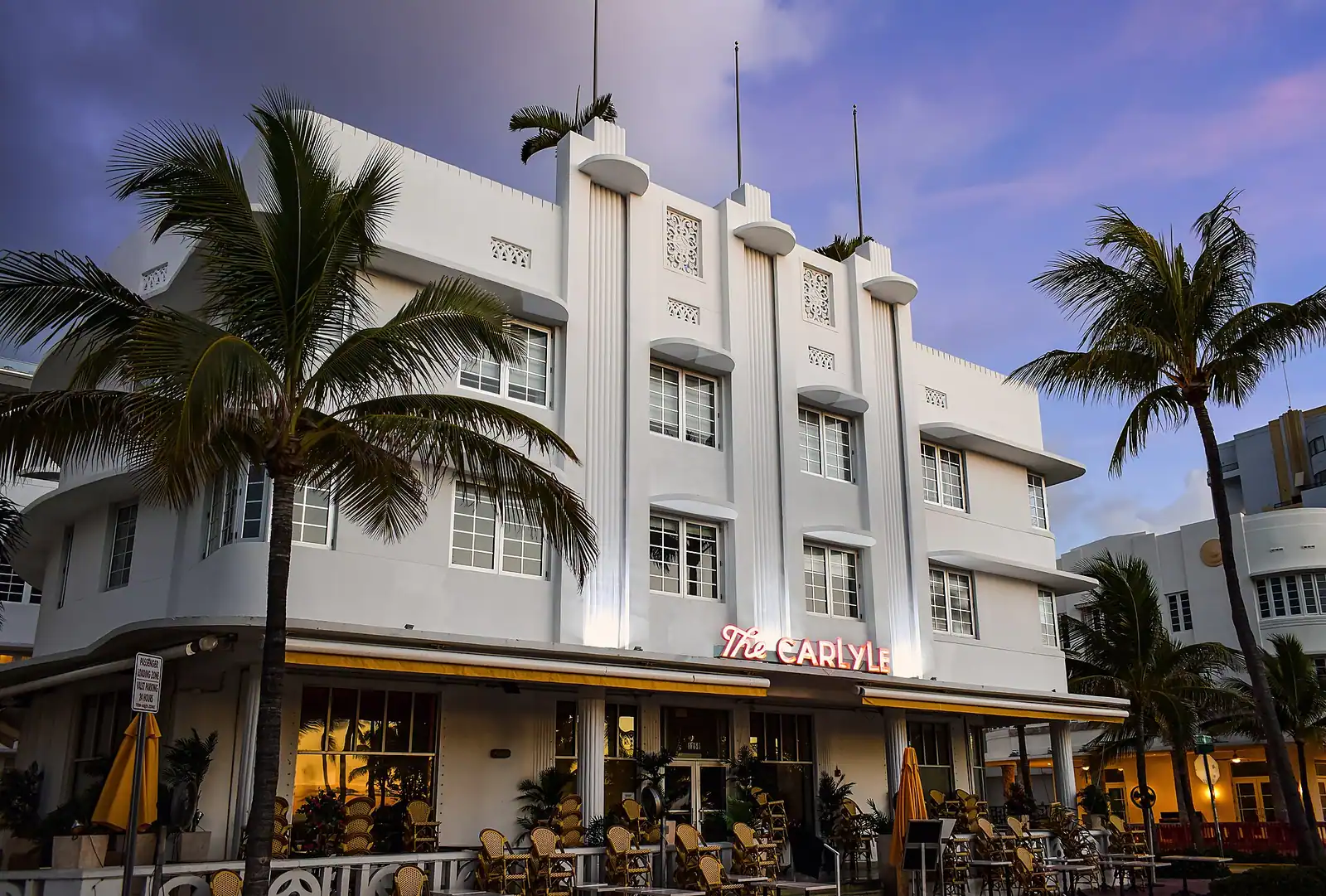
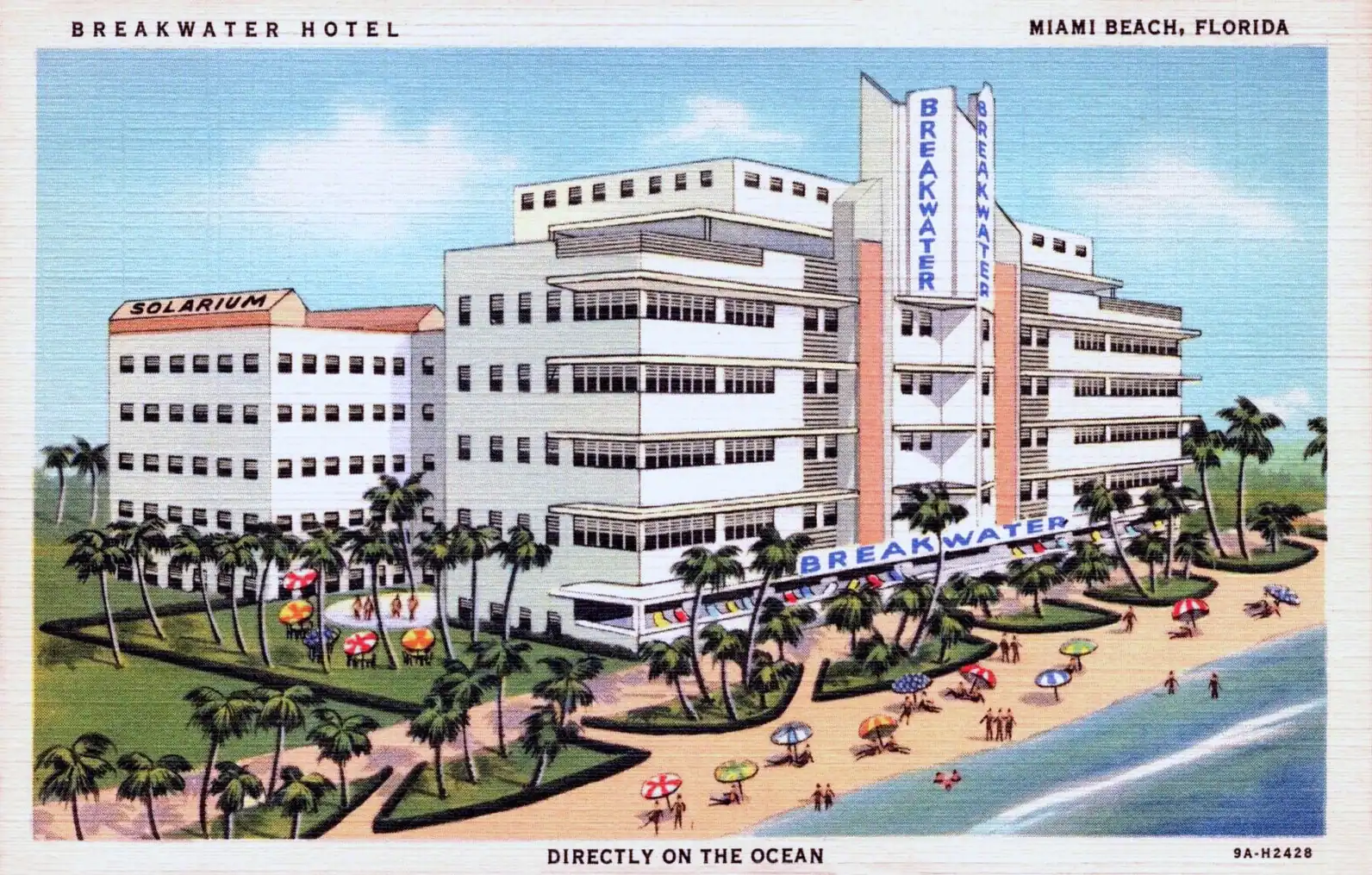
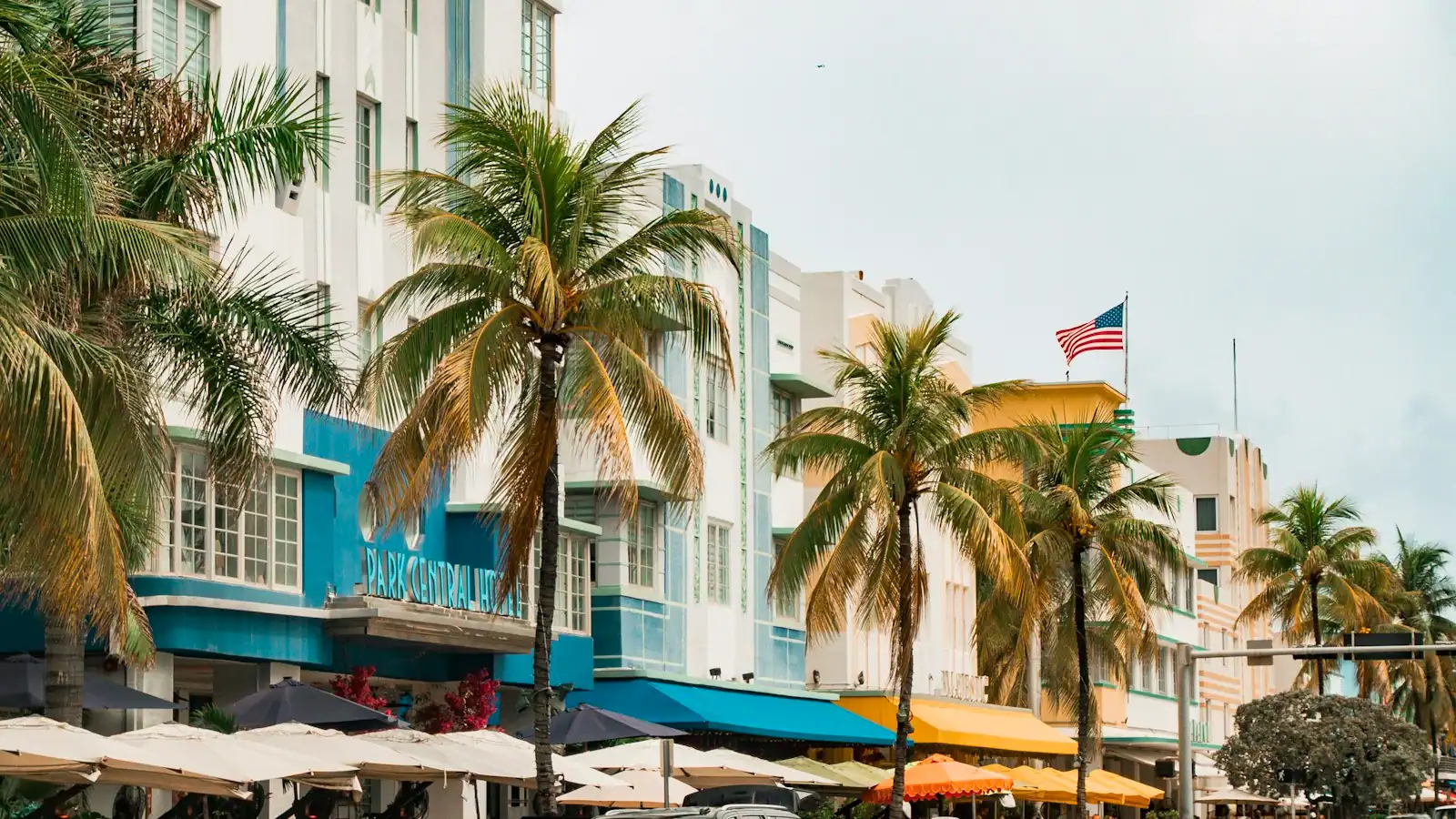
Scale is the thing photographs get wrong. Almost nothing here is tall. The typical Ocean Drive hotel is three storeys on a narrow lot, built as cheap winter lodging for people who came down on the train and needed a bed and a porch, not a suite. That modesty is why the district works at walking pace: the detail is at eye level, one building wide, and it repeats and varies every fifty feet. A wide-angle photograph of Ocean Drive flattens twelve separate buildings into one pink smear. Standing in front of them, you can see that no two are the same.
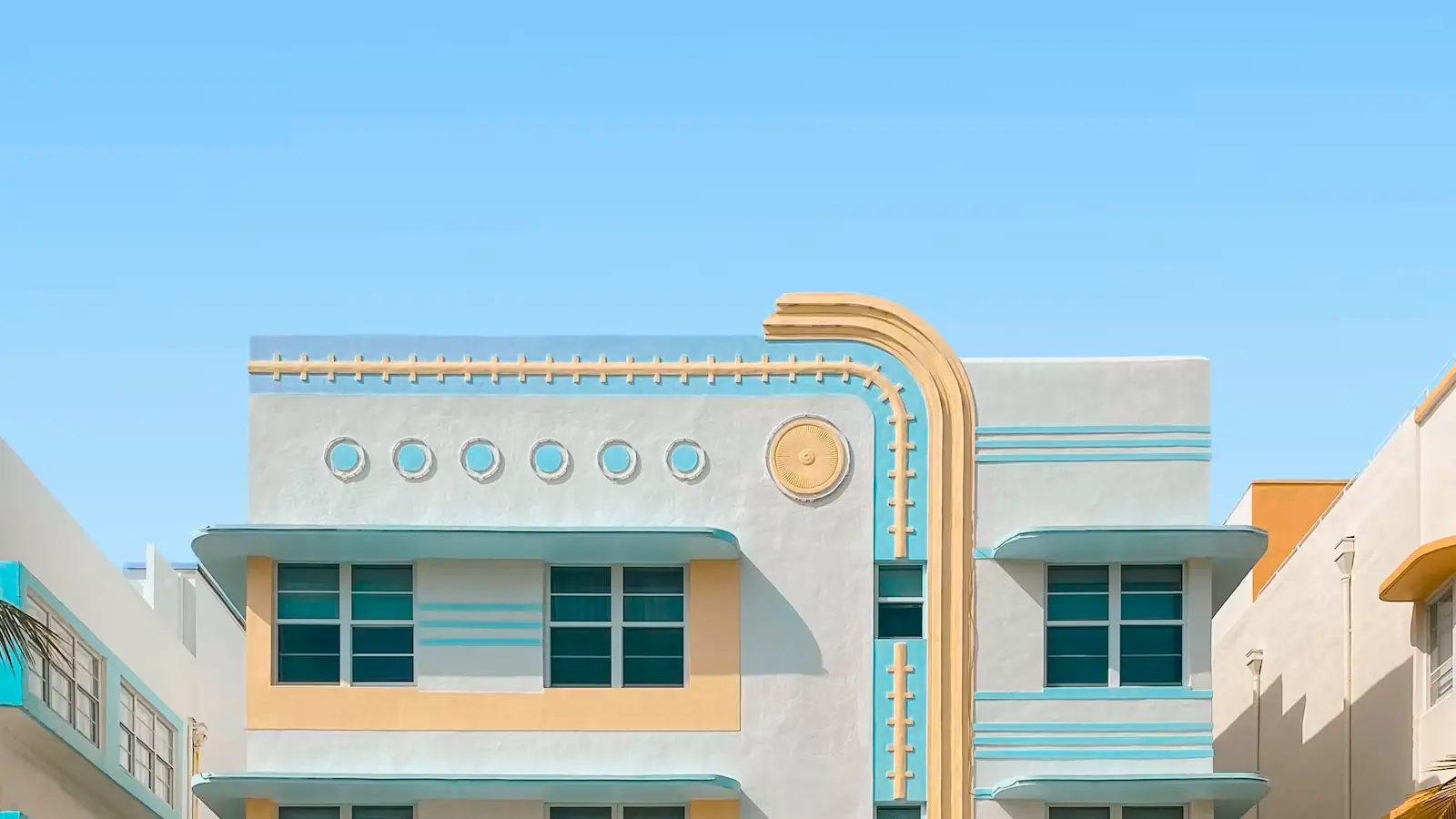
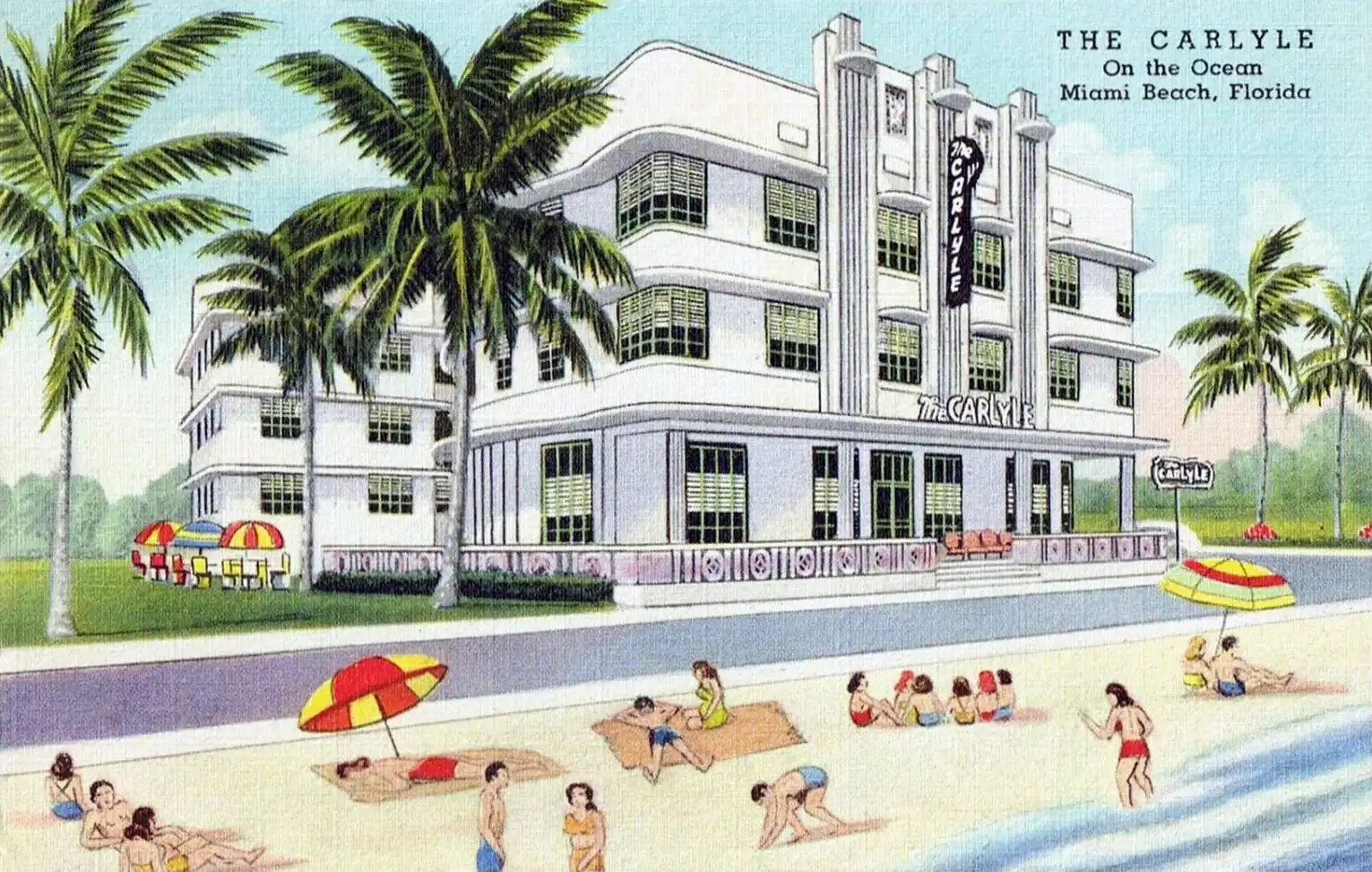
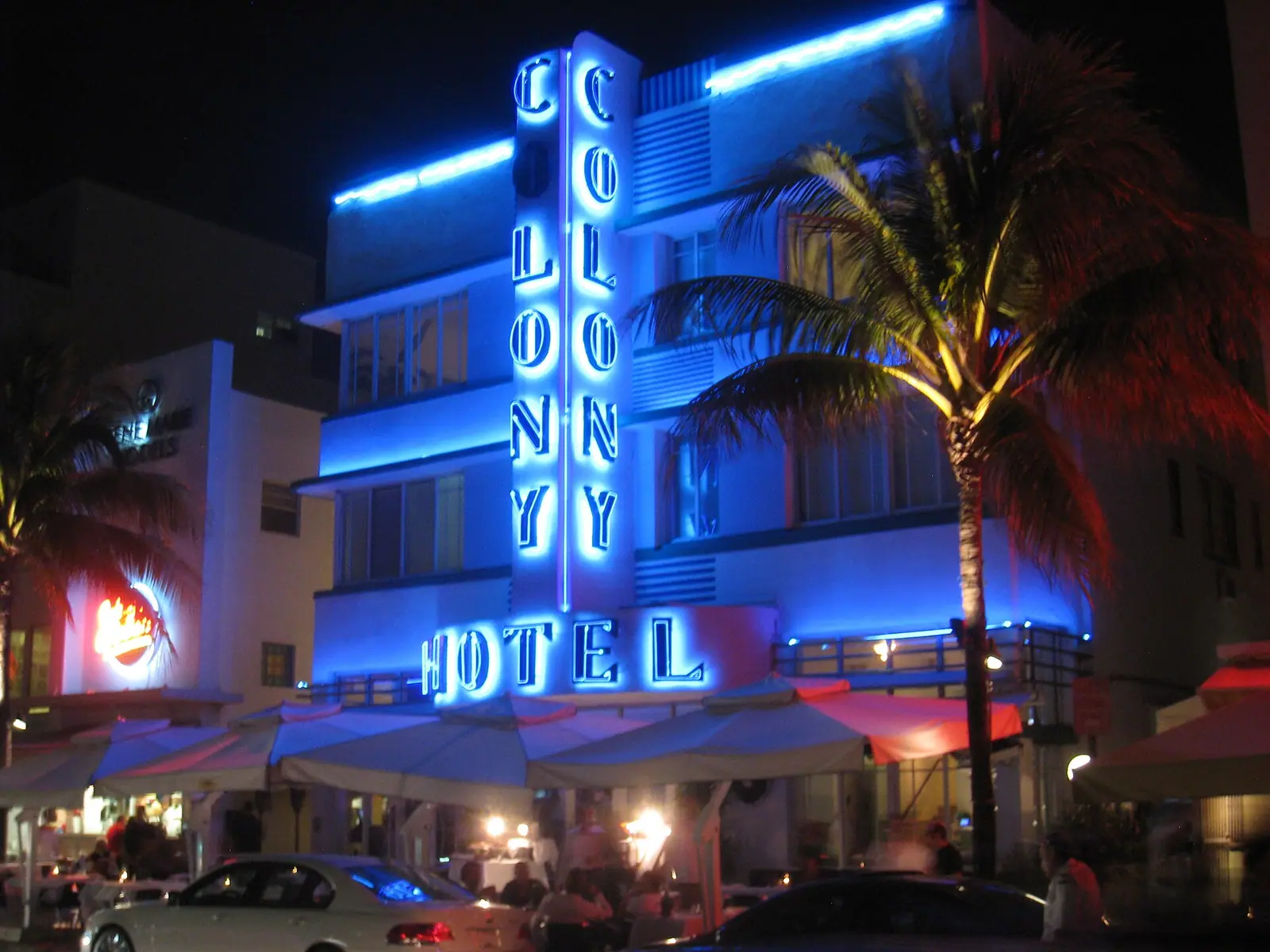
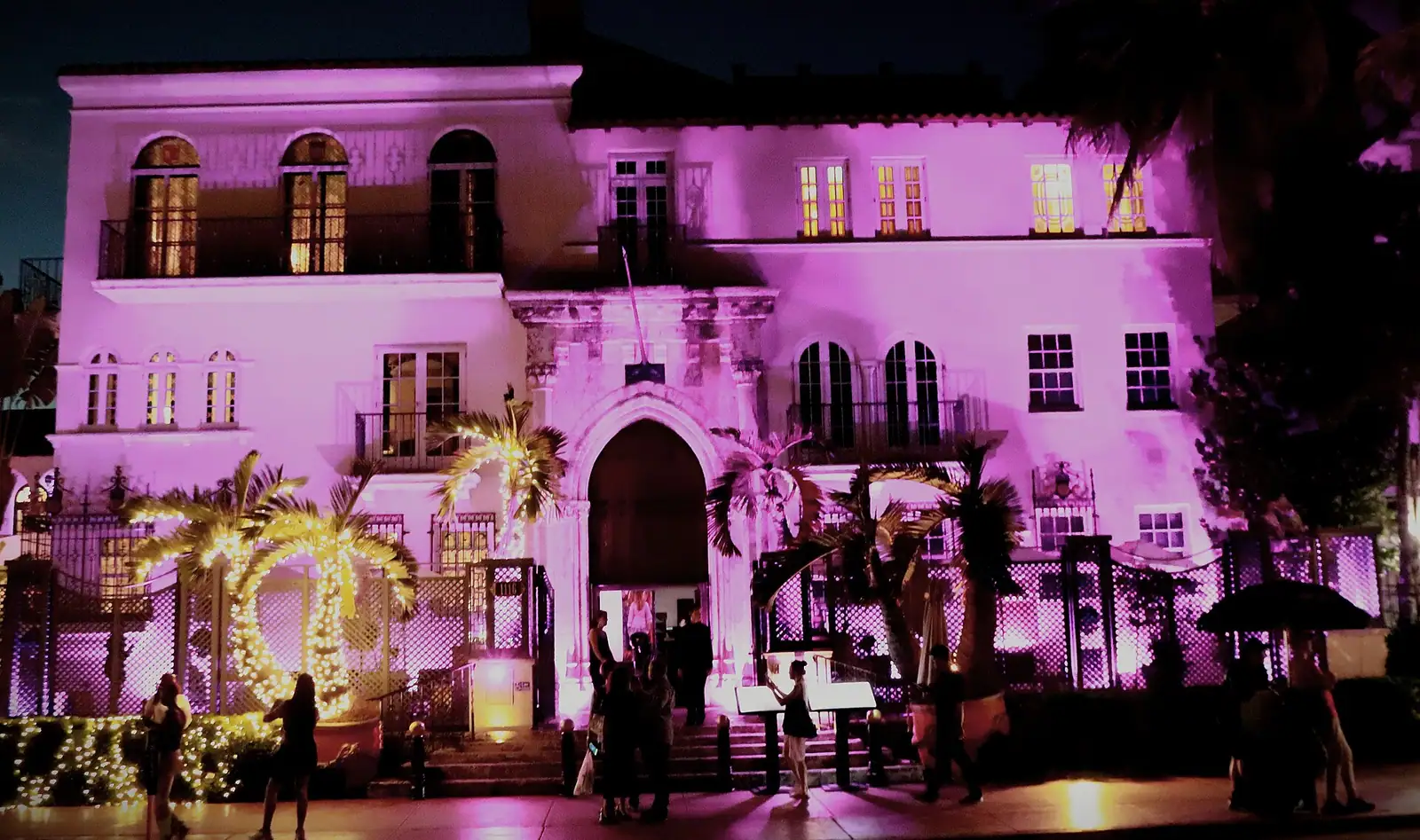
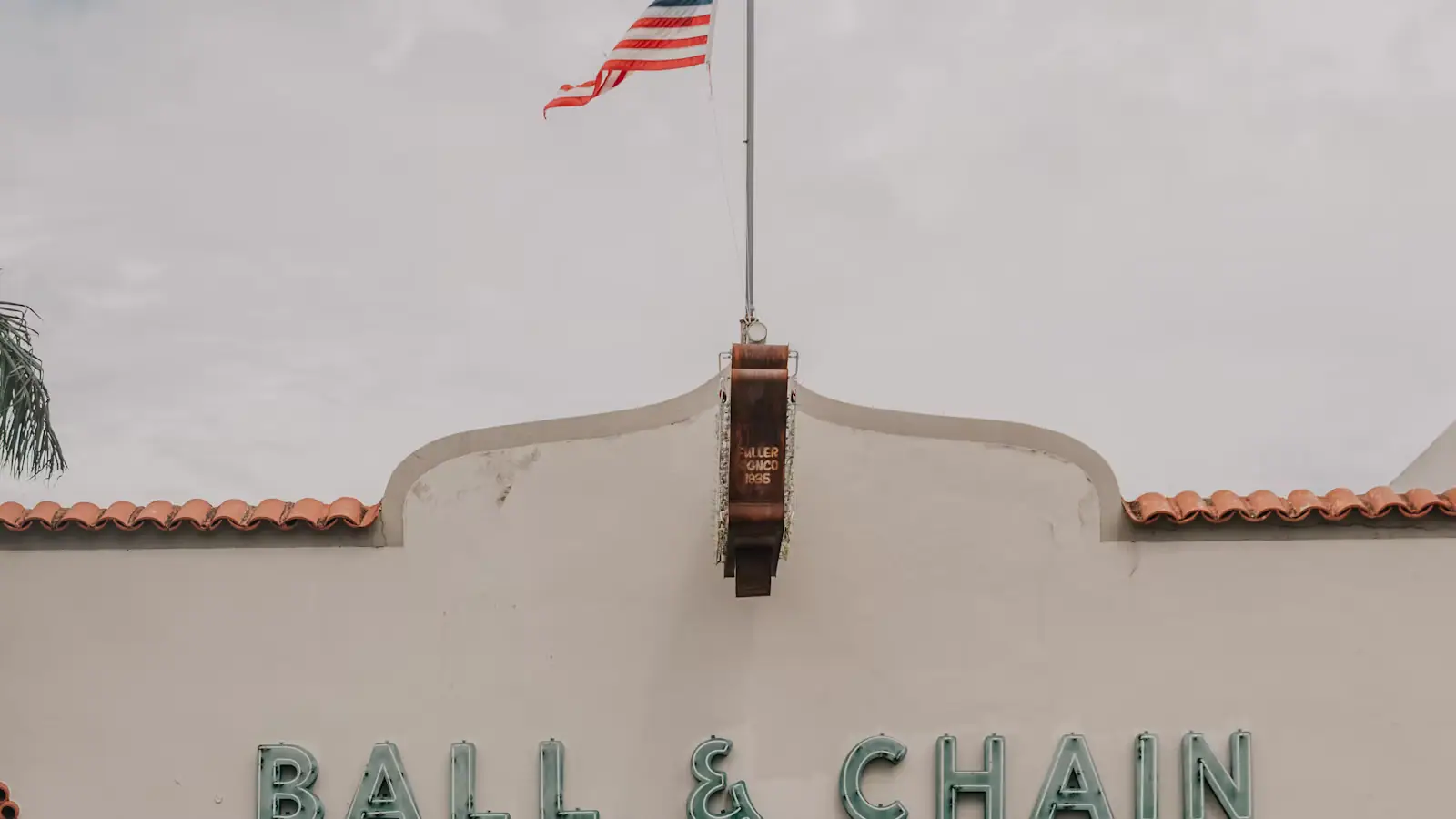
Three eras are stacked on the same blocks and visitors call all of it deco. The mid-1920s left Mediterranean Revival: clay tile roofs, arched openings, twisted columns, rough stucco, the Spanish-village fantasy of the land boom. The 1930s brought Art Deco proper and then Streamline Moderne, which is the look everyone means — flat roofs with stepped parapets, horizontal shading eyebrows over the windows, a symmetrical vertical feature up the middle, porthole windows, glass block, terrazzo underfoot. After the war came MiMo, Miami Modern, bigger and looser and mostly further north. Knowing which of the three you are looking at is the difference between seeing a pretty street and reading a neighbourhood.
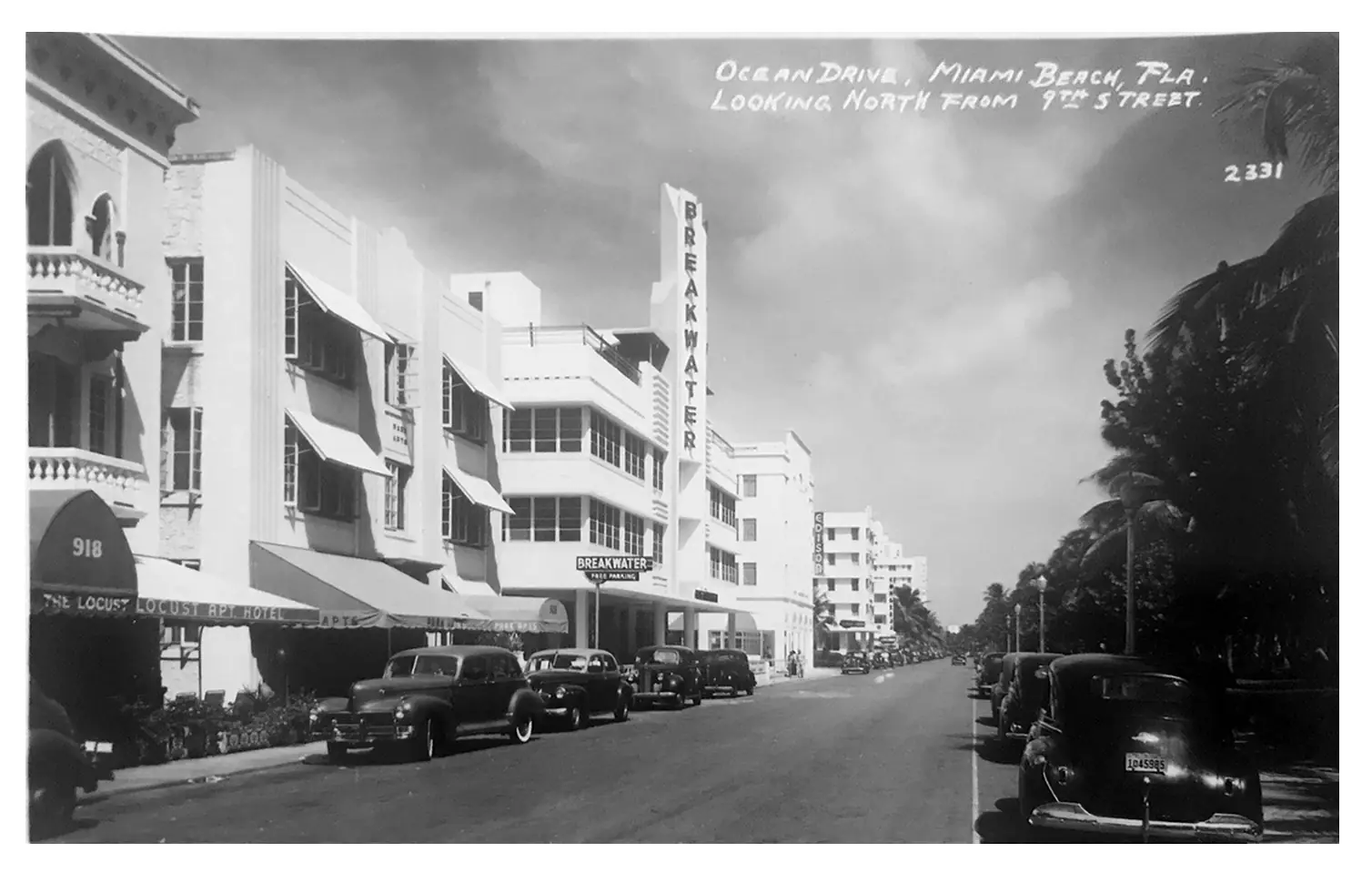
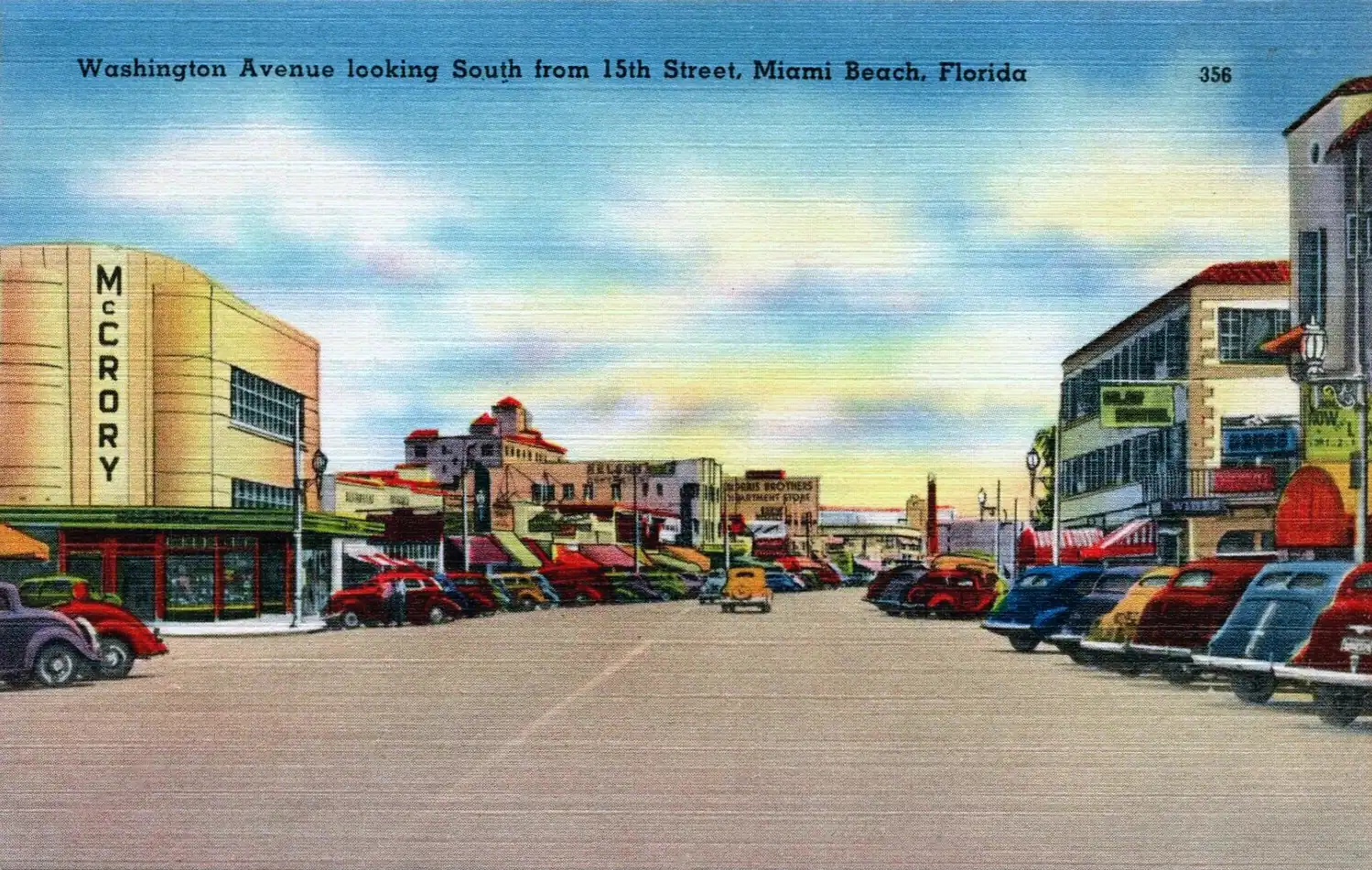
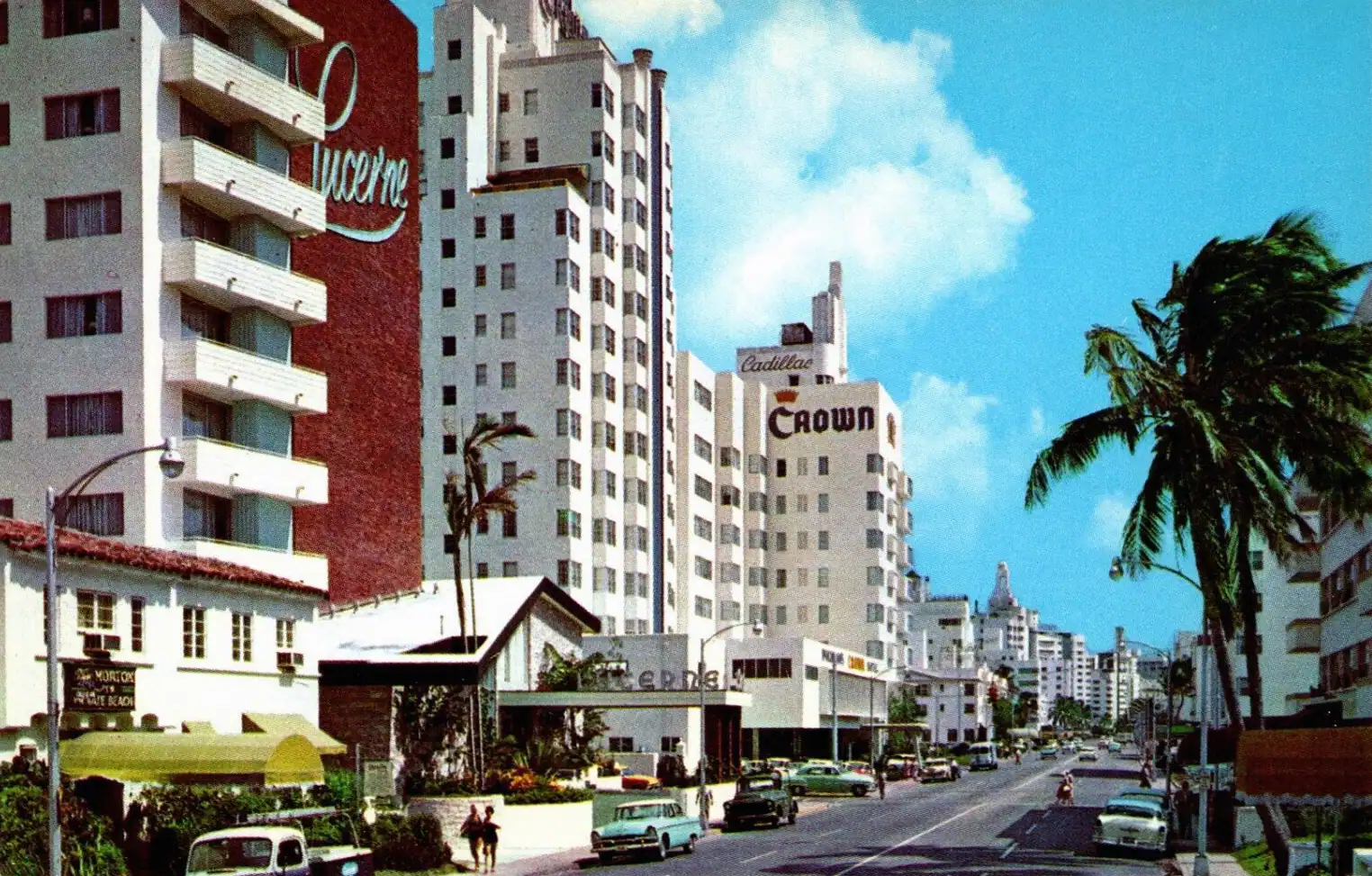
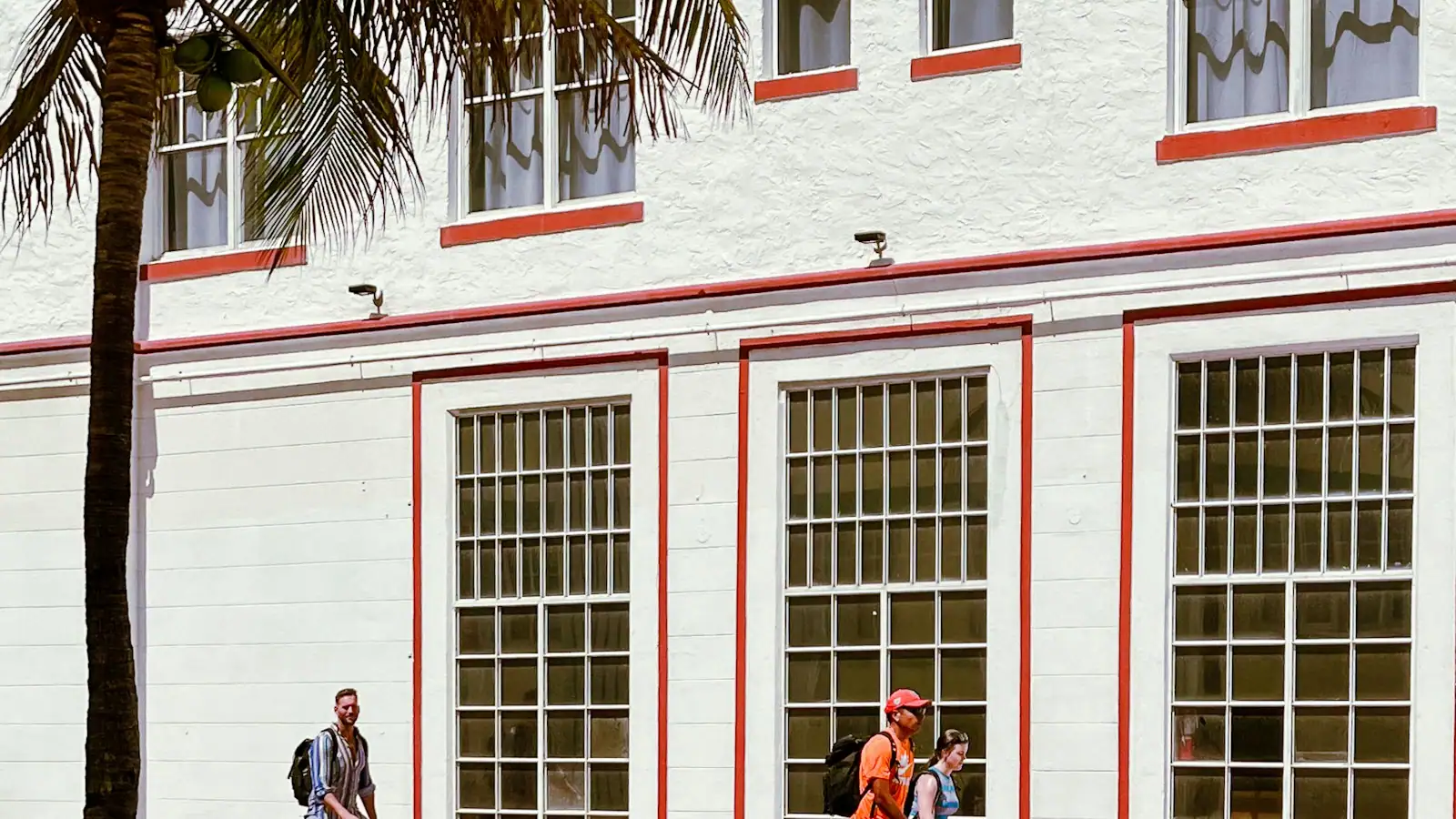
Then the correction that separates people who have been here from people who have read about it. The pastels are not original. Photographs from the 1930s and 1940s show a district in white, cream and sand with restrained trim, because pale walls reflect heat. By the 1970s that had weathered into grey, the buildings were cheap housing for elderly residents, and demolition was winning. Barbara Baer Capitman founded the Miami Design Preservation League in 1976, argued the district onto the National Register on 14 May 1979 — the first 20th-century urban district ever listed — and lost buildings anyway. The colours came from Leonard Horowitz, a designer working alongside her, who assembled a palette of roughly forty shades in the early 1980s and talked owners into using them. The flamingo pink and the mint green are a preservation tactic from the Reagan years that worked well enough to become the city's signature. Much of the neon is restoration too.
What follows is the practical version of all that: how to read a façade in thirty seconds, which buildings you can walk into and which you cannot, the two museums that are actually inside the district, a two-hour route that keeps you in shade, and which hours the light is on your side.