Historic site
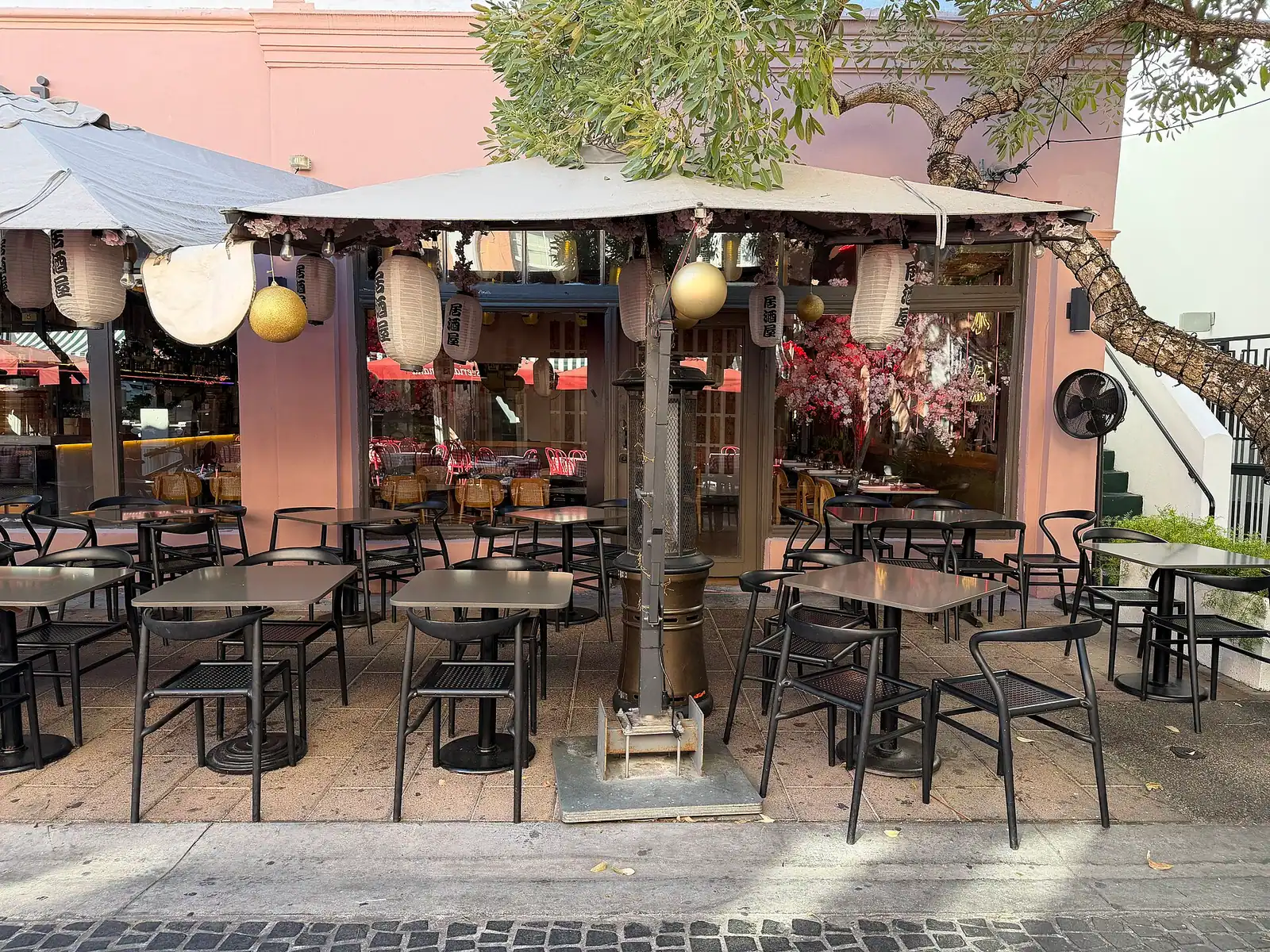
Española Way
Free
A single block of 1925 Mediterranean Revival, built as an artists' colony and now the prettiest two hundred yards on the island.
0.5–1.5 hoursFree to walk. The restaurants and bars along it are not.0.4 mi away
These earn us a commission through Viator. Same price for you, and the commission had no hand in the order.

Park
Last updated
The island's largest park, four blocks inland, where spring-training baseball was played in the 1930s and residents still run the place.
Photo: ProfessorAMartyCC0
Four blocks west of Ocean Drive, the noise stops. Flamingo Park covers about thirty-six and a half acres between Alton Road and Meridian Avenue, running north from 11th Street to just above Española Way, and it is the largest open space in South Beach by a wide margin. Almost no visitor ever walks into it, for the excellent reason that nothing in it is for sale.
What is in it is a municipal sports complex of unusual seriousness: a tennis centre rebuilt in 2013 with seventeen courts, an aquatic centre with two pool areas and an eight-lane main pool heated through the winter, a baseball stadium, a running track, football and soccer pitches, softball, basketball, handball and racquetball courts, a playground, a dog park and a good deal of grass to lie on.
The history underneath it is better than the facilities. Flamingo Field opened here in 1925, in the middle of the land boom, and for two decades it was a spring-training ground. The New York Giants trained here in 1934 and 1935. The Philadelphia Phillies came from 1940 to 1942 and again in 1946. The Pittsburgh Pirates followed in 1947. A replacement ballpark went up on the site in 1967. There is no plaque-heavy visitor experience attached to any of this; the field is simply still there, still being played on.
The neighbourhood around it matters as much as the park. Historic Flamingo Park is the residential half of the Art Deco Historic District — small two- and three-storey deco and Mediterranean Revival apartment buildings on Jefferson, Euclid, Meridian and Michigan, mostly unrestored, mostly lived in, with scooters outside and laundry on the line. Ocean Drive shows you ten famous façades that have been painted for photographs. These streets show you the other seven hundred and ninety buildings, which is what a historic district actually is.
Go for an hour. Walk 12th to 15th between Jefferson and Meridian, then cut into the park and sit under a tree.
Four blocks inland from the ocean, bounded roughly by Alton Road, Meridian Avenue, 11th Street and the blocks just north of Española Way. Entrances on 11th Street and along Michigan and Jefferson Avenues.
Walking. Ten to fifteen minutes west from Ocean Drive at 11th Street. Take 11th or 12th Street rather than a main avenue — the residential deco blocks between Washington and Meridian are the interesting route and the shaded one.
Trolley and bus. The free Miami Beach Trolley's South Beach loop runs on Washington Avenue, two blocks east. Alton Road, on the western edge, carries city bus routes including services over the causeway.
Parking. Metered spaces around the park's edges, with residential permit-only blocks immediately adjacent. Read the sign above the space including the hours on which the rules change, because Miami Beach enforcement is constant. Off-season this is one of the few places in South Beach where you can reasonably expect to find a legal space.
From the mainland. The MacArthur Causeway lands at 5th Street; Alton Road north to 11th is the direct approach and avoids Ocean Drive entirely.
This is the single best-value walk in South Beach, and it costs nothing.
The route. Start at the corner of 11th Street and Jefferson Avenue. Walk north on Jefferson to 15th. Turn east one block to Euclid Avenue and walk back south to 11th. That is about twenty-five minutes and around forty buildings.
What you are looking at. Two- and three-storey apartment buildings from the late 1920s to the early 1940s, built for people who lived here rather than for winter visitors. The vocabulary is the same as Ocean Drive — eyebrows, vertical fins, racing stripes, stepped parapets, keystone banding — applied on a domestic budget. You will also find Mediterranean Revival from the 1920s, with tiled roofs and arched openings, standing next door.
What makes it different from the beachfront. Original colours and original condition, in both directions. Some buildings are immaculate; some have not been touched in forty years, and the difference between a restored façade and an unrestored one teaches you more about what restoration involves than any tour.
Manners. People live here. Photograph the buildings, not through the windows, and keep off the front steps.
Shade. These streets have street trees, which Ocean Drive does not. In August that is the deciding factor.
Miami Beach runs these facilities primarily for its own residents, and the pricing says so clearly. Visitors are welcome and pay more.
Tennis. Seventeen courts, rebuilt as a centre in 2013, with clay and hard surfaces and floodlighting. Non-resident court fees published for the 2025–26 fee year have been in the high teens per person per hour, with residents paying substantially less, and a separate charge for lights after dark. Memberships exist and are priced for people who live here. Book ahead in winter; this is a busy club.
Swimming. Two pool areas, with an eight-lane main pool heated in winter to a comfortable range. Non-resident lap swim has been published in the high teens per session, with multi-visit passes available, and residents swimming free or close to it. Hours vary by season and by programme and are the thing to check before turning up with a towel.
Everything else is free. The paths, the grass, the running track, the playground, the dog park, the basketball and handball courts, and watching whatever is happening on the ballfield. That is the bulk of the park.
Verify before you travel. Municipal fee schedules change annually, usually on 1 October, and published rates are per person rather than per court or per lane. Confirm with the City of Miami Beach rather than relying on a figure you read anywhere, including here.
Flamingo Field opened in 1925. Miami Beach was two years into a boom, the island had been a mangrove flat a decade earlier, and building a ballpark was part of the same argument as building the hotels: proving this was a real place.
It worked. Through the 1930s and 1940s the field hosted spring training for a run of major league clubs — the New York Giants in 1934 and 1935, the Philadelphia Phillies from 1940 to 1942 and again in 1946, and the Pittsburgh Pirates in 1947 — alongside Miami Beach's own minor league teams. Northern clubs came south in February for the weather, and what is now a municipal park was for a few weeks a year a professional ground.
The current stadium dates from 1967, when the city built a replacement on the same site. It is a modest concrete-and-steel ballpark rather than a preserved historic one, and it is used by school, college and amateur baseball.
Nothing about this is commemorated at any length. There is no museum and no tour. What there is, on a February evening, is floodlit baseball being played on ground that has hosted it for a hundred years, four blocks from a beach full of people who have no idea it is there. Wander in and watch an inning. Nobody will ask you for anything.
Where. Roughly bounded by Alton Road on the west, Meridian Avenue on the east, 11th Street on the south and the blocks just north of Española Way. Main entrances are on 11th Street and along Michigan and Jefferson Avenues.
Walking. Ten to fifteen minutes west from Ocean Drive at 11th Street, which is a flat, mostly shaded walk through the residential deco streets and is half the point.
Trolley and bus. The free Miami Beach Trolley's South Beach loop runs on Washington Avenue two blocks east; the South Beach Local bus also serves the area. Alton Road on the western edge carries more routes.
Parking. Metered street parking around the park, and residential permit zones on the streets immediately adjacent — read the signs carefully, because enforcement here is constant and the permit blocks are not obvious. This is one of the few parts of South Beach where street parking is realistically findable off-season.
Who it suits. Families with children who have run out of beach. Anyone travelling with a racket or goggles. Runners, who will find the track and the flat perimeter far better than dodging tourists on the beachwalk. Anyone interested in what the Art Deco district looks like when it is not a backdrop.
Who it does not. Anyone looking for a view, a café or anything to buy. There is essentially no commercial offer inside the park.
Straight-line distances, so allow more on the road — the island is long and has one main parkway.
Historic site
A single block of 1925 Mediterranean Revival, built as an artists' colony and now the prettiest two hundred yards on the island.
0.5–1.5 hoursFree to walk. The restaurants and bars along it are not.0.4 mi away
Neighbourhood
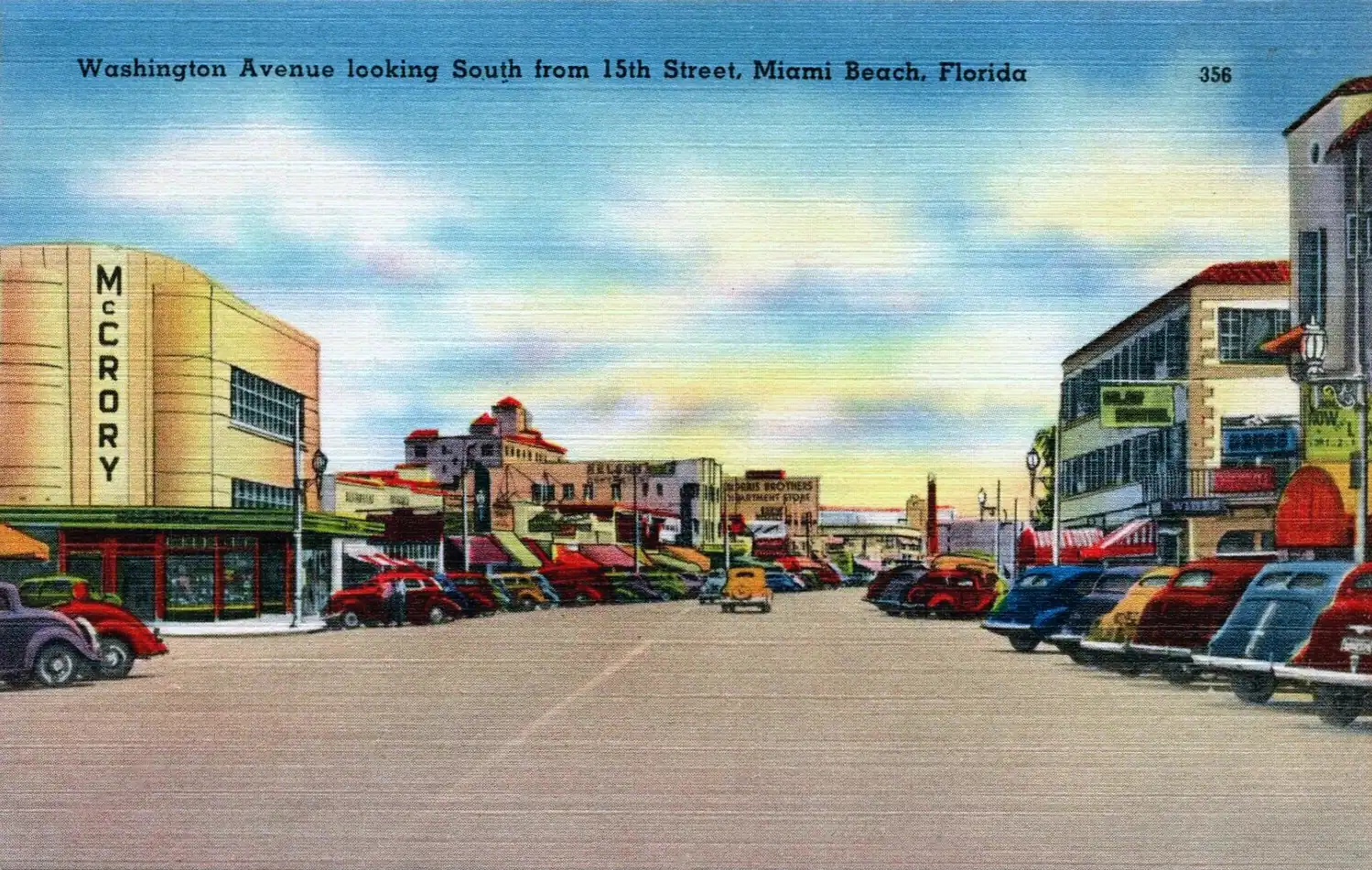
Two blocks back from the ocean and about a third of the price, with the district's best museum and all four cheap garages on it.
1–3 hoursThe street is free, as is the post office lobby. The Wolfsonian and the Jewish Museum of Florida charge admission.0.4 mi away
Shopping
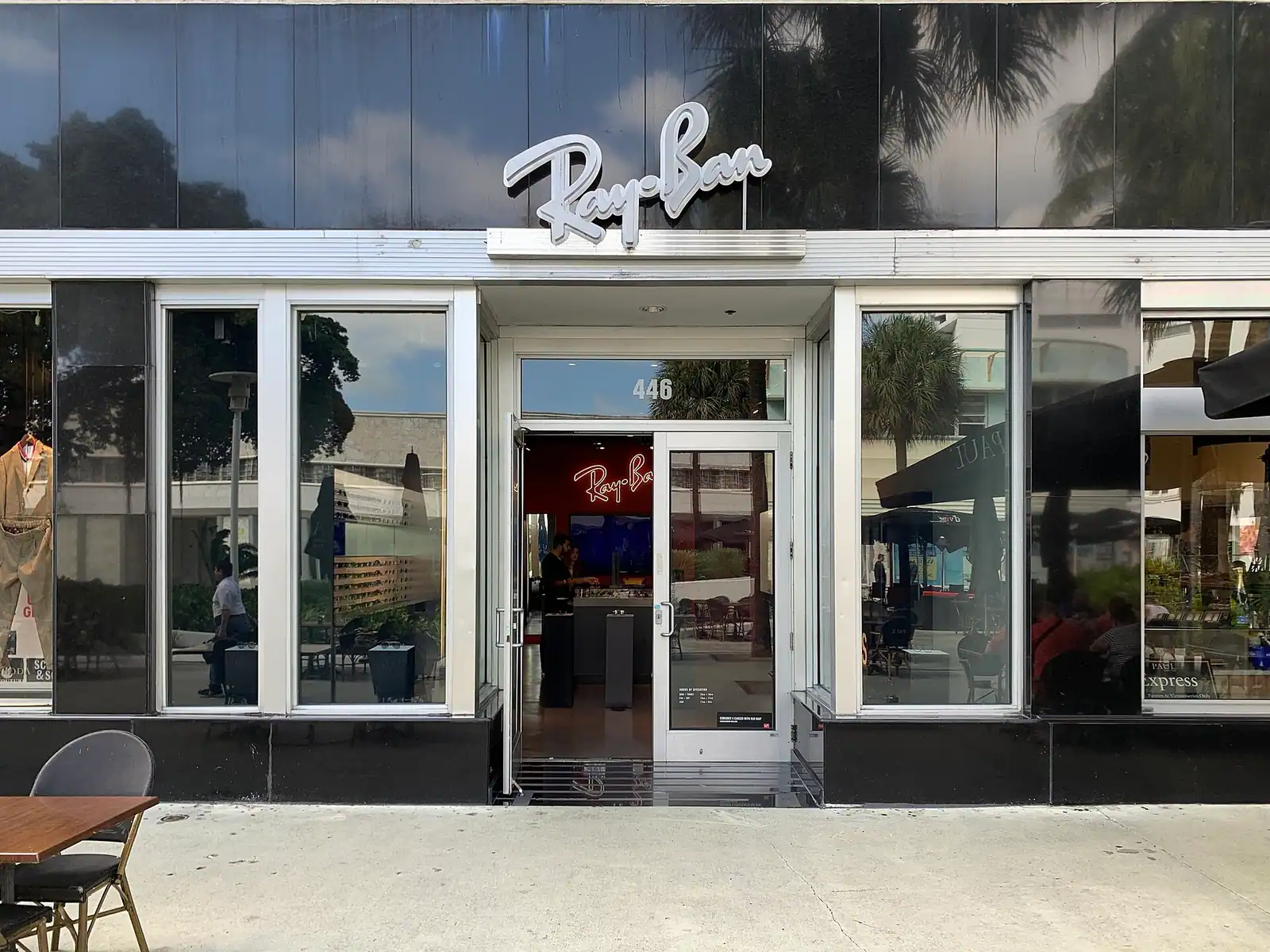
A Morris Lapidus landscape from 1960 that has become a chain high street, with three blocks at the western end that have not.
1–3 hoursFree to walk. Shops, restaurants, cinema and theatre tickets are not.0.5 mi away
Historic site
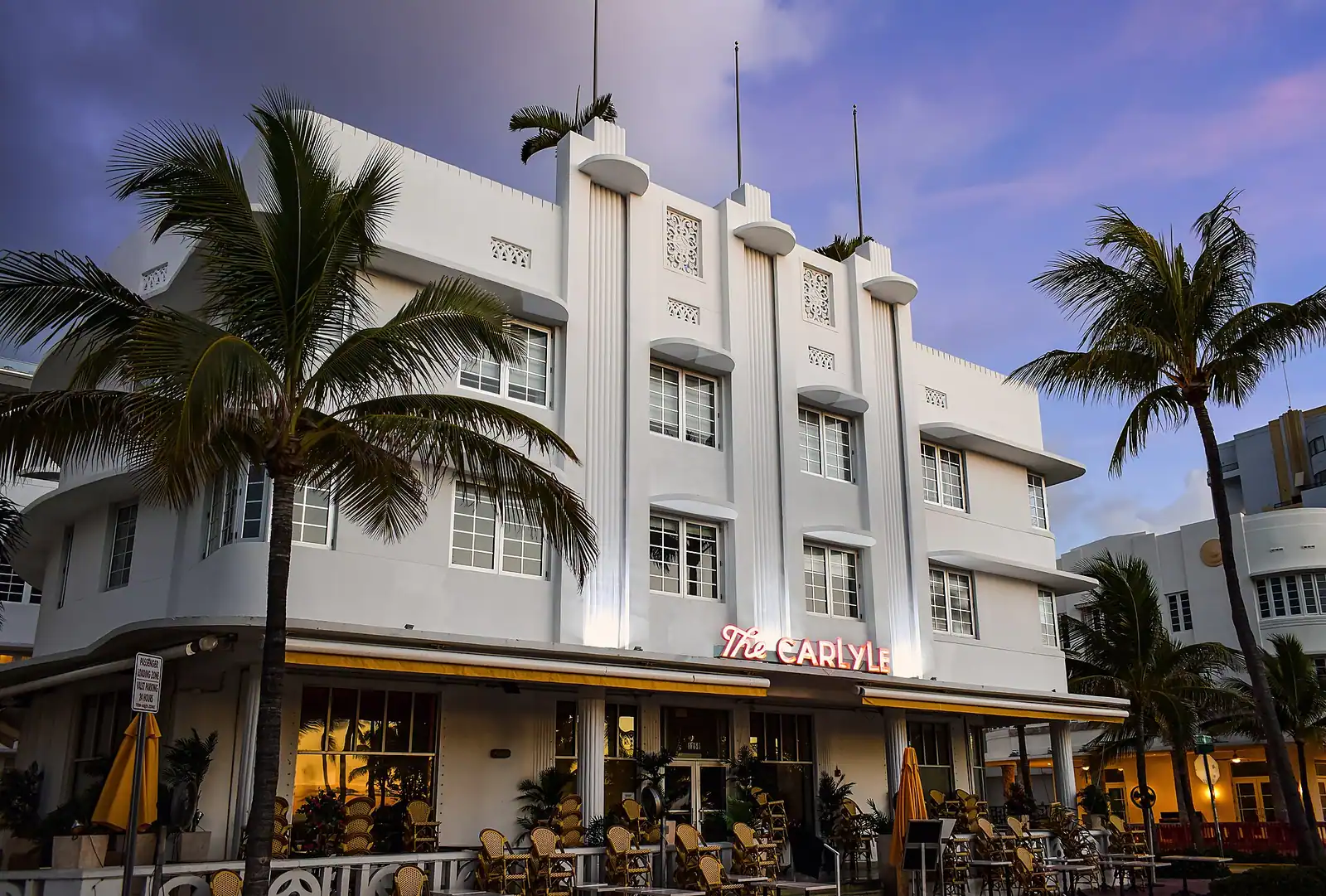
Roughly 800 protected buildings in twenty-odd blocks, and a visual grammar you can learn in about ten minutes.
1.5–4 hoursFree to walk. Guided tours, the Art Deco Museum, the Wolfsonian and the Jewish Museum of Florida charge separately.0.4 mi away
Where this place fits into a day, and the pages that plan one.
Guide hub
South Beach is small. That is the first thing to understand, and almost everything useful follows from it. The whole subject of this site is the…
Guide hub
An attractions list for most destinations is a set of places you drive between. Here it is closer to a list of addresses on four streets, and the…
Guide hub
The subject of this page is about six blocks wide and twenty-three blocks long. That is the whole of it. The Miami Beach Architectural District…
Who it suits
South Beach with children is better than its reputation and worse than its marketing, and both halves of that come from the same fact: this is a…
Budget
The expensive things in South Beach are the ones you can skip. The famous things are free. That is not a budget-travel platitude on this particular…
Guide
This is an adult neighbourhood that happens to have a world-class beach and two very good parks. Use the southern end, use the mornings, and skip March.
7 min readRenata Vieira
Guide
The meter costs about twice the garage and has no daily cap. That single fact decides most of this. The rest is knowing which kerbs will tow you.
7 min readRenata Vieira
Guide
Miami Beach publicly broke up with spring break in 2024 and meant it. Here is what that looks like on the ground, and how to plan a March trip around it.
7 min readDominique Saint-Clair
Yes, at non-resident rates. Miami Beach runs both facilities principally for residents, who pay much less or nothing, while visitors pay a per-person fee — recently in the high teens per hour for a tennis court and per session for lap swimming, plus a separate charge for court lights after dark. Fee schedules reset annually around 1 October, so confirm with the City of Miami Beach rather than relying on a published figure.
The park itself is entirely free: paths, grass, the running track, the playground, the dog park, the basketball and handball courts, and watching whatever is being played on the ballfield. Only the tennis centre and the aquatic centre charge, and only for actually using them. Given that it covers around thirty-six acres, that makes it one of the largest free things in South Beach and one of the least visited.
Flamingo Field opened in 1925 and became a spring-training ground for major league clubs: the New York Giants in 1934 and 1935, the Philadelphia Phillies from 1940 to 1942 and again in 1946, and the Pittsburgh Pirates in 1947, alongside local minor league teams. The current stadium was built on the site in 1967. There is no museum or plaque trail — just a field that has had baseball played on it for a century.
It is arguably the best free hour in South Beach. Historic Flamingo Park is the residential half of the Art Deco Historic District: small two- and three-storey apartment buildings from the late 1920s to early 1940s on Jefferson, Euclid, Meridian and Michigan, mostly still lived in, in every state of repair. Ocean Drive shows you ten restored façades. These streets show you what the other several hundred buildings look like.
Ten to fifteen minutes on foot, straight west along 11th or 12th Street — about four blocks and a bit. Take the residential cross streets rather than a main avenue: they have street trees, which Ocean Drive does not, and they run through the deco blocks that make the walk worth doing in its own right. It is flat the whole way, as is everything on this island.