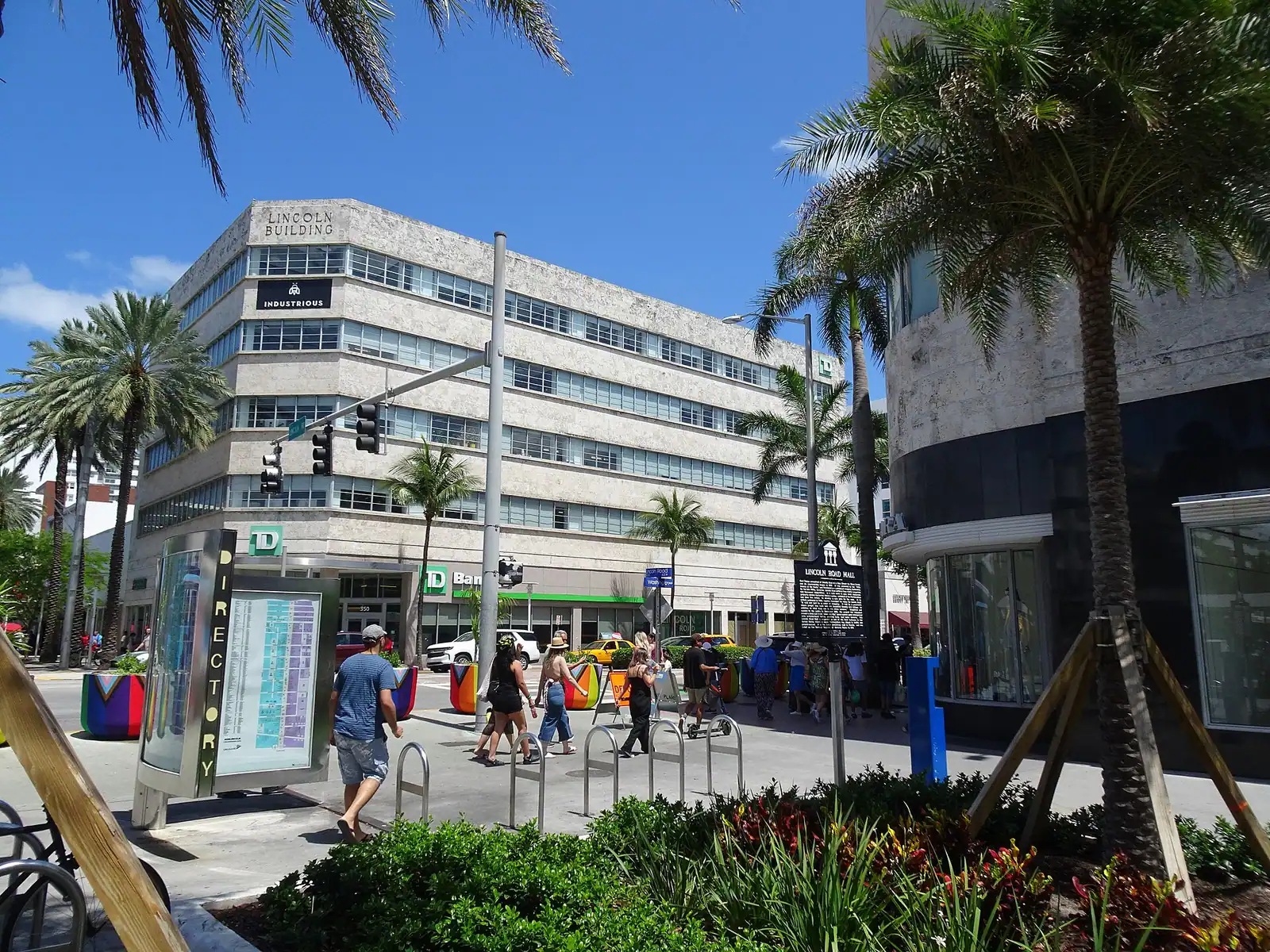
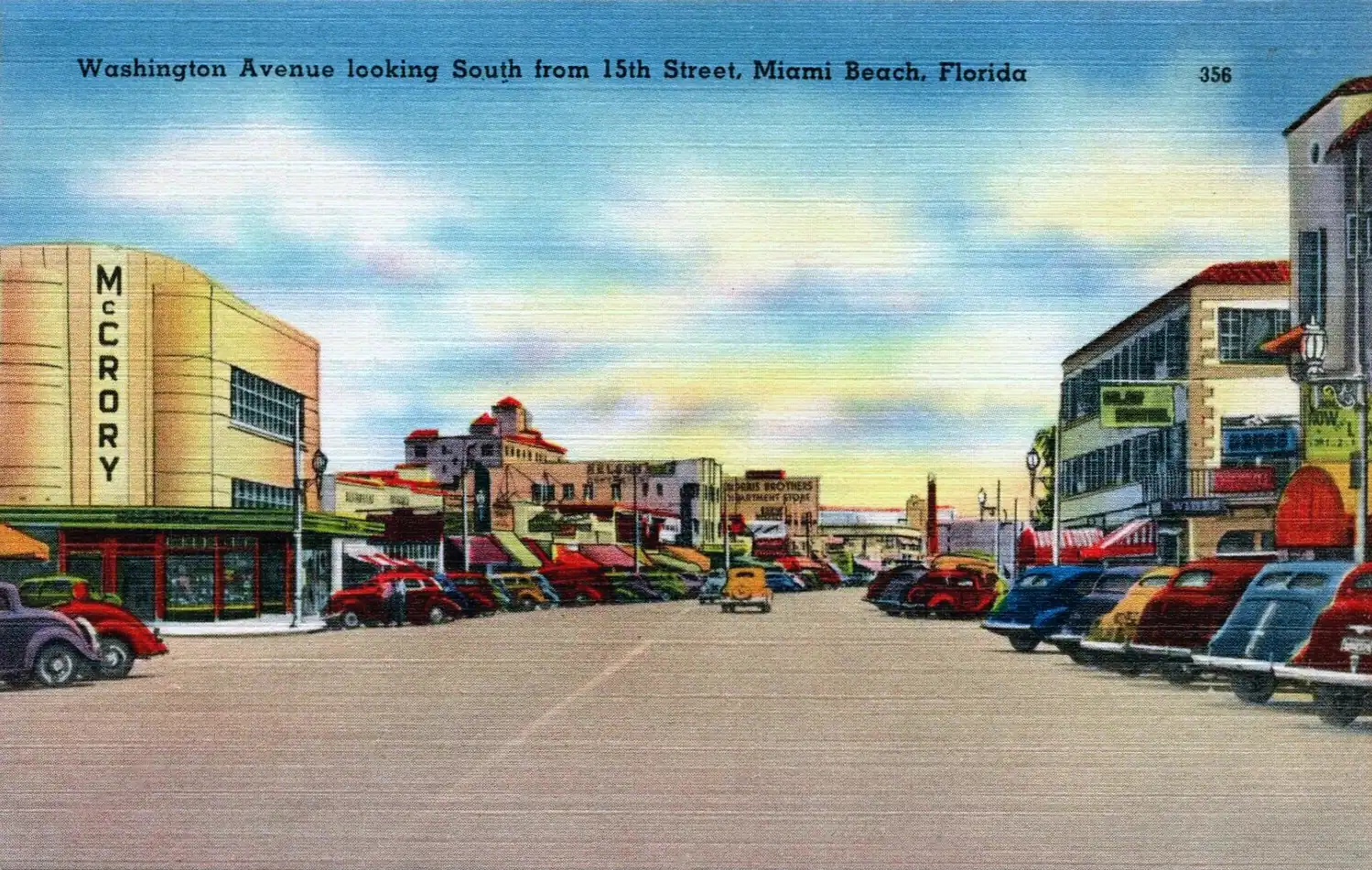
Lincoln Road is the only street in South Beach that was designed twice, and the second design is the one worth walking for. Carl Fisher cut the road across the island in the 1910s and sold it as the Fifth Avenue of the South, which it genuinely was for forty years: Saks, Bonwit Teller, Cartier, the department stores of a winter resort that catered to people who arrived by train with trunks. By the late 1950s the shops were losing custom to the suburbs and the road was losing its charm to traffic.
The property owners turned to Morris Lapidus, the architect of the Fontainebleau and the Eden Roc up the beach, whose hotels were then the most talked-about buildings in Florida. He closed six blocks to cars and, with around $600,000 of municipal bonds, laid out a pedestrian mall of geometric paving, fountains, pools, planted bosques and a run of free-standing concrete shade structures that nobody has ever found a better name for than follies. It opened on 28 November 1960, one year after the first American pedestrian mall in Kalamazoo, and it is the oldest in Florida. It went onto the National Register in 2011. Lapidus, defending a street with no cars in the most car-dependent decade in American history, put the argument plainly: "I designed Lincoln Road for people – a car never bought anything."
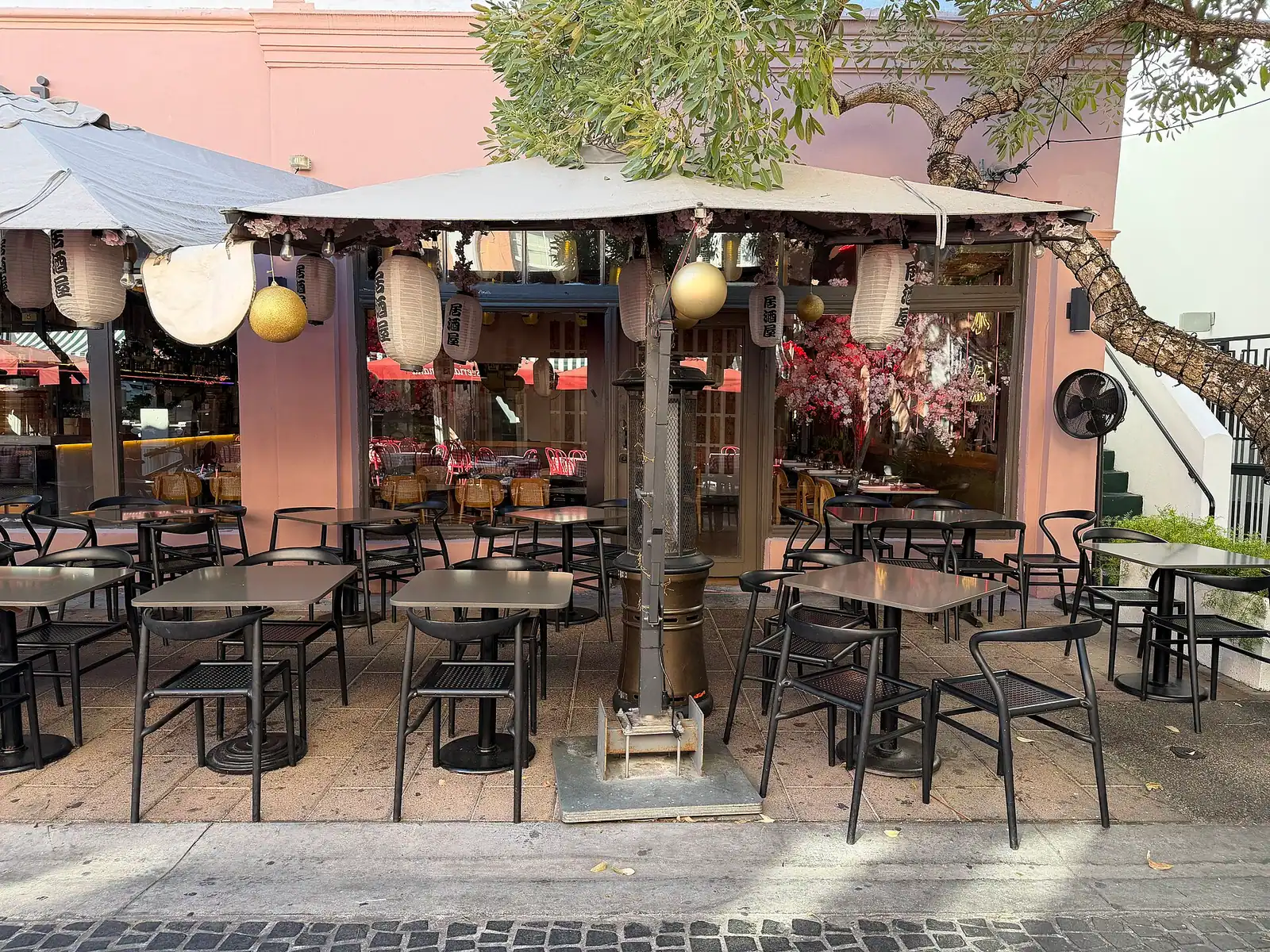
So the honest summary of Lincoln Road today: the tenants are largely national chains you have at home, the terraces are priced for tourists, and the design underneath all of it is first rate. Walk it looking up and out — at the follies, the paving geometry, the water features, the 1934 Colony Theatre with its restored vertical sign, the way the planting breaks eight blocks into a sequence of rooms — and it is one of the better pieces of mid-century public space in the United States. Walk it looking into shop windows and it is an outdoor mall.
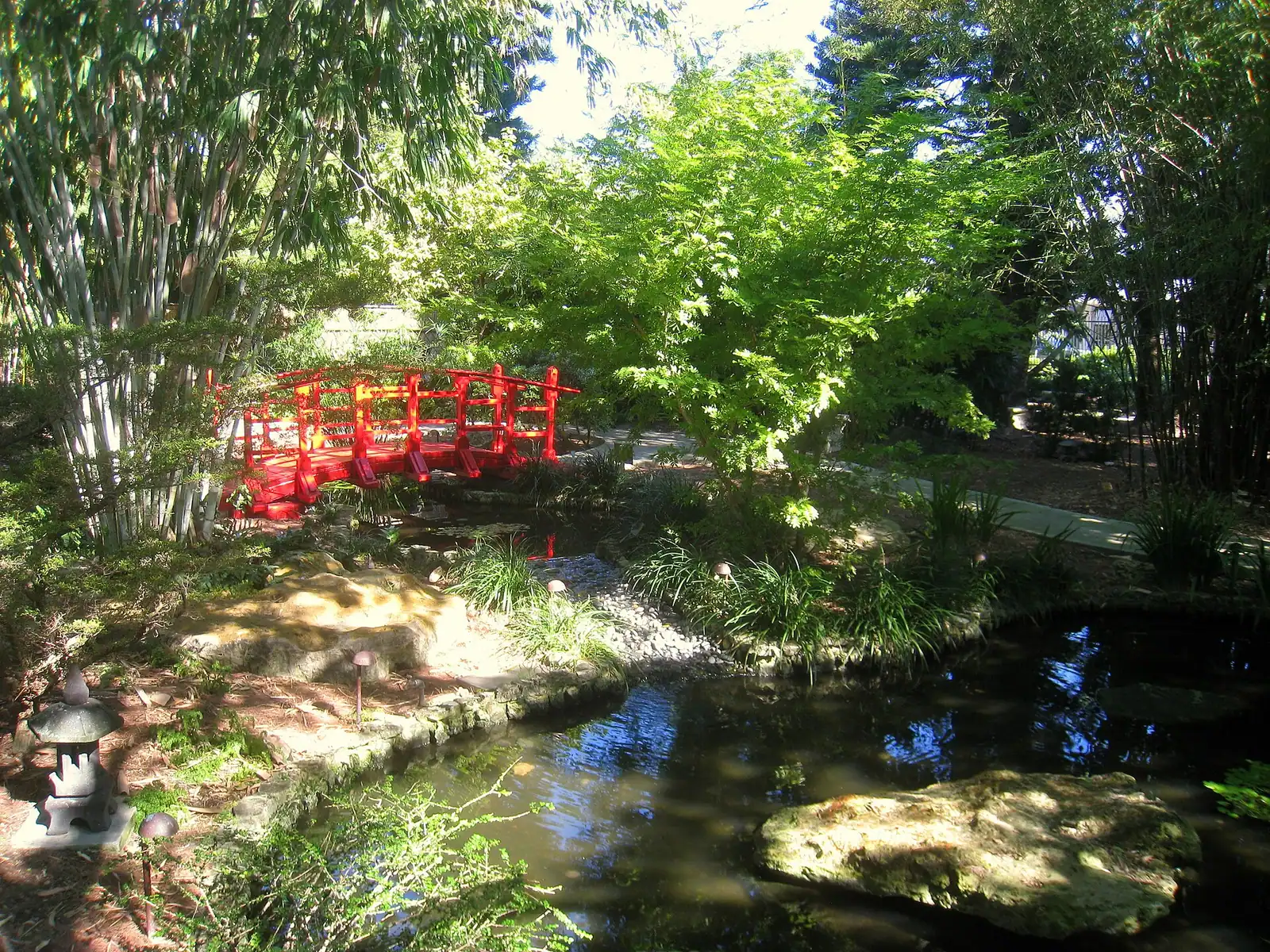
It is also the spine that connects most of the neighbourhood's cultural institutions. One block north on 17th Street is Frank Gehry's New World Center and the park in front of it, where the resident orchestra projects concerts onto the building's exterior wall for anyone sitting on the grass. A few minutes further are the Botanical Garden, which is free, and the Holocaust Memorial, which is also free and is the most affecting thing on the island. The Bass sits a few blocks northeast at 2100 Collins. None of that is on the mall itself, and almost none of it appears in a guide that treats Lincoln Road as shopping.
Below: what Lapidus actually built and where to see it, how the blocks differ from the Alton end to the Washington end, the two Sunday markets, the comparison with Española Way that this street usually loses, and how to handle the hosts with the clipboards.