Española Way is one block. From Washington Avenue west to Drexel is about two hundred yards, and you can stand at one end and see the other. That is the whole attraction, and the reason it works.
It was built from 1925 for the developer N.B.T. Roney, to a design by the architect Robert Taylor, as a self-contained Mediterranean Revival village — arcaded ground floors, ochre and cream stucco, barrel-tile roofs, wrought-iron balconies, a fountain, awnings, and upper-floor windows set into deliberately irregular openings. Roney's stated intention was an artists' colony, a place where, as the promotional language of the day had it, artists and lovers of the artistic might gather. It was meant to be Miami Beach's Greenwich Village, and for a while in the late twenties it was a fashionable promenade of tea rooms, antique dealers and small hotels.
What followed was less genteel. Prohibition-era Miami Beach was a gambling town, and the Clay Hotel on this block is bound up in that history — the persistent local account is that a gambling operation connected to the Capone circle ran out of it. The building later spent decades as a youth hostel, which is how a great many backpackers in the 1980s and 1990s ended up sleeping in the prettiest building in South Beach for very little money.
The important thing about Española Way today is the contrast it makes. It predates the Art Deco district around it by roughly a decade, so walking onto it from Washington Avenue is a step backwards in architectural time: no eyebrows, no stepped parapets, no chrome, no neon. Arches and clay tile instead.
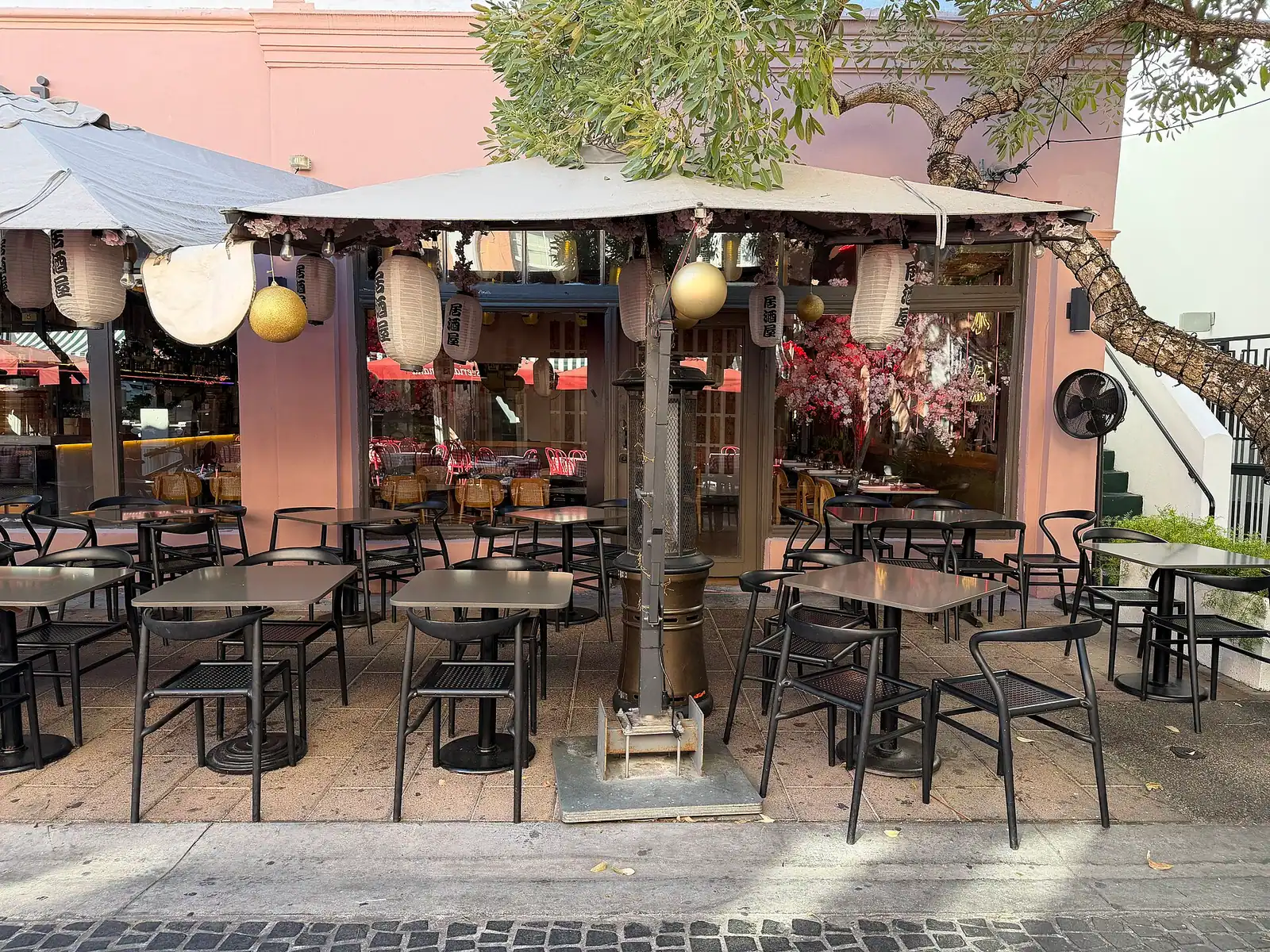
It is also pedestrianised for its historic core, with restaurant tables set out down the middle of the roadway under strings of lights, which makes it the most photographed short street on the island. That comes with the obvious consequence. Every table on it is a restaurant table, every restaurant has a host, and the menus are priced for the setting. Walk it, photograph it, and then decide separately whether you want to eat there.