Skip to content
Menu

These earn us a commission through Viator. Same price for you, and the commission had no hand in the order.

Search
A restored historic lobby with a painted ceiling, stone arches and decorative ironwork
Harry Clarke

Museum

The Wolfsonian–FIU

Last updated

A 1927 furniture vault holding the objects that taught the twentieth century how to sell itself, two blocks from Ocean Drive.

Photo: Harry ClarkePublic domain

Walk two blocks west from Ocean Drive at 10th Street and the temperature of the neighbourhood changes. Washington Avenue is the working spine of South Beach: pharmacies, hardware, bail bonds, nightclubs, a courthouse. On its corner at 10th stands a heavy ochre building with an extravagantly carved cast-stone doorway, and almost nobody who came to Miami Beach for the beach goes in.

The building was finished in 1927 as the Washington Storage Company — a vault where wealthy seasonal residents left their furniture, paintings and silver over the summer while they went north. It is Mediterranean Revival, not Art Deco, which is worth registering on a street where everything else is sold as deco. Its ornament is applied and Spanish; the deco buildings a block east strip ornament away and get their effect from geometry. Two styles, one decade, three hundred metres apart.

Mitchell Wolfson Jr, heir to a Miami cinema fortune, started storing his own collection in the building, then bought it, then filled it. What he was collecting was not fine art. It was the applied stuff of modern life between roughly 1850 and 1950: posters, furniture, appliances, world's fair souvenirs, industrial models, architectural fragments, political propaganda from fascist Italy, Nazi Germany, the Soviet Union, Britain and the United States alike. Counts published for the collection range from tens of thousands to two hundred thousand objects depending on what is being counted; well over a hundred thousand is safe. He gave it to Florida International University in 1997.

The argument the museum makes is that design is never neutral. A chair, a poster, a radio cabinet and a rally banner are all doing persuasion, and between 1850 and 1950 they were doing it at industrial scale, in every direction, including directions that ended in mass death. The displays do not flatter the objects.

Then you walk out onto Washington Avenue at four in the afternoon, and the deco hotels you saw this morning, built in exactly those years, look different. That reframing is the best thing any museum on this island does.
Getting there and parking

On the north-west corner of Washington Avenue and 10th Street, two blocks west of Ocean Drive.

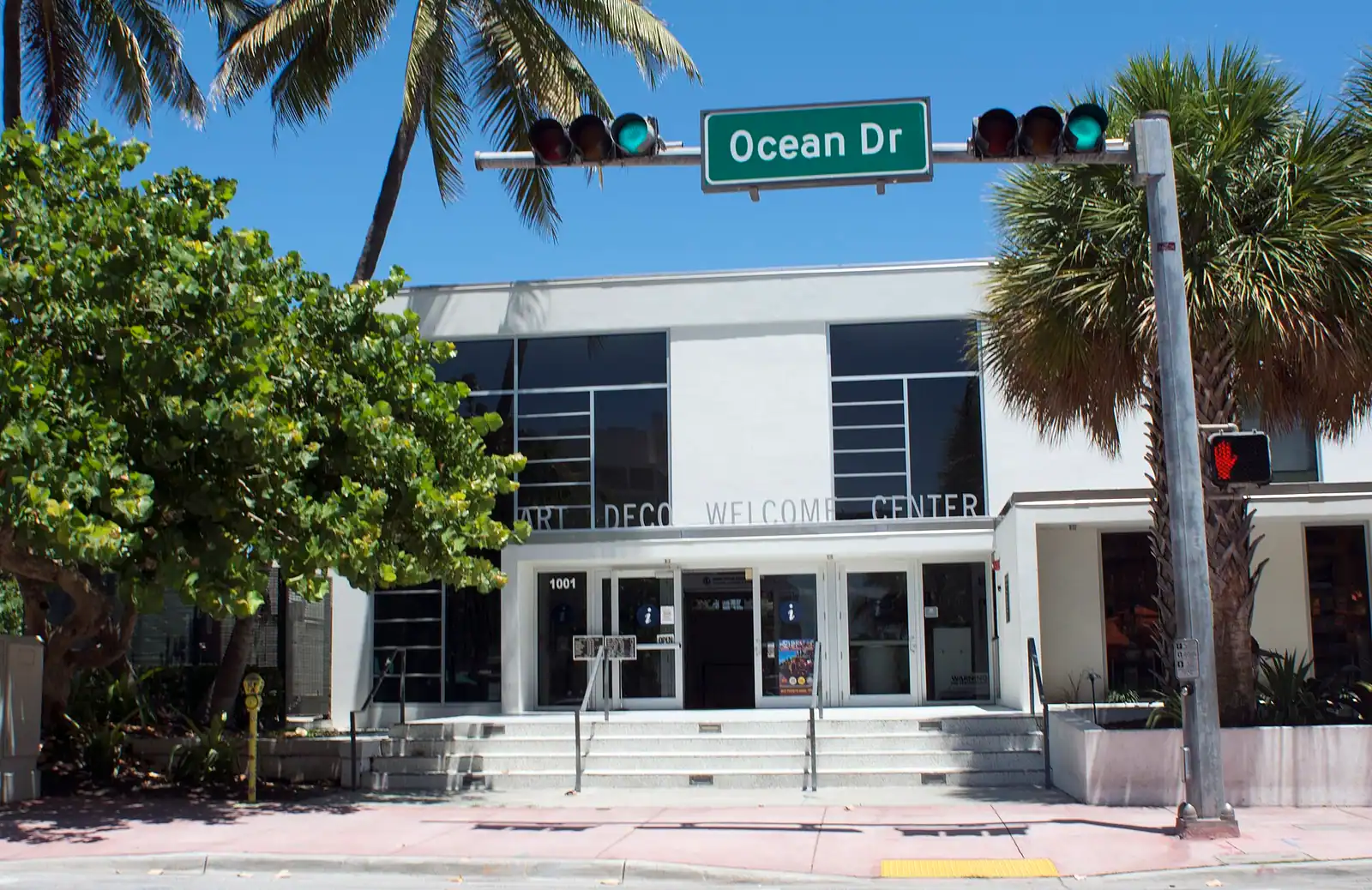
Walking. Four minutes west from the Art Deco Welcome Center at 10th and Ocean. Twelve minutes south from Lincoln Road along Washington. Eight minutes from Española Way.

Trolley and bus. The free Miami Beach Trolley's South Beach loop and the South Beach Local bus both run on Washington Avenue and stop within a block. This is the easiest museum on the island to reach without a car.

Parking. The 7th Street garage at Collins and the 12th and 13th Street garages between Collins and Washington are all within a five-minute walk. Metered spaces on Washington itself exist and are enforced closely; the residential streets west of Washington are permit zones.

From the mainland. MacArthur Causeway to 5th Street, then north on Washington for five blocks. There is no rail service across the bay to Miami Beach.

What the collection actually is

Not paintings. The Wolfsonian collects the designed objects of the industrial age, roughly 1850 to 1950, and it collects them because of what they were built to do.

Typical material includes propaganda posters and printed ephemera from across the political spectrum of the 1920s to 1940s; industrial and domestic design, from radio cabinets to kitchen appliances; furniture and interiors; world's fair and exposition material, which is where nations advertised themselves to each other; architectural models, drawings and salvaged fragments; and a substantial library of rare books and periodicals.

Exhibitions are usually thematic and argumentative rather than chronological surveys. A show might take a single idea — labour, speed, the machine, the nation — and follow it across countries and media. The captions do the heavy lifting and are worth reading.

Two practical notes. The galleries are compact and vertically arranged, so this is a ninety-minute museum rather than a half-day one. And it is genuinely not a children's museum: the subject matter includes the visual language of fascism and total war, presented as what it was.

If you have one indoor hour in South Beach and you want the one that changes how the street outside looks, it is this one rather than the art museum at the other end of the district. If you want contemporary art in a deco building, that is The Bass at 21st and Collins.

A vault, not a villa

The Washington Storage Company opened in 1927, in the middle of the Florida land boom and a year after the hurricane that ended it. Robertson & Patterson designed it in Mediterranean Revival, the style that dominated South Florida before deco arrived: stucco walls, small deep-set windows, a tiled roofline and a heavily carved cast-stone surround around the entrance.

The function explains the form. This was a strongroom. Miami Beach in the 1920s was a winter resort, emptied every summer by heat and mosquitoes, and its seasonal residents needed somewhere secure and dry to leave the contents of a house. Small windows, thick walls and one ornamented door is exactly what that building looks like.

The conversion kept the shell and hollowed the inside. The entrance sequence retains the ornamental doorway and opens into a tall hall; galleries stack above it. Architectural fragments from the collection are installed in the public spaces, so the building itself carries part of the exhibition.

For anyone walking the district's architecture, this is the useful counterexample. The Art Deco Historic District is not uniformly deco. It holds Mediterranean Revival from the early and mid-1920s, deco and Streamline Moderne from the 1930s, and Miami Modern from the post-war years, all within the same twenty-odd blocks. The Wolfsonian is the clearest 1920s example you can go inside.

Hours, admission and the free Friday evening

Days. Published as closed Monday and Tuesday, open Wednesday through Sunday. The same trap as every other museum on the island: a rainy Monday in South Beach has very few indoor options and this is not one of them.

Hours. Recently published as 10am to 6pm Wednesday, Thursday, Saturday and Sunday, and 10am to 9pm on Friday. The Friday late opening is the useful one, because it fits around a beach day rather than replacing one.

Admission. Published at around $12 for adults and around $8 for seniors, students with ID and children roughly six to eighteen. Free admission has long applied to Florida residents, members, children under six, visitors with disabilities and their companions, State University System of Florida students and staff, and active military and veterans with ID.

Free Fridays, 6–9pm. A standing weekly slot. It is the best-value three hours of culture on Miami Beach and it is not a secret, so it is also the busiest the galleries get.

Verify before you go. All of the above is what the museum has published recently rather than a promise, and university museums adjust hours around semesters and installations.

The bit that costs nothing regardless. The doorway. Stand on the 10th Street corner and look at the cast-stone surround — it is the most elaborate piece of 1920s ornament on Washington Avenue and you do not need a ticket to see it.

Working it into a South Beach walk

The Wolfsonian sits at the intersection of two of the district's three spines, which makes it easy to build a route around.

The ninety-minute architecture loop. Start at the Art Deco Welcome Center at 10th and Ocean. Walk one block west on 10th Street to Collins Avenue, then one more to Washington. That is three streets, three completely different characters, in four minutes: deco showfront, hotel-and-retail corridor, everyday commercial avenue. Finish inside the Wolfsonian looking at the decade that produced all three.

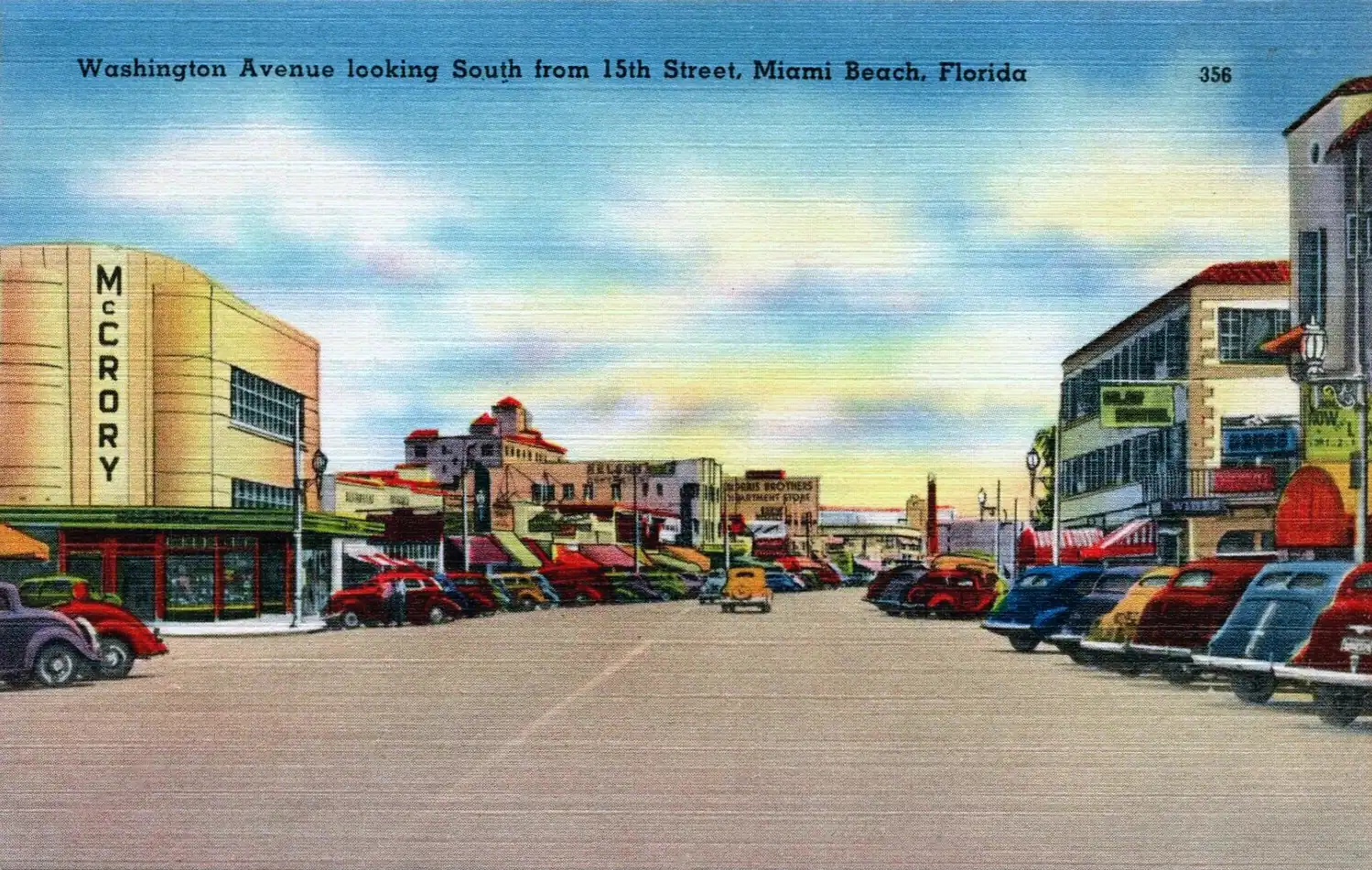
Going north from here. Washington Avenue runs up to 17th Street and the New World Center. Along the way it passes the courthouse, the city's older commercial buildings and the entrance to Española Way at 14th and 15th.

Going south. Washington continues to 5th Street and on into South of Fifth, where the district's scale drops and the restaurants get expensive.

Practical. Washington Avenue is the one spine where you can reliably buy a bottle of water, use a pharmacy or find a cash machine that is not attached to a nightclub. It is also where the free Miami Beach Trolley and the South Beach Local bus run, so it is the street to be on when you are tired of walking.

A warning about the evening. Washington Avenue's character shifts hard after eleven, particularly between 8th and 14th, when the clubs open and the pavement crowd changes. That is a nightlife question rather than a museum one — the Wolfsonian is long shut by then.

Tours that visit The Wolfsonian

Operators run these trips past The Wolfsonian, or stop there as part of a longer route. We list what the booking data supports — not everything that mentions the name.

These earn us a commission through Viator. Same price for you, and the commission had no hand in the order.

Private and small-group departurespriced per boat or per vehicle, not per person

Near The Wolfsonian

Straight-line distances, so allow more on the road — the island is long and has one main parkway.

  • A visitor standing in a gallery looking at framed works hung on a white wall

    Neighbourhood

    Washington Avenue

    Free

    Two blocks back from the ocean and about a third of the price, with the district's best museum and all four cheap garages on it.

    1–3 hoursThe street is free, as is the post office lobby. The Wolfsonian and the Jewish Museum of Florida charge admission.620 ft away

  • A visitor standing in a small gallery looking at framed works hung on a white wall

    Museum

    Art Deco Welcome Center

    The preservation league's own building, and the ten minutes that make the next two hours of walking make sense.

    0.5–2.5 hoursThe Welcome Center, shop and information desk are free to enter. The Art Deco Museum, guided walking tours and the self-guided audio tour are ticketed, with museum admission included in the guided tour.890 ft away

  • The peach and mint facade of a three-storey Art Deco hotel seen from below with a palm frond crossing the frame

    Neighbourhood

    Ocean Drive

    Free

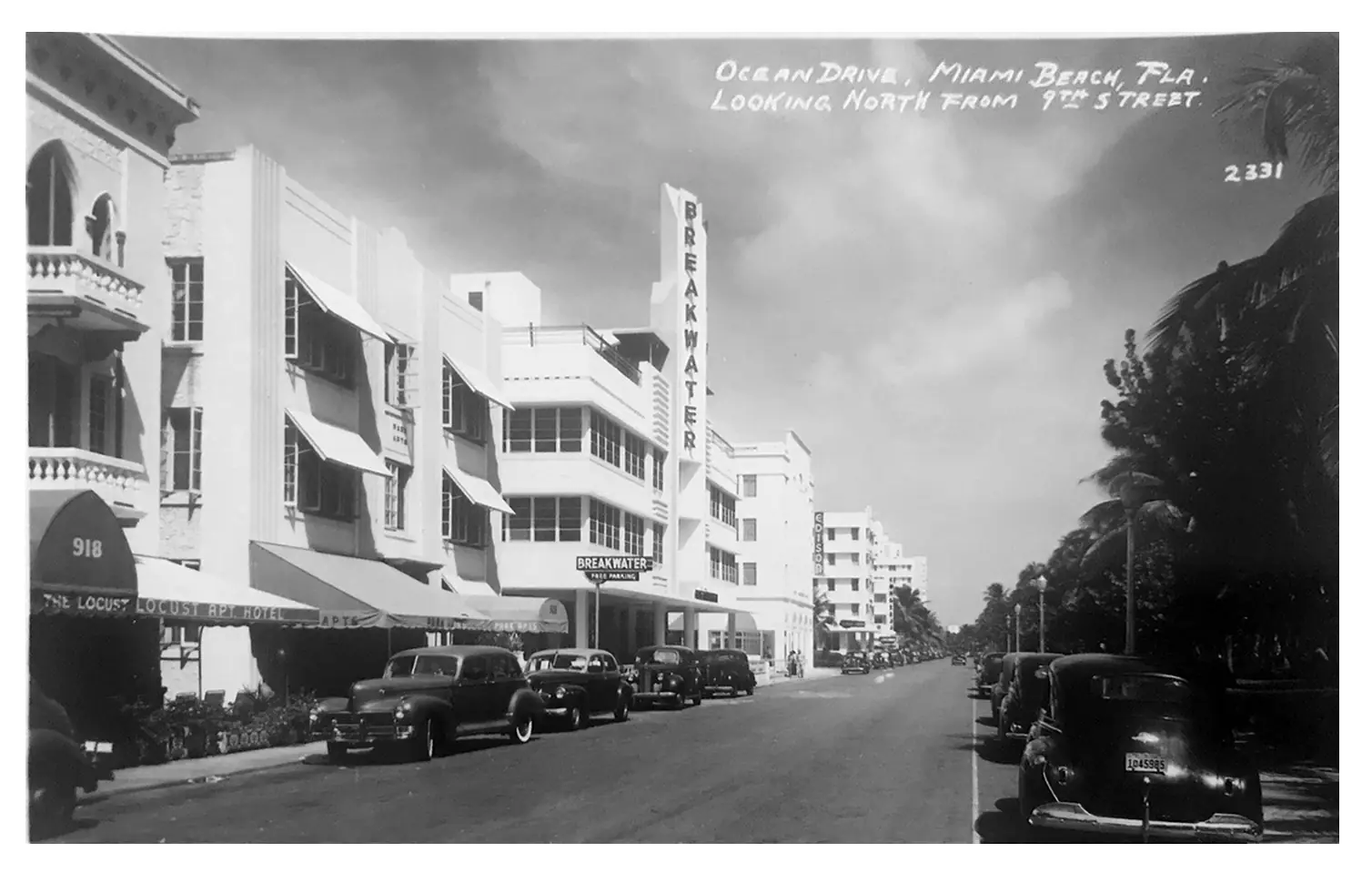
    Ten blocks of deco facade on one side and open park on the other, and almost everything depends on which side you choose.

    1–2.5 hoursFree to walk. The sidewalk cafes, hotel bars and beach loungers are not.890 ft away

  • A symmetrical pastel hotel facade with banded concrete window shades and a stepped central parapet

    Historic site

    Art Deco Historic District

    Free

    Roughly 800 protected buildings in twenty-odd blocks, and a visual grammar you can learn in about ten minutes.

    1.5–4 hoursFree to walk. Guided tours, the Art Deco Museum, the Wolfsonian and the Jewish Museum of Florida charge separately.780 ft away

The Wolfsonian: common questions

Is the Wolfsonian free on Fridays?

Yes, for the evening. The museum has run a free admission window on Friday evenings from 6pm to 9pm for years, alongside its late Friday opening. It is well known locally, so expect the galleries to be busier than on a weekday morning. Florida residents, members, under-sixes, visitors with disabilities and their companions, and military and veterans with ID have also had free entry at all opening times.

What is the Wolfsonian museum about?

Design as persuasion, roughly 1850 to 1950. The collection is posters, furniture, appliances, world's fair material, architectural fragments, rare books and political propaganda from fascist Italy, Nazi Germany, the Soviet Union, Britain and the United States. The argument running through it is that designed objects always carry an intention. It is not a fine art museum and it is not a gentle one.

Is the Wolfsonian building Art Deco?

No, and that is one of the more useful things it teaches. It was built in 1927 as the Washington Storage Company in Mediterranean Revival style — stucco, small deep-set windows, tiled roofline and a heavily carved cast-stone entrance. The Art Deco Historic District around it is not uniformly deco: it holds 1920s Mediterranean Revival, 1930s deco and Streamline Moderne, and post-war Miami Modern, all within about twenty blocks.

How long do you need at the Wolfsonian?

Between an hour and two. The galleries are compact and arranged vertically over a few floors, and the exhibitions are usually thematic rather than sprawling. The captions carry a lot of the argument, so reading properly takes longer than walking through. Ninety minutes is the sensible plan, which fits neatly into a Friday evening or around an afternoon thunderstorm.

Is the Wolfsonian suitable for children?

Not especially. The subject matter includes the visual language of fascism, total war and industrial labour, presented directly rather than softened, and the objects are behind glass rather than hands-on. Older teenagers studying the period will get a great deal from it. For younger children in South Beach, the beach, Flamingo Park's playground and the music-themed playground at Maurice Gibb Memorial Park are the better calls.