Skip to content
Menu

These earn us a commission through Viator. Same price for you, and the commission had no hand in the order.

Search
Clipped hedges and a stone basin in a formal courtyard garden with palms rising behind
Thank You (24 Millions ) views

Historic site

Casa Casuarina

Last updated

A 1930 Mediterranean Revival palazzo dropped into the middle of a deco street, and now a private hotel you can only enter by booking.

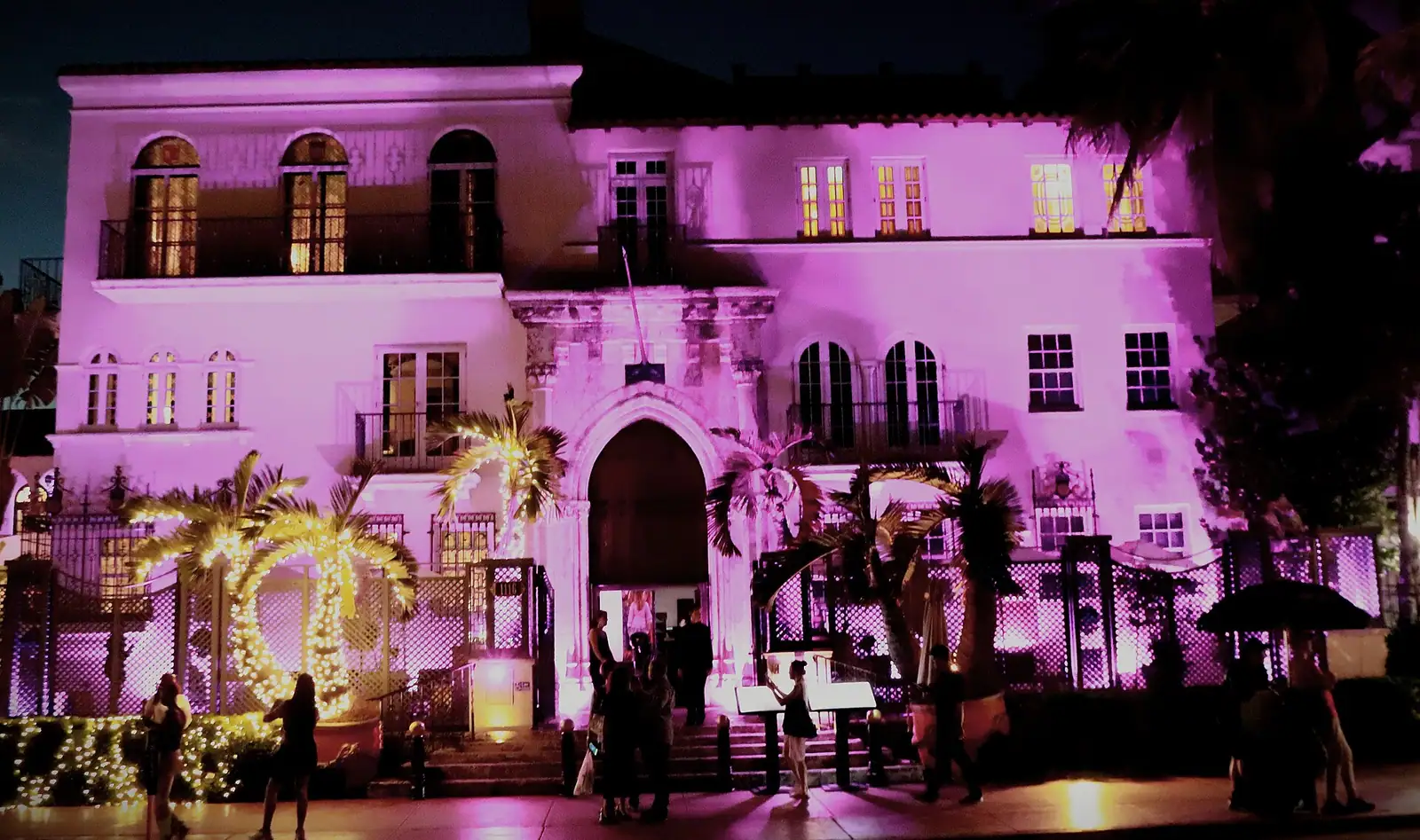
Walk north along Ocean Drive and at 1116 the street breaks its own rules. Everything either side is 1930s deco: flat roofs, stepped parapets, banded eyebrows, smooth stucco. Casa Casuarina is arched, ornamented, tiled and heavy — a Mediterranean Revival palazzo with a courtyard, dropped into the middle of a modernist block.

It is older than most of its neighbours by a few years and it was built for a different kind of person. Alden Freeman, an heir to a Standard Oil fortune, put it up in 1930 and modelled it on the Alcázar de Colón in Santo Domingo, the early sixteenth-century house built for Christopher Columbus's son Diego. Brick from that building is said to have been incorporated into the construction, which is either a beautiful gesture or an act of architectural vandalism depending on your view of taking a Dominican monument apart. The name comes from the casuarina tree that stood on the site.

Freeman died in 1937 and the house was bought by Jacques Amsterdam, who divided it into apartments. For the next fifty-odd years it was flats — the Amsterdam Palace, later the Christopher Columbus Apartments — which is how the grandest private house on Ocean Drive spent the middle of the twentieth century as a rooming block.

In 1992 Gianni Versace bought it, restored it, and extended it southward with a new wing and a mosaic pool, work that required demolishing the hotel next door and put him in open conflict with the preservation movement that had just saved the street. The house became, briefly, the most famous private address in Florida.

On 15 July 1997 Versace was shot dead on the front steps as he returned from breakfast. He was 50. His killer died by suicide days later on a houseboat a few miles away.

Since 2015 the house has operated as The Villa Casa Casuarina, a small hotel and restaurant. It is private property with a working front desk, and what you can do here depends entirely on whether you have a booking.

Getting there and parking

Casa Casuarina is at 1116 Ocean Drive, on the west side of the street between 11th and 12th Streets, in the middle of the deco hotel row.

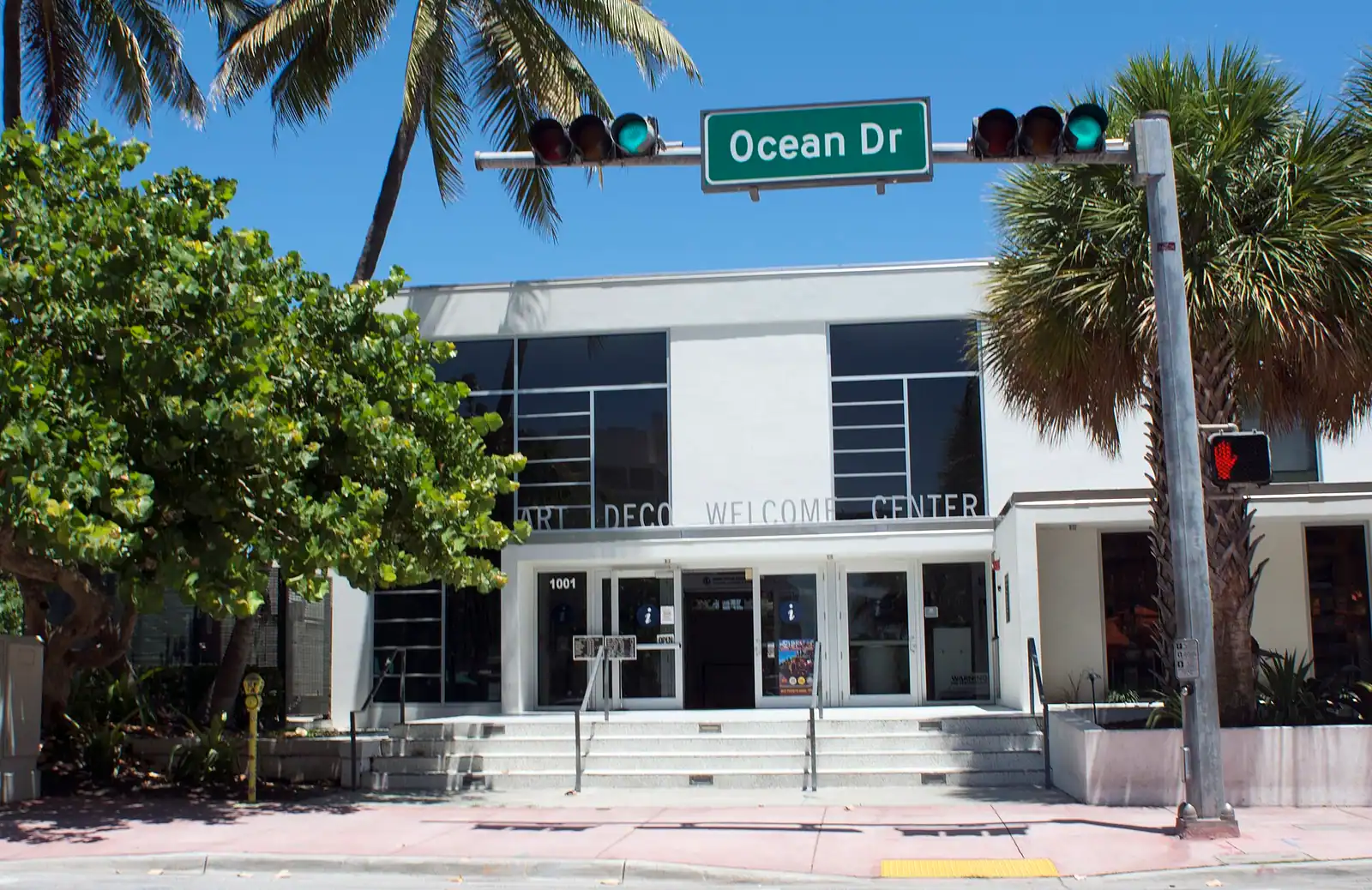
On foot it is one block north of the Art Deco Welcome Center at 1001 Ocean Drive, which is the sensible place to start a walk up the street.

The best viewpoint is across the road, from the Lummus Park path, where you can see the whole façade at once rather than a foreshortened corner.

Parking. The municipal garages on and around Washington Avenue between 7th and 17th Streets are two blocks west and are cheaper over a day than the Ocean Drive meters. There is no visitor parking at the building.

Arriving for a reservation. Valet and drop-off on Ocean Drive are slow at busy hours and unavailable when the street is restricted to traffic, which happens at weekends and on spring-break dates in March. Allow extra time, or walk from a garage.

By trolley and bus, the free Miami Beach trolley and the South Beach Local run the Washington and Collins corridors one and two blocks west.

What a non-guest can actually do

This is the practical question and the answer is narrower than most people expect.

From the street: everything on the outside. The façade, the arched openings, the ironwork, the tiled detail and the front steps are all directly on a public pavement. Photographing the exterior is completely normal and nobody will stop you.

Inside: only with a booking. The building is a hotel. There is no lobby you can wander into, no ticket desk, no self-guided visit and no public tour of the interior. The doors are staffed and non-guests are turned away politely and consistently.

The way in, if you want one, is the restaurant. The house runs a restaurant in the courtyard beside the mosaic pool, and a reservation gets you into the centre of the building. It is priced as you would expect for the location and the setting, and it is the only reliable way for a member of the public to see the courtyard, the colonnade and the mosaics. Book ahead; walk-ins are not the model here.

Staying is the other way. The rooms are individually decorated and expensive, and availability in high season and around Art Basel in early December is thin.

What is not available: a tour of Versace's private rooms, access to the pool as a non-guest, or entry to photograph the interior. Various operators sell South Beach walking tours that stop outside the building and talk about it; none of them can take you in.

Set your expectations at the pavement and anything more is a bonus.

Reading the building from the street

Stand across Ocean Drive, in Lummus Park, and the contrast is the whole point.

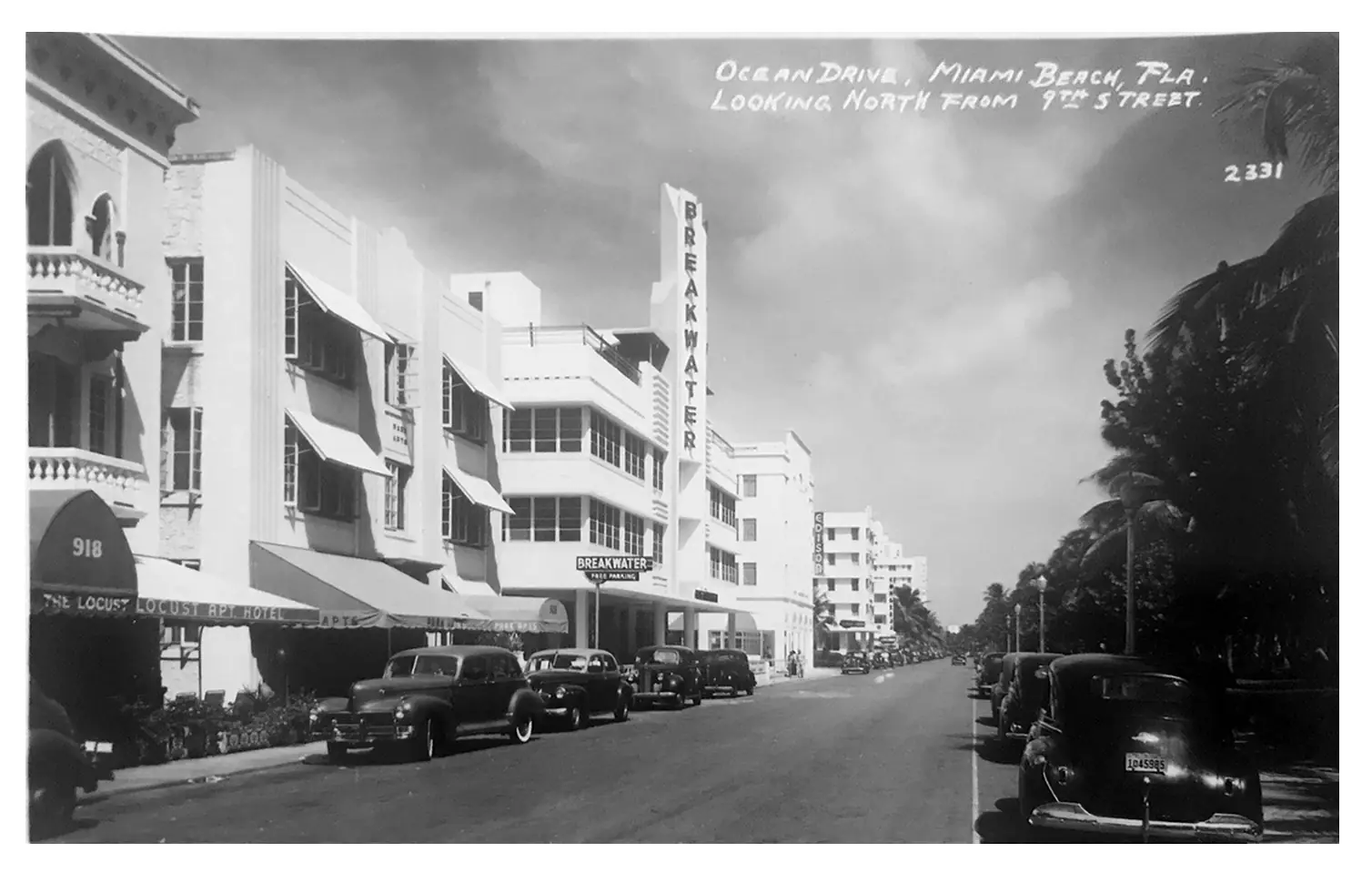
Its neighbours are 1930s deco: horizontal, flat-roofed, smooth-rendered, with the ornament pressed into the surface rather than applied to it. Casa Casuarina is 1920s-idiom Mediterranean Revival: vertical emphasis, arched and colonnaded openings, deep window reveals, cast and carved ornament standing proud of the wall, a tiled roof, and a plan organised around an internal courtyard rather than a street frontage.

The specific things to look for:

The arcade and the arched entrance. The doorway is recessed and framed, which is a Mediterranean Revival habit and the opposite of the deco practice of flush, streamlined entrances.

The ornament density. Look at how much carved and moulded detail is carrying on above the ground floor. A deco building next door will have three stripes and a parapet. This has a full vocabulary.

The courtyard plan. You cannot see it from the street, but you can infer it from the way the building presents a wall to Ocean Drive rather than a bank of windows. The good rooms face inward.

The south wing. The 1990s extension, with the pool behind it, occupies the footprint of a hotel that was demolished to build it. Look for where the older and newer masonry meet.

The steps. Shallow, wide, and directly on the public pavement, which is unusual on this street and is why the entrance reads as a private house rather than a hotel door.
1997, and how to behave at the steps

Gianni Versace was killed on the front steps of this house on the morning of 15 July 1997, returning from buying newspapers a few blocks away. The killing was the end of a cross-country series of murders and the case closed days later when the man responsible died by suicide on a houseboat moored in Miami Beach.

That is the whole of what this page will say about it as an event, and it is said because it is a real thing that happened at a real address and pretending otherwise would be silly.

What the page will add is about conduct, because the steps have become a photograph people queue for.

A man was murdered there. It is also the front door of a working hotel, with guests coming in and out, and a public pavement that other people need to walk along. Photographing the building is entirely reasonable. Posing on the steps in an approximation of what happened is not, and staff, guests and local residents see it several times a day.

The reasonable version: take the building from across the street, where you can see the whole façade anyway, and keep moving on the pavement.

There is also a wider point about Miami Beach here. The island has a long and genuinely interesting history of violence, money and reinvention — Prohibition gambling, the postwar mob hotels, the Mariel years, the 1980s cocaine economy that funded a good deal of what you are looking at. Ocean Drive sells a thin, sensational version of that. The Wolfsonian, the Jewish Museum of Florida and the preservation league's own museum sell a much better one.

Why a palazzo ended up on a deco street

The short answer is that Casa Casuarina was built at the seam between two Miami Beaches.

The 1920s boom built Mediterranean Revival: arcades, tile, courtyards, Spanish and Italian references, the style of Española Way and the big Roney-era hotels. It was the architecture of a Florida that was selling itself as a transplanted European resort.

The 1926 hurricane and then the 1929 crash ended that. What rebuilt the island through the 1930s was cheaper to construct, faster to finish and pitched at a different customer — modern, streamlined, horizontal, and looking to ocean liners and machinery rather than to Seville. That is the Art Deco the district is named for.

Casa Casuarina went up in 1930, right on the hinge, built for a private individual with old money who wanted a Renaissance palace rather than a modern hotel. Within five years the buildings going up on either side of him were answering a completely different brief.

The result is a street where you can see both arguments at once. Walk from 11th Street to 12th and you pass a palazzo, then a deco hotel, then another, and the change of mind between 1930 and 1936 is right there in the stucco.

If the contrast interests you, the two other places to see it are Española Way, three blocks west at 15th Street, which is a whole block of the older idiom, and the Wolfsonian on Washington Avenue, which is itself a 1927 building in the same tradition and holds the objects that explain why the taste changed.

Tours that visit Casa Casuarina

Operators run these trips past Casa Casuarina, or stop there as part of a longer route. We list what the booking data supports — not everything that mentions the name.

These earn us a commission through Viator. Same price for you, and the commission had no hand in the order.

Private and small-group departurespriced per boat or per vehicle, not per person

Near Casa Casuarina

Straight-line distances, so allow more on the road — the island is long and has one main parkway.

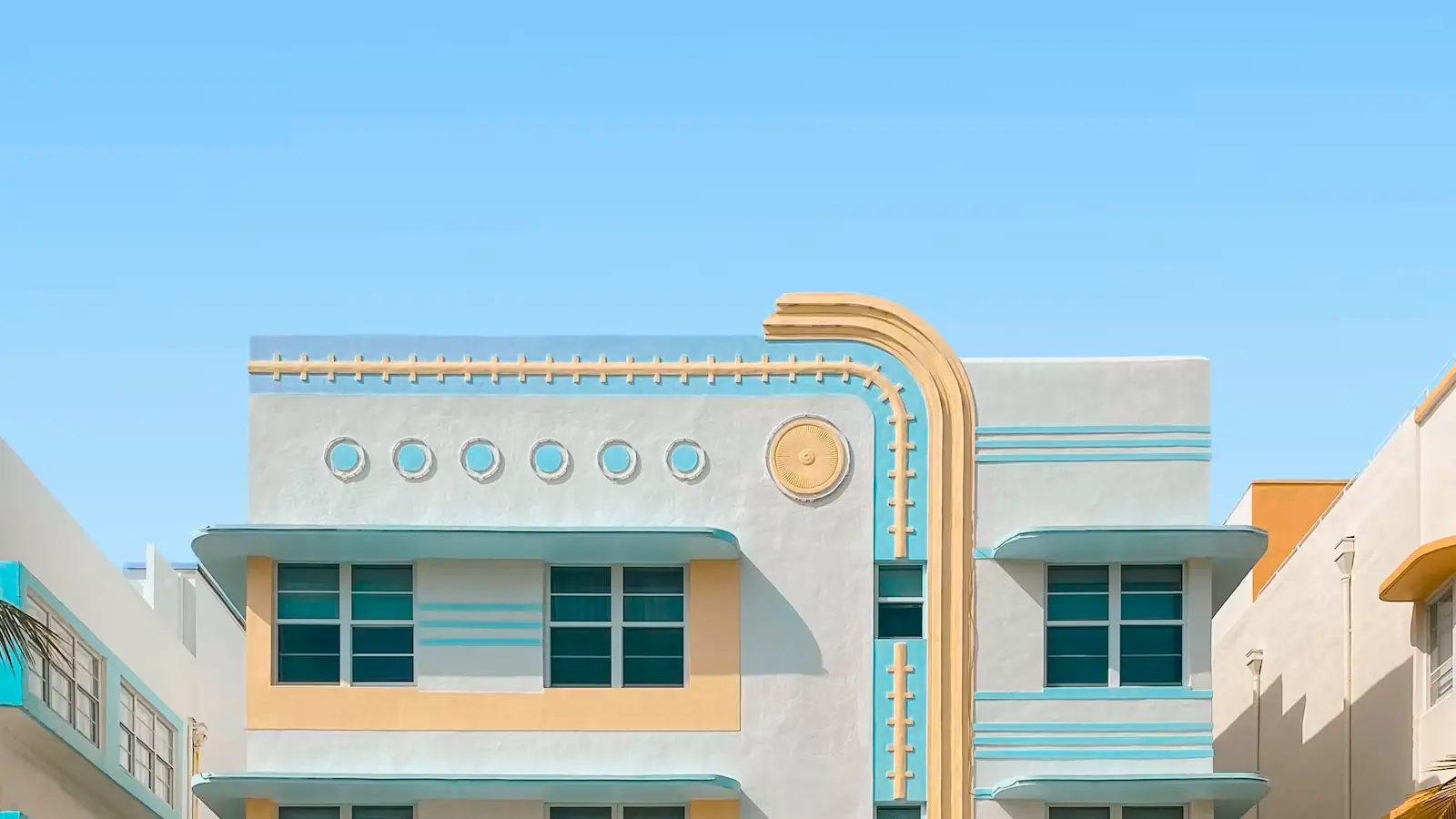
  • The peach and mint facade of a three-storey Art Deco hotel seen from below with a palm frond crossing the frame

    Neighbourhood

    Ocean Drive

    Free

    Ten blocks of deco facade on one side and open park on the other, and almost everything depends on which side you choose.

    1–2.5 hoursFree to walk. The sidewalk cafes, hotel bars and beach loungers are not.330 ft away

  • A visitor standing in a small gallery looking at framed works hung on a white wall

    Museum

    Art Deco Welcome Center

    The preservation league's own building, and the ten minutes that make the next two hours of walking make sense.

    0.5–2.5 hoursThe Welcome Center, shop and information desk are free to enter. The Art Deco Museum, guided walking tours and the self-guided audio tour are ticketed, with museum admission included in the guided tour.370 ft away

  • A wide city street with palms, shopfronts and pedestrians under strong midday sun

    Historic site

    The Carlyle

    Free

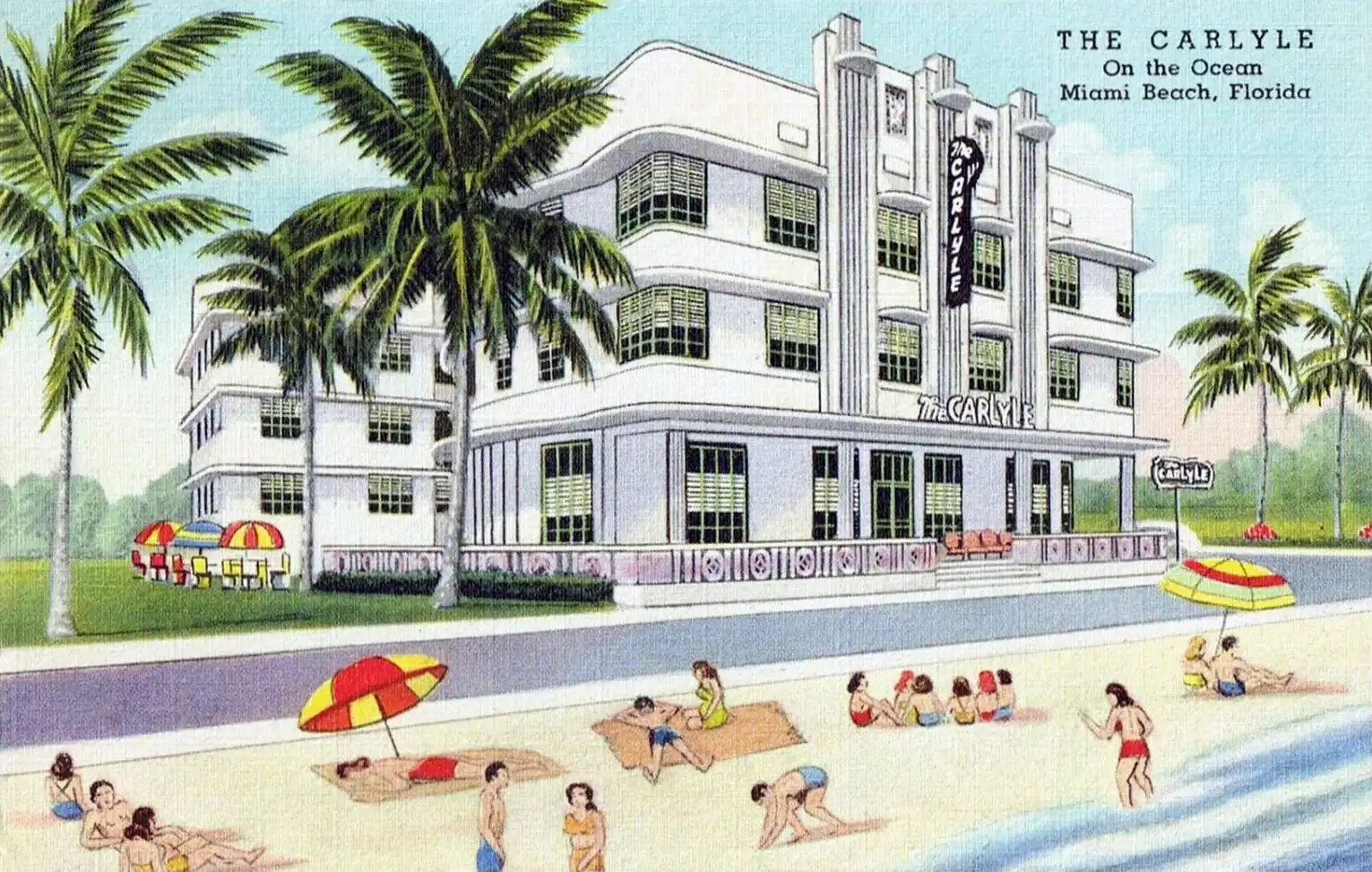
    The three-fin Streamline Moderne front that stands in for South Beach in half a dozen films, and has no lobby you can enter.

    5–20 minutesFree. It is a building you look at from the pavement.920 ft away

  • The peach and mint facade of a three-storey Art Deco hotel seen from below with a palm frond crossing the frame

    Landmark

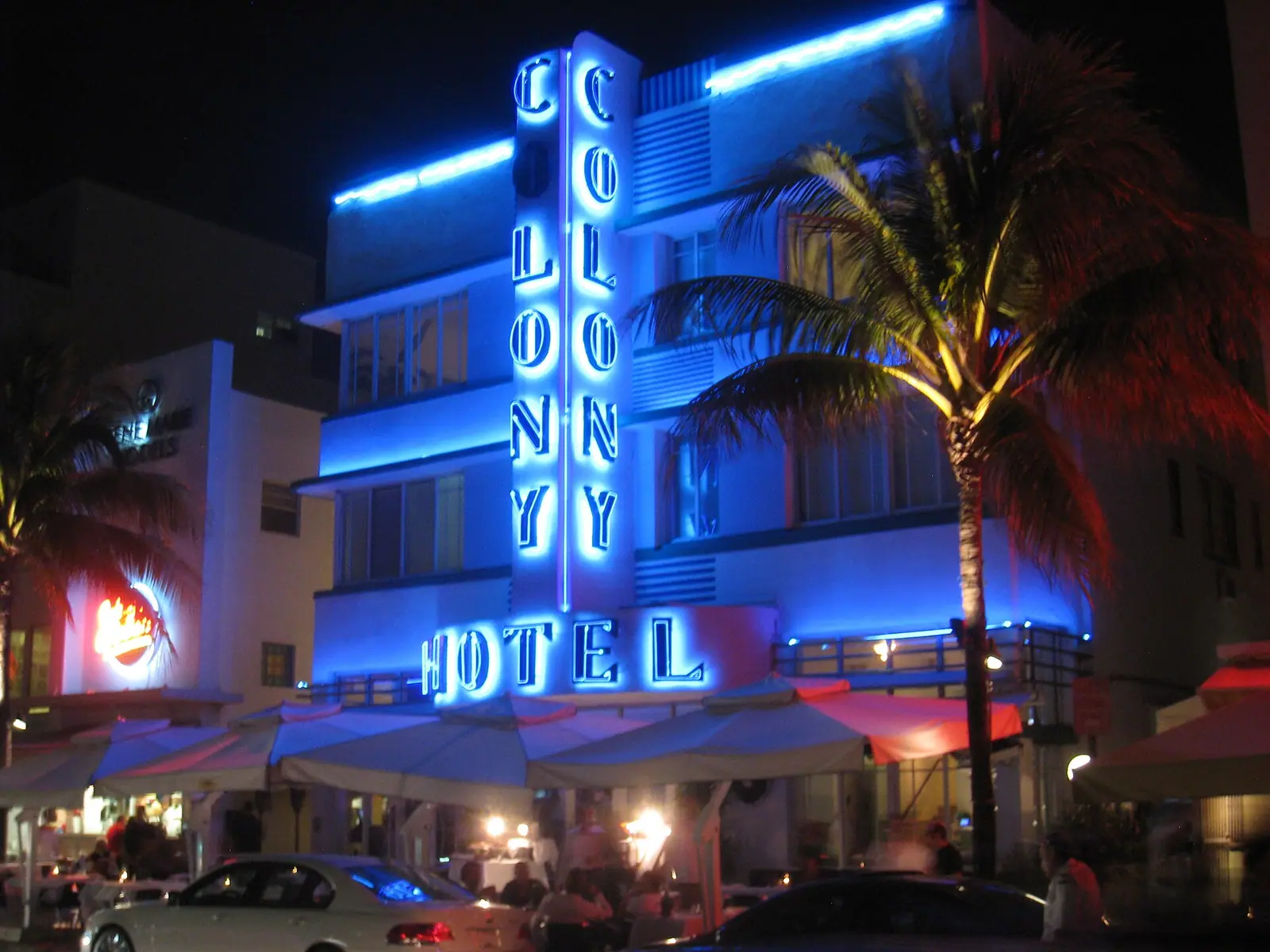
    The Colony Hotel

    Free

    A three-storey Henry Hohauser building from 1935 whose neon sign is the image most people carry of South Beach without knowing the name.

    10–45 minutesFree to look at. The terrace bar and cafe charge Ocean Drive prices, and the rooms are a hotel booking.990 ft away

Casa Casuarina: common questions

Can you go inside Casa Casuarina?

Only with a booking. The building operates as The Villa Casa Casuarina, a private hotel and restaurant, and there is no public admission, no ticket desk and no tour of the interior. A reservation at the courtyard restaurant is the reliable way for a member of the public to see the colonnade, the mosaics and the pool; staying is the other. The exterior can be photographed freely from the public pavement.

Who built Casa Casuarina and when?

Alden Freeman, an heir to a Standard Oil fortune, built it in 1930 and modelled it on the Alcazar de Colon in Santo Domingo, the early sixteenth-century house built for Christopher Columbus's son. Brick from that building is said to have been incorporated into the construction. The name comes from a casuarina tree on the site. After Freeman died in 1937 it was divided into apartments and spent fifty years as a rooming block.

Is Casa Casuarina the Versace mansion?

Yes. Gianni Versace bought the house in 1992, restored it and extended it southward with a new wing and a mosaic pool, work that involved demolishing the hotel next door and put him at odds with the preservationists who had just saved the street. He was killed on the front steps on 15 July 1997. The house was sold after his death, changed hands again, and has operated as a boutique hotel and restaurant since 2015.

Why does Casa Casuarina look different from the rest of Ocean Drive?

Because it belongs to the style the street replaced. It is Mediterranean Revival — arched and colonnaded, heavily ornamented, tile-roofed and built around an internal courtyard — which was the idiom of the 1920s Florida boom. The 1926 hurricane and the 1929 crash ended that boom, and the deco hotels that went up either side of it through the 1930s answer a completely different brief: flat, horizontal, streamlined and cheap to build.

Can you take photos at Casa Casuarina?

Of the building, yes, and the best angle is from the Lummus Park path across the road where you can see the whole facade. Please do not stage photographs on the entrance steps. It is the front door of a working hotel with guests using it, it is a public pavement other people need, and it is the spot where a man was murdered. Take the architecture and keep moving.