Skip to content
Menu

These earn us a commission through Viator. Same price for you, and the commission had no hand in the order.

Search
The peach and mint facade of a three-storey Art Deco hotel seen from below with a palm frond crossing the frame
Unknown author

Neighbourhood

Ocean Drive

Last updated

Ten blocks of deco facade on one side and open park on the other, and almost everything depends on which side you choose.

Photo: Unknown authorPublic domain

Ocean Drive is ten blocks long. That is worth saying first, because the street's reputation is wildly out of proportion to its size: 5th Street to 15th Street is about three-quarters of a mile, and an unhurried walk end to end takes twenty minutes if you never stop.

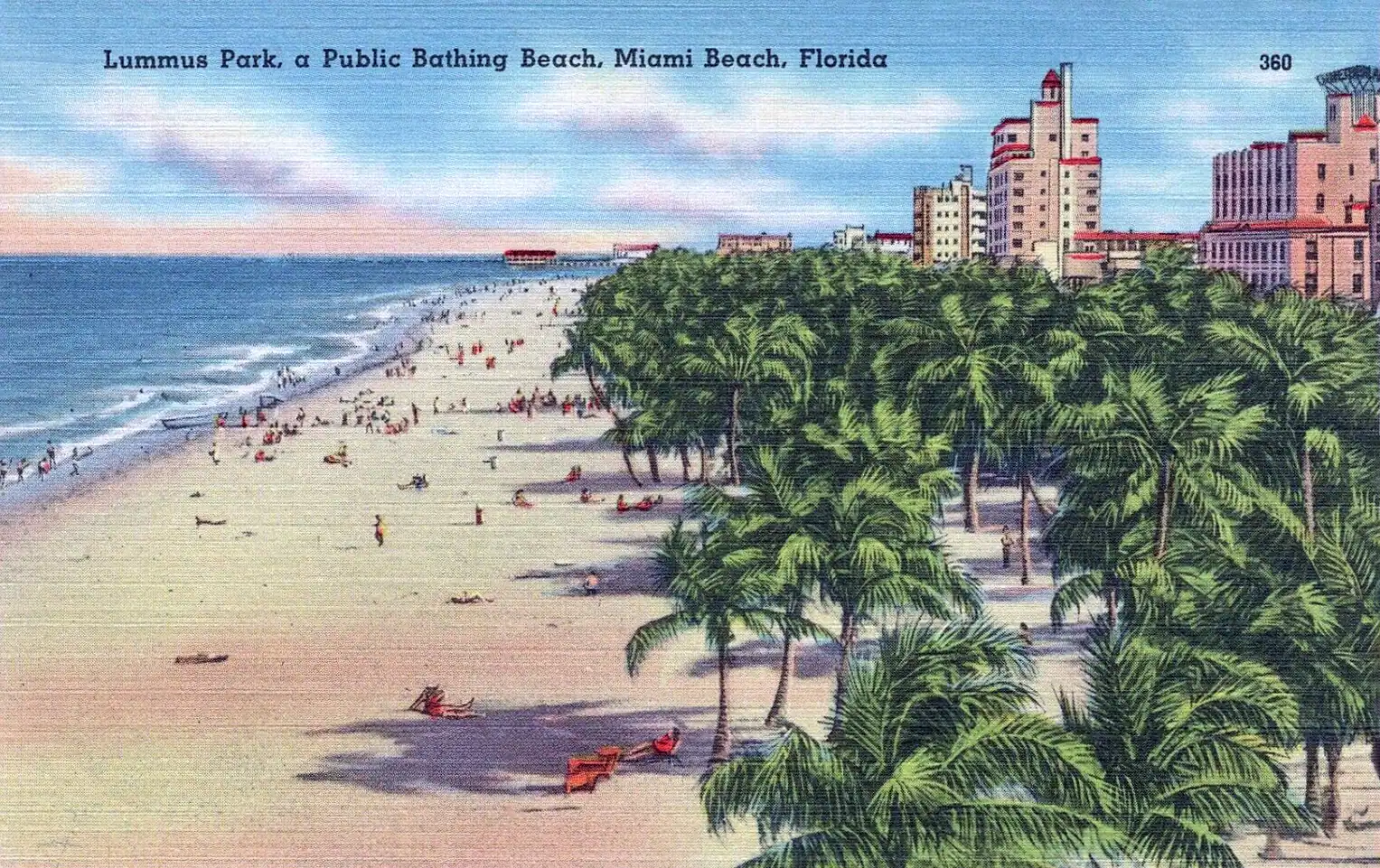
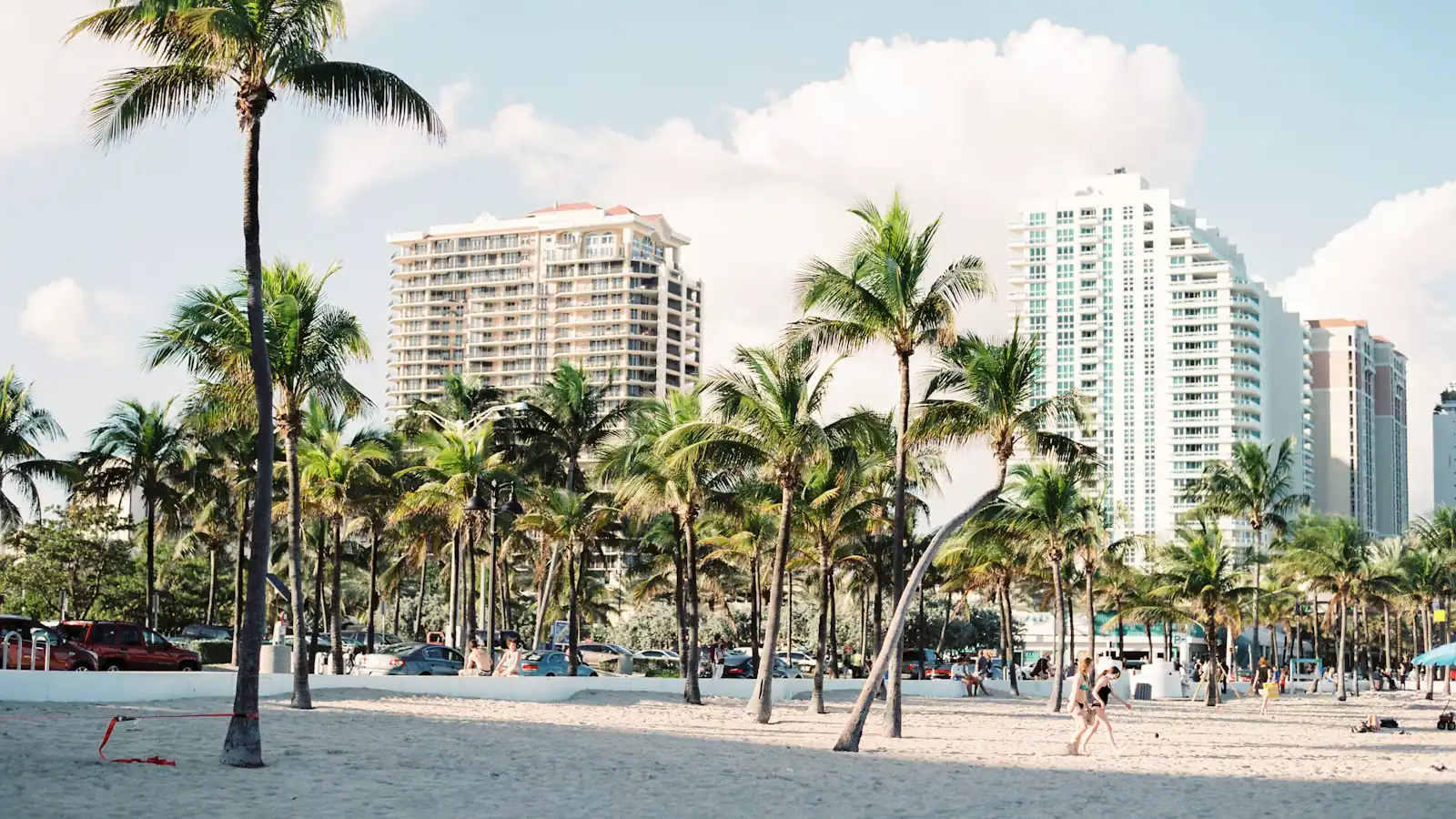
The second thing is that the two sides are effectively different streets. The west side carries the buildings — three storeys, symmetrical, pastel, hotel names in neon or cast in relief above the door — and in front of them, under the awnings, the sidewalk cafés with menu boards and hosts who will step into your path. The east side has no buildings at all. It has the sea grape and coconut palms of Lummus Park, then sand, then the Atlantic.

So: walk the east side. From the park path you can see whole façades at once, including the parapets and the lettering, which you cannot do standing underneath them. Cross to the west side when you want to go inside a specific lobby, and cross back.

The cafés deserve plain description rather than coyness. Ocean Drive has a long, documented record of bills that do not resemble the menu board: an automatic service charge, then a tip line left blank on top of it, occasionally a further "fee". Florida's disclosure law took effect on 1 July 2026 and requires service charges and automatic gratuities to be stated on the menu and the receipt, and Miami-Dade County separately requires automatic-gratuity notices to be posted in English, Spanish and Creole. Neither makes the street self-policing. Ask for the printed menu rather than the board, read the small type at the bottom, and check the total before you sign. A good rule: eat one block west on Collins or two blocks west on Washington, and come back to Ocean Drive for the walk.

Do not drive it. The street was designed in the 1920s for a village and now carries a tour bus, a rideshare queue and a slow parade of hired convertibles. At weekends it is regularly restricted or closed to traffic entirely. The view from a car window is of the car in front.

Getting there and parking

Ocean Drive is the easternmost street on the island, one block of park away from the Atlantic. The promenade stretch runs from 5th Street north to 15th Street.

Do not drive to it. There is street parking on Ocean Drive, it is metered, it is almost never free, and hunting for it in a queue of hired convertibles is the least pleasant twenty minutes South Beach offers. The four municipal garages serving the Art Deco district sit on and around Washington Avenue between 7th and 17th Streets, a three to five minute walk east to Ocean Drive, and they are consistently cheaper than the meters over a full day.

On foot is the correct arrival. From anywhere in the Art Deco district you are within ten minutes.

By bus, the South Beach Local circulator and the Miami Beach trolley both run the Washington and Collins corridors and put you a block or two away. From mainland Miami, routes crossing the MacArthur Causeway land you on 5th Street at the southern end of the drive.

By rideshare, ask to be dropped on Collins rather than Ocean Drive. Pick-ups on Ocean Drive itself are slow at any busy hour and impossible when the street is closed to traffic.

There is no rail to the beach. Metrorail and Metromover both stop on the mainland.

Which side of the street to walk on

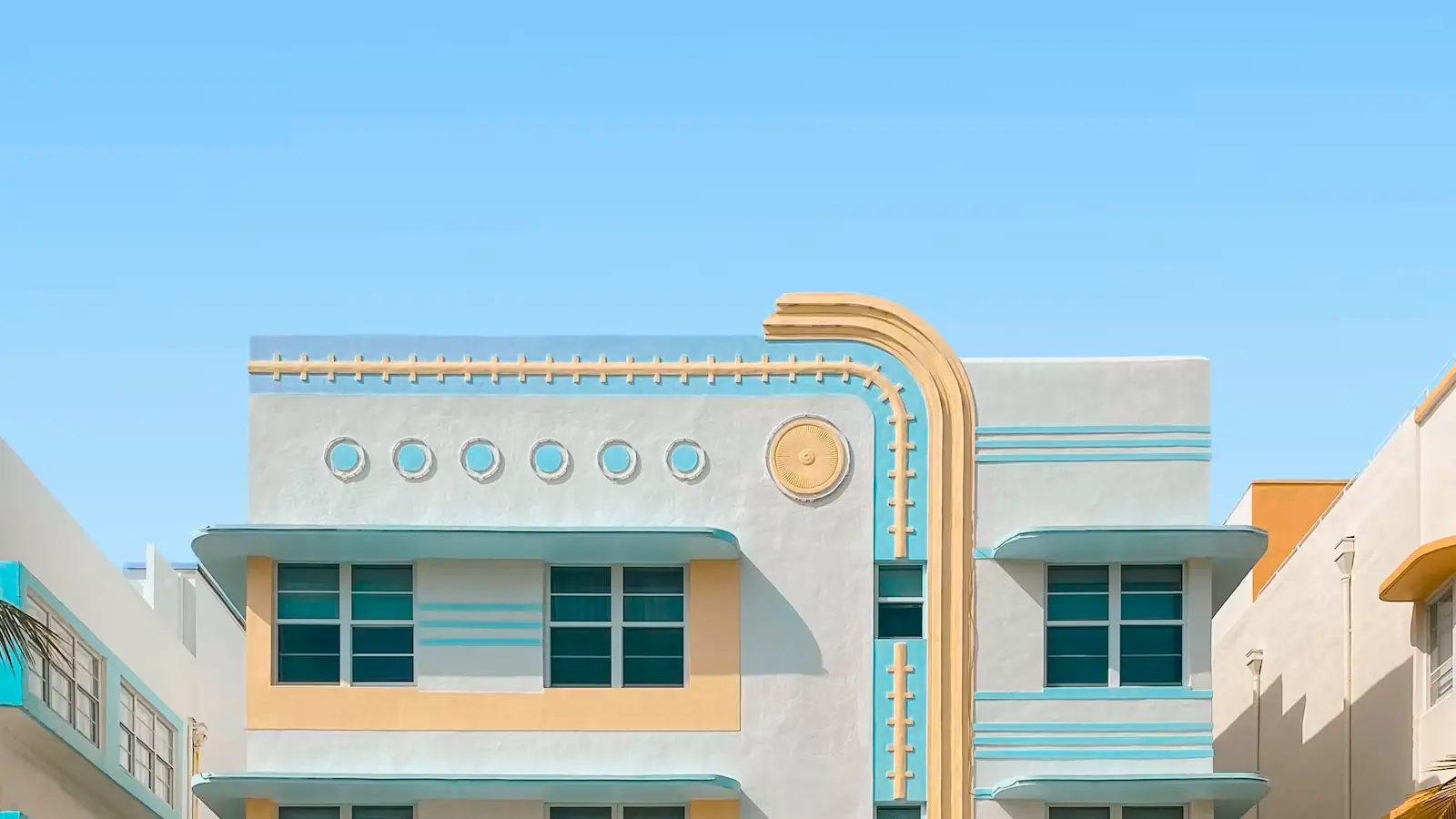
  • Photographing the architecture: east side, inside Lummus Park. The deco frontages are three storeys and the pavement in front of them is narrow, so from the west side you get a foreshortened corner and an awning. From the park path, forty feet back, you get the whole symmetrical composition — the stepped parapet, the eyebrows over the windows, the vertical name sign.
  • Morning light falls on the façades. Ocean Drive faces east. Between about 8am and 11am the sun is coming off the water straight onto the buildings, which is the only time of day they are lit rather than in shadow. By three in the afternoon the whole west side is backlit and flat.
  • Going into a lobby: west side, obviously. Several hotel lobbies are open to anyone who walks in and buys nothing. Others post a doorman. The reliable tell is whether the front doors stand open to the street.
  • Walking with children or a pushchair: east side. The park path is wide, level, shaded in patches and has no host trying to seat you.
  • After dark: whichever side has people on it. The neon is on the west side and is the point of being here at night. The park after 11pm is dark, largely empty and not where you want to be.

One more: the pavement narrows badly between roughly 8th and 11th Streets where the café seating extends furthest out. That is the stretch where walking west-side becomes a slalom.

The sidewalk cafes, and how the bill works

This is the single most common complaint visitors make about South Beach, and it is avoidable.

The pattern is consistent. A host offers a deal from a laminated board — two-for-one cocktails, a fixed-price lunch. What arrives at the end is a bill with an automatic service charge of somewhere between 15 and 20 percent already applied, a separate line that may be described as a fee, and then a blank tip line inviting a second gratuity on top of the first.

What changed recently: Florida's service-charge disclosure law took effect on 1 July 2026, requiring establishments to state automatic gratuities and operations charges on the menu, online and on the receipt. Miami-Dade County has its own older ordinance requiring automatic-gratuity notices to be posted in English, Spanish and Creole. Enforcement is complaint-driven, so the rules help you argue rather than prevent the argument.

Practical defence, in order:

  1. Ask for the printed menu, not the board. Read the bottom of the last page.
  2. Ask directly, before you order: is service included, and is there any other charge?
  3. Order drinks one round at a time. Two-for-one boards are where the largest gaps appear.
  4. Check the total against the menu before you hand over a card, and do not add a second tip on top of an included service charge unless you mean to.
  5. If it is wrong, ask for the manager on the spot. Miami Beach code compliance takes these complaints and the restaurants know it.

None of this applies to the whole street, and several Ocean Drive kitchens are perfectly honest. But the stretch between about 8th and 12th Streets is where the pressure is highest, and one block west on Collins the same lunch costs meaningfully less.

Ocean Drive hour by hour

6:30 to 9am. The best hours on the street and almost nobody's plan. Runners, dog walkers, delivery trucks reversing into service bays, café staff hosing down the pavement. The sun comes up out of the Atlantic behind you and lands directly on the buildings. This is when the street looks like the photographs.

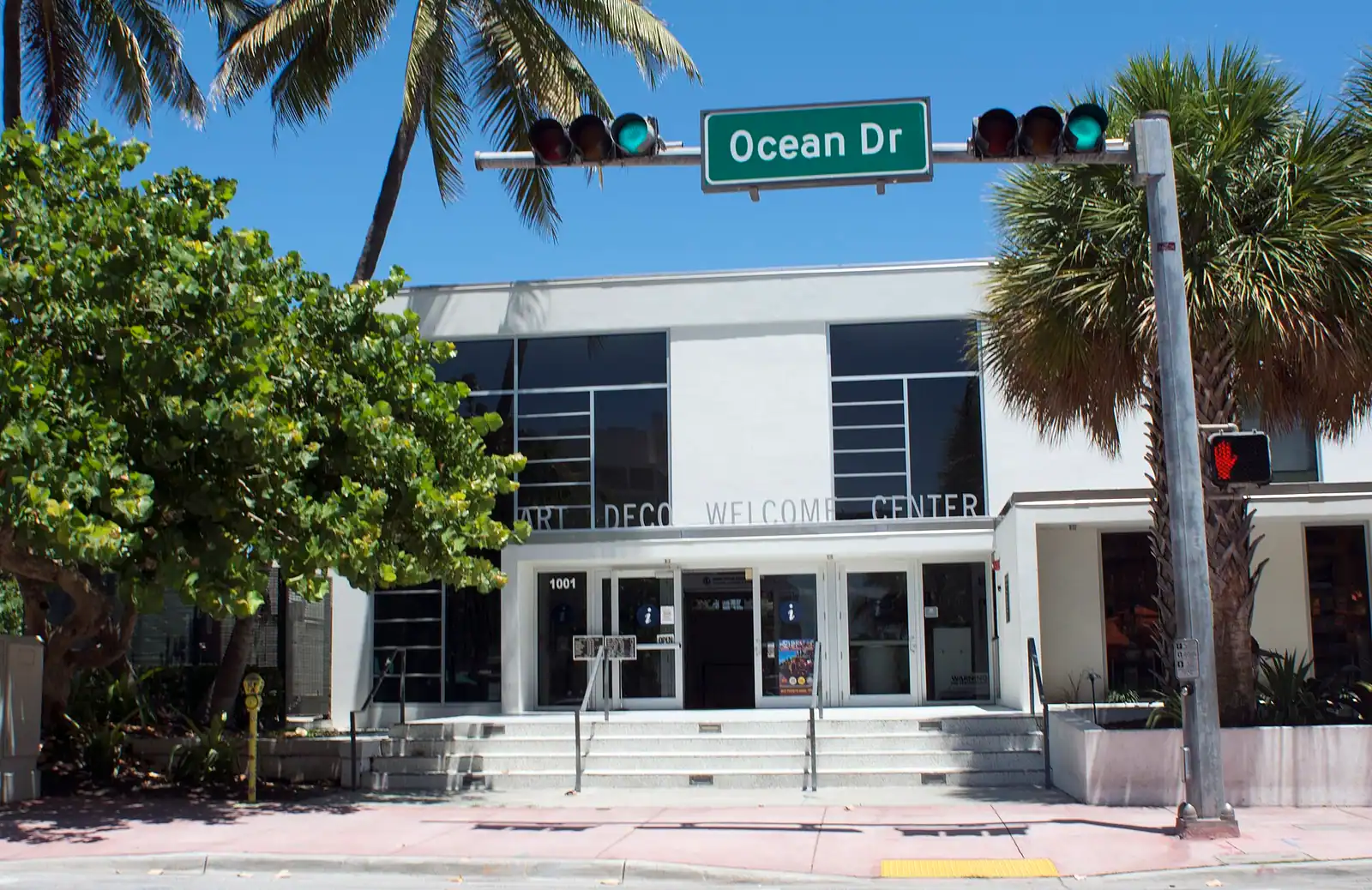
9am to noon. Still good light, the crowd building, the Art Deco Welcome Center's walking tour leaving at 10:30 from 1001 Ocean Drive. Comfortable in winter, already hard work in August.

Noon to 4pm. The worst of it. Full sun, no shade on the west pavement, façades backlit, the café pitch at maximum intensity, and the sand across the park at its most crowded. If you are here in summer this is the window to be indoors — the Wolfsonian on Washington, a lobby, a museum, anything.

5 to 8pm. The second good window. The light goes warm and sidelong, the neon comes on before it is properly dark, which is the ten minutes photographers actually want, and the street shifts from tourists to people going out.

After 10pm. A bar street, loud, and priced accordingly. Worth seeing once for the neon. The park opposite is not the place to walk at this hour.

March. Ocean Drive during spring break is a different proposition — vehicle access restricted, security checkpoints on the beach entrances, flat garage rates that ran between $40 and $100 in 2026, and enforcement that is deliberately conspicuous. Not dangerous, but not the relaxed stroll the rest of the year offers.
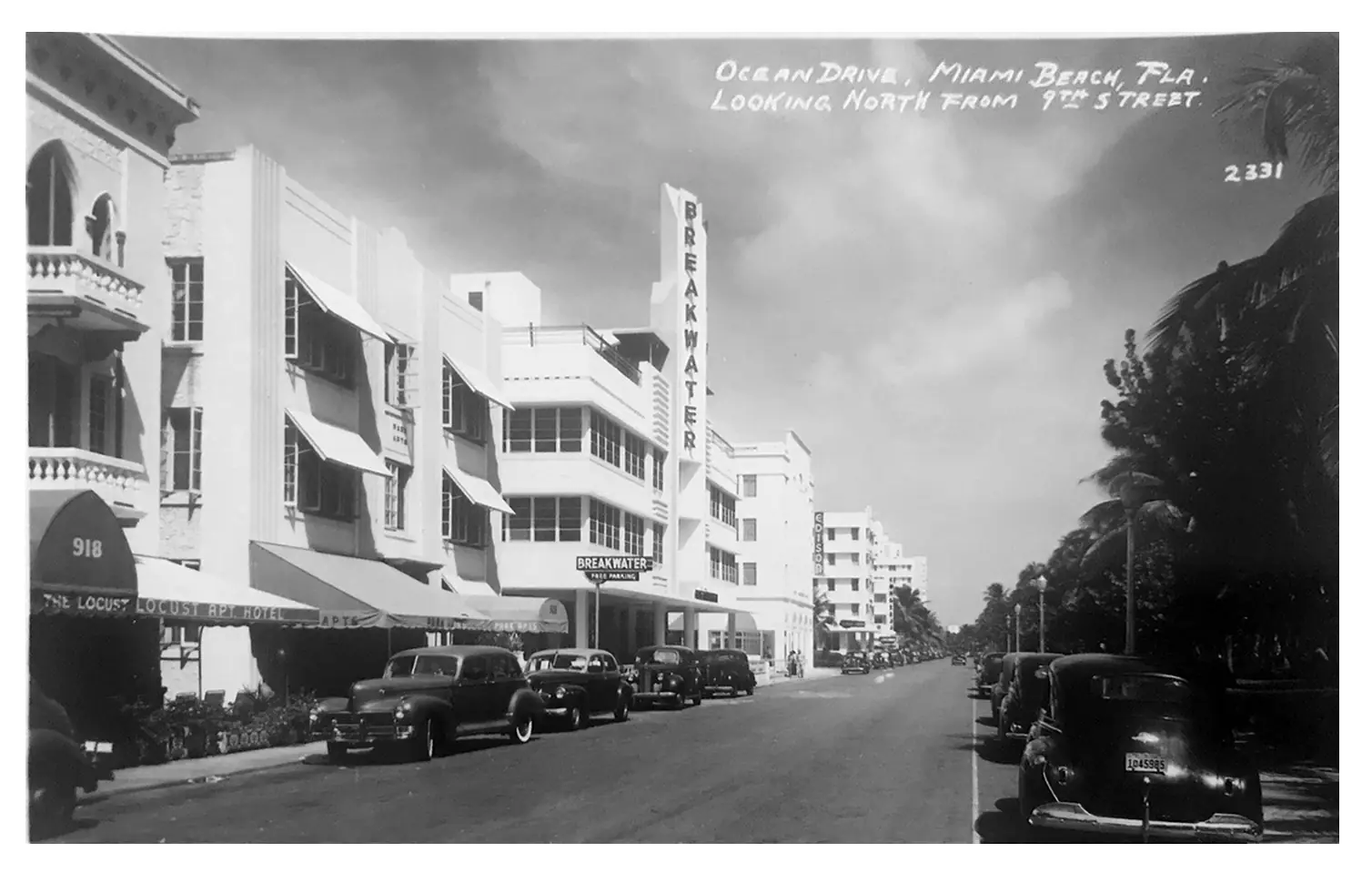
The buildings, south to north

Walking north from 5th Street, these are the ones to slow down for.

Park Central (640), a 1937 Henry Hohauser building, is one of the clearest lessons in deco symmetry on the street: central bay, flanking wings, banded eyebrows over the windows.

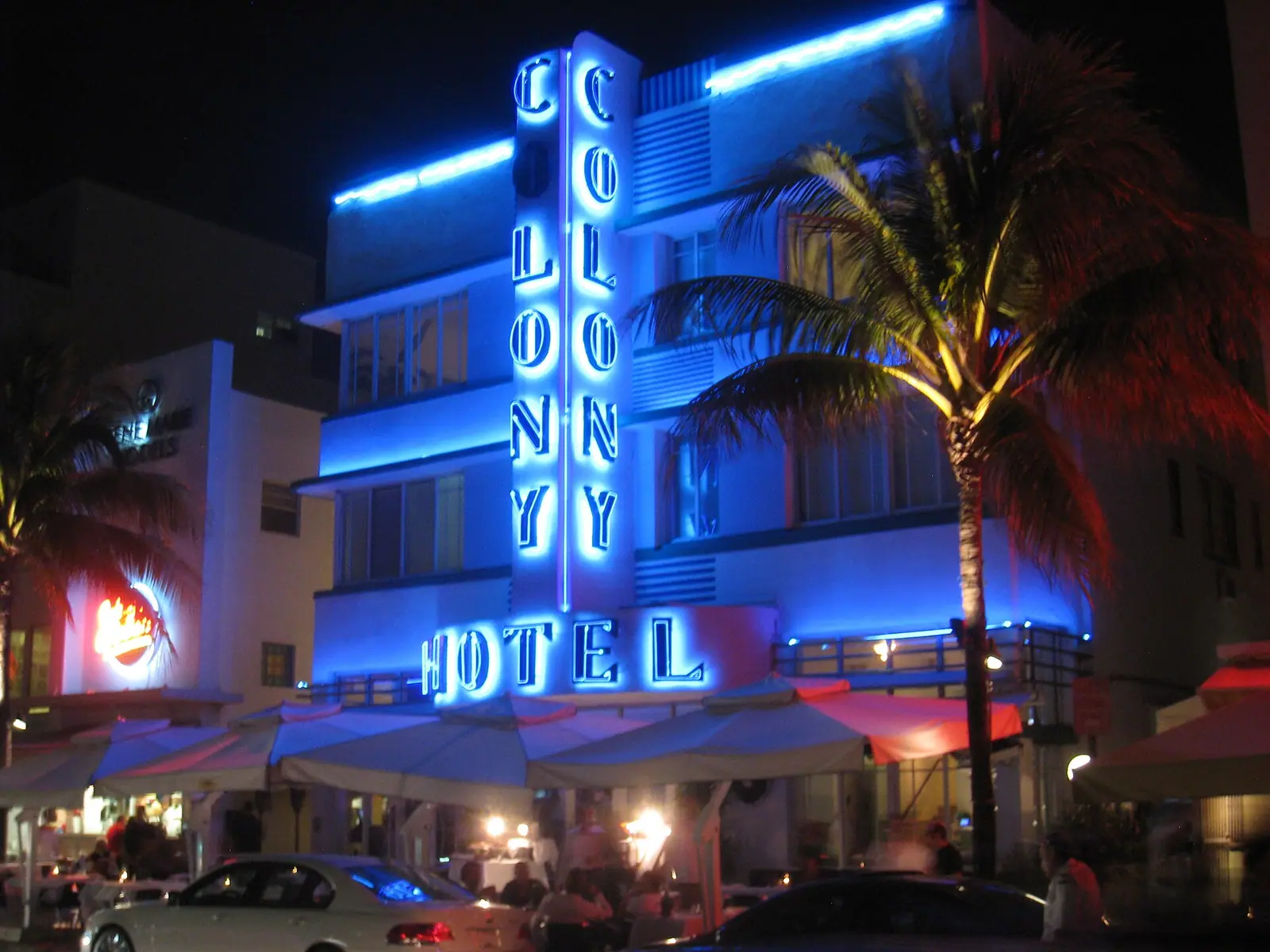
The Colony (736) is the most photographed frontage in Florida, and its blue vertical neon sign is the image most people carry of South Beach without knowing the name.

The Breakwater (940), with its stepped central tower and the name running vertically up it, is the best example on the drive of the deco habit of borrowing a skyscraper's silhouette for a three-storey building.

1001 Ocean Drive is the Art Deco Welcome Center, the Miami Design Preservation League's museum, shop and tour departure point, and the sensible first stop if you want to understand what you are looking at.

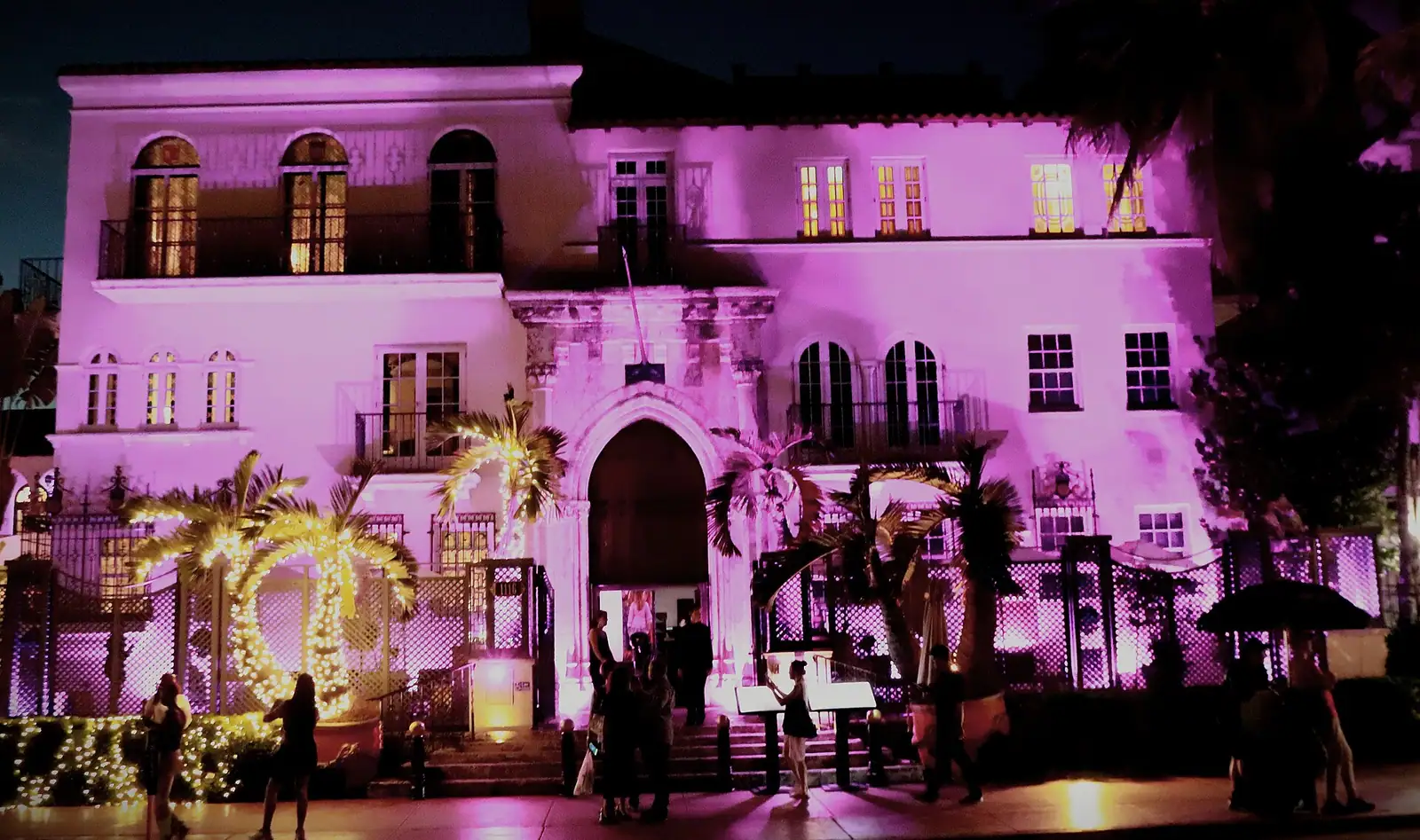
Casa Casuarina (1116) breaks the pattern entirely — Mediterranean Revival, 1930, built for Alden Freeman and later the Versace house. It is a private hotel and restaurant now.

The Tides (1220) is the tallest building on the strip at twelve storeys, an L. Murray Dixon design from 1936, and its lobby is the grandest room on Ocean Drive.

The Carlyle (1250) and the Cardozo (1300) close the sequence with the two most-filmed façades in the district.

Above 15th Street, Ocean Drive ends and Collins takes over as the coastal road.

Tours that visit Ocean Drive

Operators run these trips past Ocean Drive, or stop there as part of a longer route. We list what the booking data supports — not everything that mentions the name.

These earn us a commission through Viator. Same price for you, and the commission had no hand in the order.

Shared departurespriced per seat, best value for one or two

Private and small-group optionsoften cheaper per head for a family or a group of six

Near Ocean Drive

Straight-line distances, so allow more on the road — the island is long and has one main parkway.

  • Curving paved walkways running through low coastal planting in a landscaped seafront park

    Park

    Lummus Park

    Free

    Ten blocks of palm, path and free outdoor gym, and the decision that kept anyone from building between Ocean Drive and the Atlantic.

    0.5–3 hoursFree. The park, the outdoor gym, the volleyball courts, the restrooms and the beach access cost nothing.250 ft away

  • A visitor standing in a small gallery looking at framed works hung on a white wall

    Museum

    Art Deco Welcome Center

    The preservation league's own building, and the ten minutes that make the next two hours of walking make sense.

    0.5–2.5 hoursThe Welcome Center, shop and information desk are free to enter. The Art Deco Museum, guided walking tours and the self-guided audio tour are ticketed, with museum admission included in the guided tour.40 ft away

  • Clipped hedges and a stone basin in a formal courtyard garden with palms rising behind

    Historic site

    Casa Casuarina

    Free

    A 1930 Mediterranean Revival palazzo dropped into the middle of a deco street, and now a private hotel you can only enter by booking.

    10–30 minutesFree to look at from the street. There is no public admission to the interior; access requires a restaurant reservation or a room booking.330 ft away

  • The peach and mint facade of a three-storey Art Deco hotel seen from below with a palm frond crossing the frame

    Landmark

    The Colony Hotel

    Free

    A three-storey Henry Hohauser building from 1935 whose neon sign is the image most people carry of South Beach without knowing the name.

    10–45 minutesFree to look at. The terrace bar and cafe charge Ocean Drive prices, and the rooms are a hotel booking.660 ft away

Ocean Drive: common questions

How long is Ocean Drive and how long does it take to walk?

The promenade stretch runs from 5th Street to 15th Street, about three-quarters of a mile, and takes roughly twenty minutes to walk end to end without stopping. Most people take an hour, because the point is stopping. South of 5th Street the same road continues into the quieter residential blocks of South of Fifth, and north of 15th it gives way to Collins Avenue as the coastal road.

Is Ocean Drive a tourist trap?

The street is genuinely one of the best-preserved blocks of 1930s architecture in the world. The sidewalk cafes along it have a long record of bills that do not match the menu board, usually through an automatic service charge plus a second blank tip line. Both things are true at once. Walk it, photograph it, go into the lobbies, and eat one or two blocks west on Collins or Washington where the same meal costs less and the bill is simpler.

What is the best time of day to see Ocean Drive?

Early morning. Ocean Drive faces east, so between about 8am and 11am the sun comes off the Atlantic directly onto the hotel facades, which is when the pastel colours and the banded eyebrow windows actually read. The street is also close to empty. For the neon, come back between 6pm and 8pm, when the signs are lit but the sky has not gone fully black.

Should you drive down Ocean Drive?

No. The street is slow, metered end to end, frequently restricted to traffic at weekends and closed outright on some spring-break dates, and the view from a car is of the vehicle in front. Park in one of the municipal garages around Washington Avenue between 7th and 17th Streets and walk the three blocks east. It is cheaper, faster and the only way to actually see the buildings.

Is Ocean Drive in Miami or Miami Beach?

Miami Beach. Ocean Drive is in the South Beach neighbourhood of the City of Miami Beach, a separate municipality on a barrier island with its own police department, parking authority and ordinances. The City of Miami is on the mainland across Biscayne Bay, roughly fifteen minutes away over the MacArthur Causeway without traffic. The skyline visible from the island is the other city.