Skip to content
Menu

These earn us a commission through Viator. Same price for you, and the commission had no hand in the order.

Search
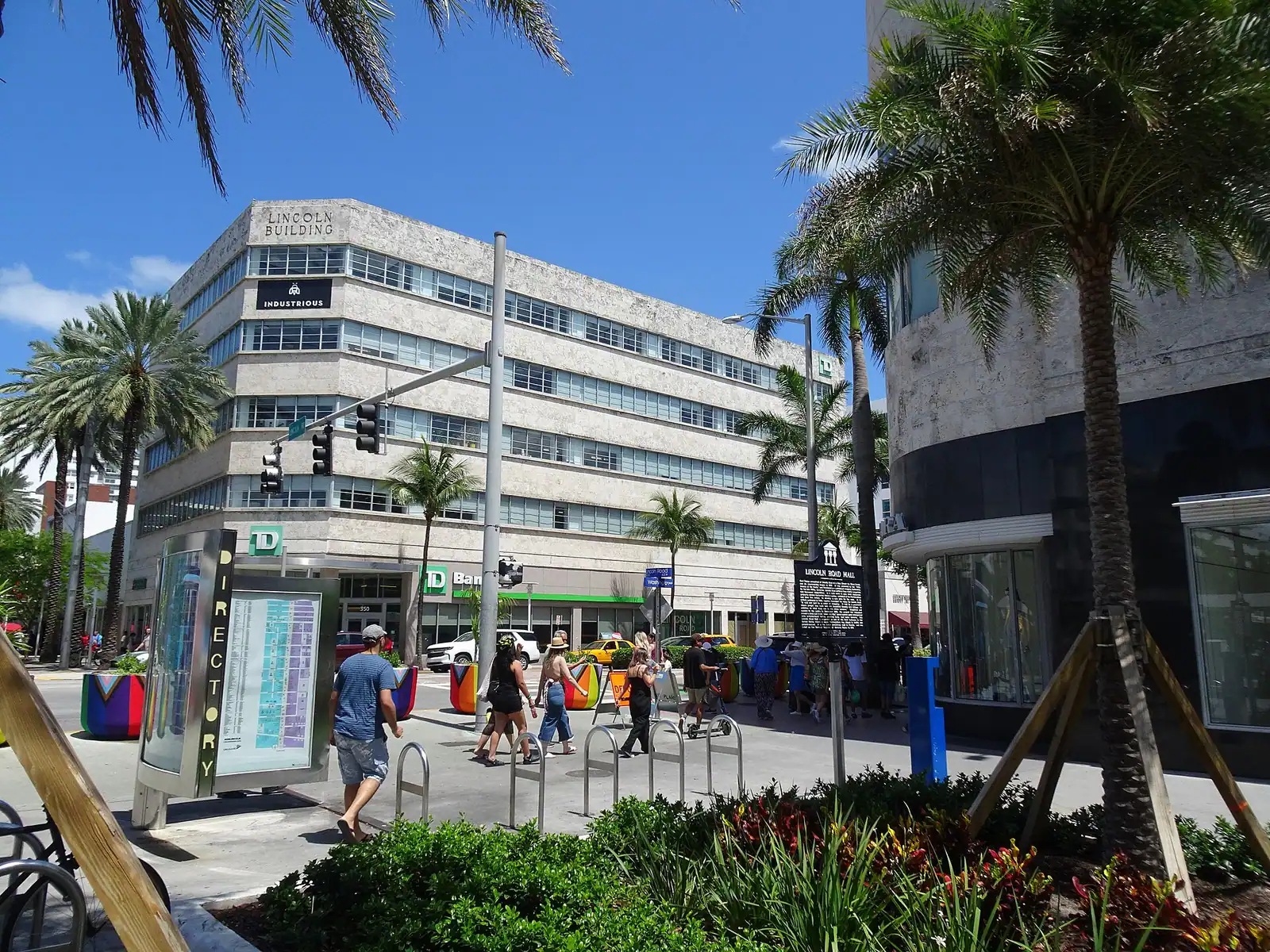
A wide pedestrian shopping street lined with palms and terraces under strong midday sun
Phillip Pessar

Shopping

Lincoln Road Mall

Last updated

A Morris Lapidus landscape from 1960 that has become a chain high street, with three blocks at the western end that have not.

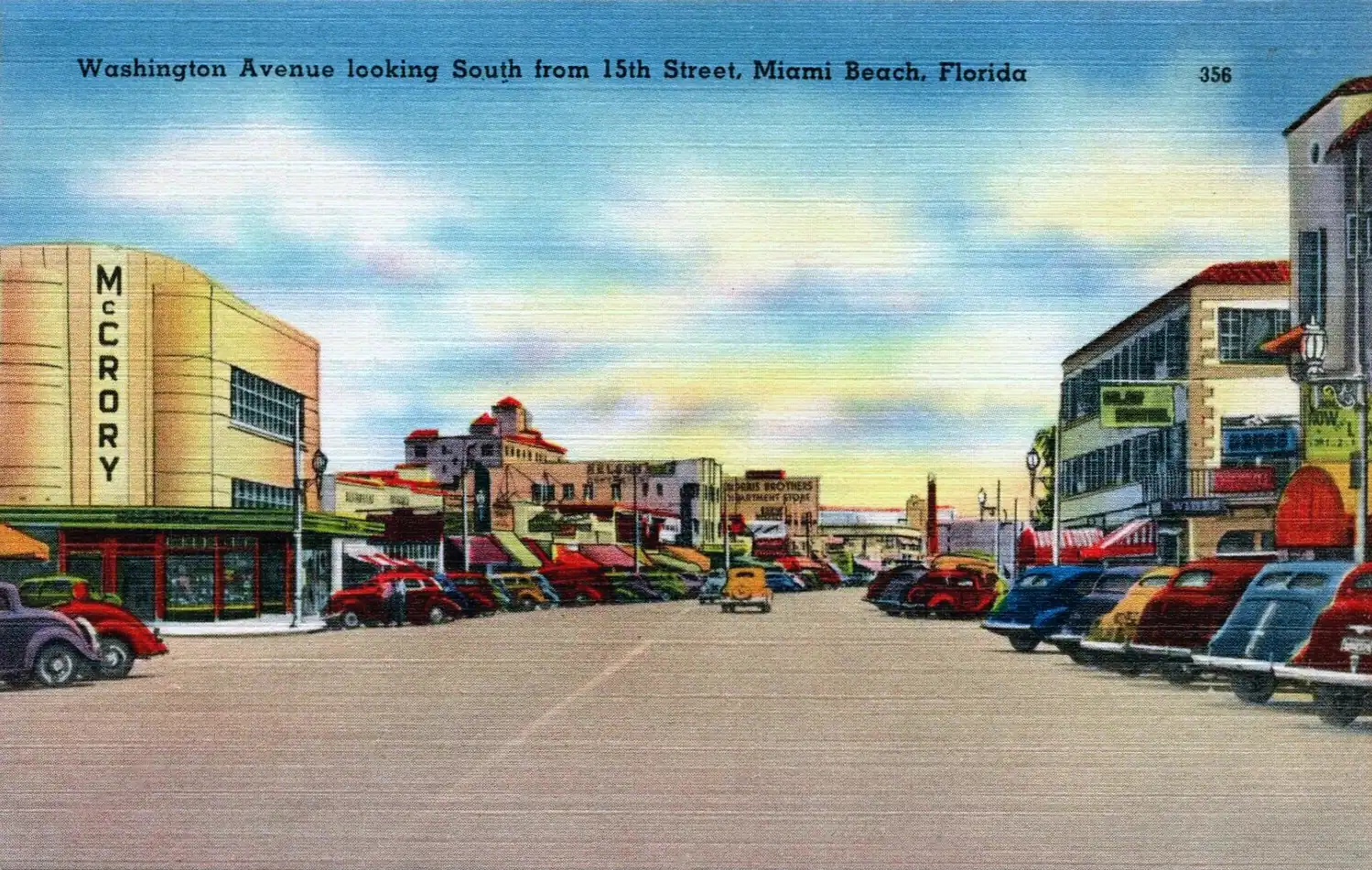
Lincoln Road was cut through mangrove by Carl Fisher in 1912, running the full width of the island from ocean to bay, and it spent the next forty years as Miami Beach's main shopping street. By the 1950s it was selling itself as the Fifth Avenue of the South. Then in 1960 the city did something unusual: it closed six blocks to cars and hired Morris Lapidus — the architect of the Fontainebleau, the most theatrical hotel designer in America — to turn a street into a landscape.

What Lapidus built opened on 28 November 1960 and is still largely what you walk on. Bold geometric paving that reads as pattern from above. Free-standing concrete shade structures on slender supports, with the curves and cutouts he used everywhere. Fountains, pools, planted beds and clusters of trees arranged to break a long straight road into a sequence of rooms. It was among the first outdoor pedestrian malls in the country, a year behind Kalamazoo, and it billed itself without embarrassment as the most magnificent mall in the Americas.

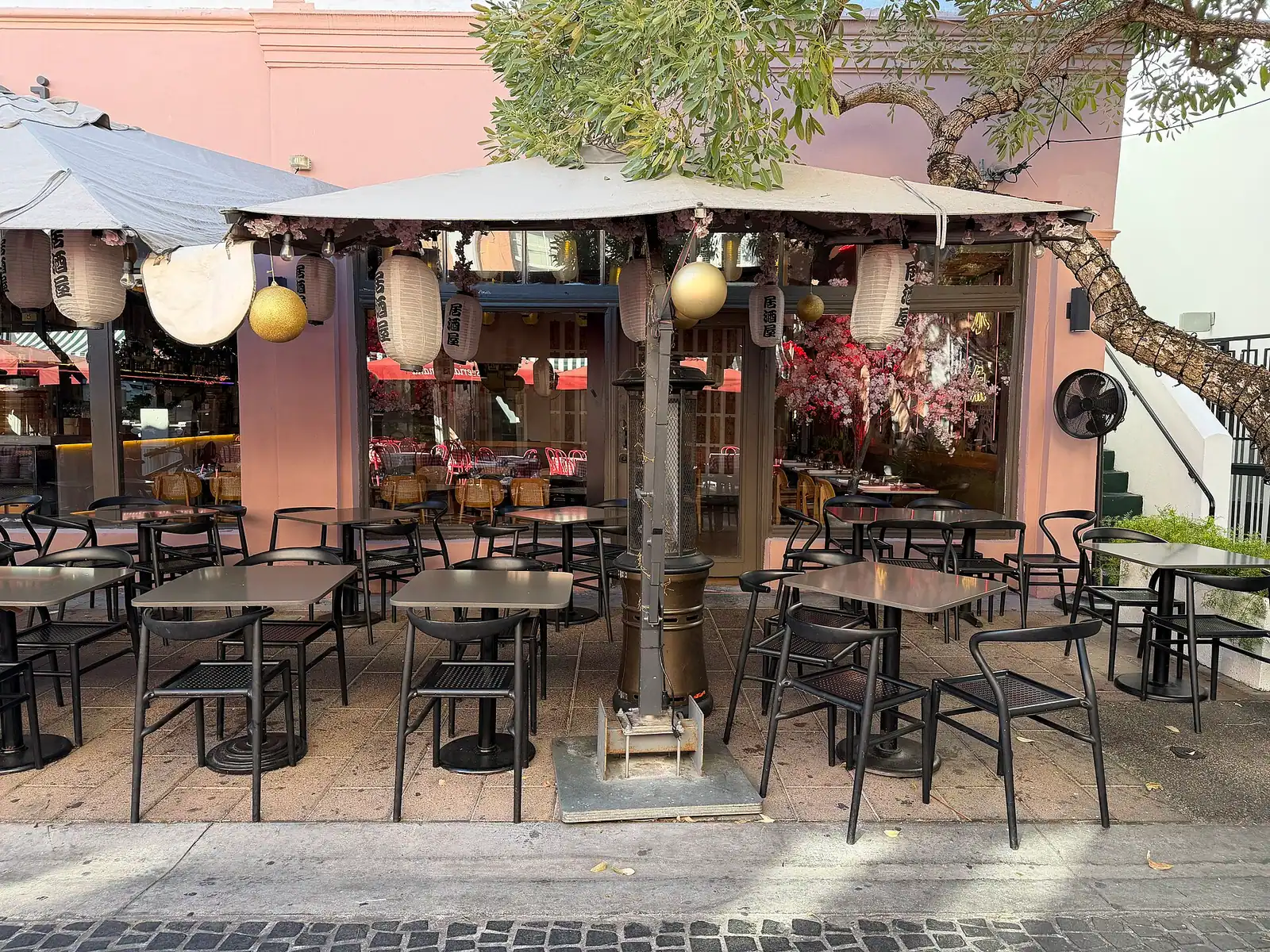
The honest assessment now is split. As a piece of landscape design it has aged extremely well — the shade structures still work, the planting still breaks the sightlines, and it is a genuinely pleasant place to sit down. As a shopping street it has been flattened by its own success. Rents rose, independents left, and the eastern blocks between Washington and Meridian are now the same international chains you would find on a high street anywhere, fronted by restaurant terraces with the same hosts and the same laminated boards as Ocean Drive.

So the instruction is simple and it is the opposite of what most visitors do. Walk west. The further you get from Washington Avenue, the more of the road's actual character survives: the 1935 Colony Theatre at 1040, the 1921 church at Drexel, the long-standing bookshop, the surviving independents, and at the Alton Road end the 1111 Lincoln Road car park by Herzog & de Meuron, which is an open concrete frame you can walk up and one of the best free views in South Beach.

Getting there and parking

Lincoln Road crosses the island two long blocks back from the sand, at what would be 16th and a half Street. The pedestrian section runs west from Washington Avenue to Alton Road.

On foot from Ocean Drive, go north to 16th or 17th Street and turn west. From 10th Street it is about fifteen minutes.

Parking. The 1111 Lincoln Road garage at the Alton Road end is the architectural one and puts you at the good end of the road. The 17th Street garage behind the convention centre is larger and usually cheaper. Cross-street meters fill by mid-morning at weekends.

By trolley and bus. The free Miami Beach trolley serves the Lincoln Road area, and the South Beach Local circulator runs the Washington and Collins corridors a block or two east.

From mainland Miami, the Julia Tuttle Causeway lands closer to Lincoln Road than the MacArthur does, joining Alton Road from the north. Coming across the MacArthur, you arrive at 5th Street and drive north.

Do not cycle or scooter along the mall. Bikes are not permitted on the pedestrian section; walk them across or use the parallel streets.

Block by block, east to west

The 300 and 400 blocks (Washington to Euclid). The busiest and the least distinctive. Restaurant terraces on both sides, aggressive hosting, chain retail behind. Walk through it.

The 500 block. The former Lincoln Theatre at 541, a 1936 building that was for years the home of the New World Symphony before it moved into its new hall around the corner. Worth a look up at the façade even though the ground floor has changed hands repeatedly.

The 600 and 700 blocks. The mall widens, the Lapidus shade structures and planting are at their best, and the seating is genuinely comfortable. This is where to sit.

The 900 block. The long-established independent bookshop with a café terrace, which has been the road's living room for decades and is still the best place on Lincoln Road to spend an hour.

The 1000 block. The Colony Theatre at 1040, a 1935 cinema restored as a performing arts venue. Note the name: this is not the Colony Hotel on Ocean Drive, which is a different building seven blocks away, and confusing them is one of the more common South Beach mix-ups.

Drexel Avenue. The Miami Beach Community Church, a 1921 Mediterranean Revival building that predates the mall by forty years and the deco district by a decade.

The 1100 block and Alton Road. 1111 Lincoln Road, the Herzog & de Meuron parking structure that opened in 2010: an open frame of concrete slabs at varying heights with no cladding at all, containing shops, restaurants and a great deal of parked car. You can walk or drive up it. The top deck is free, open to the sky and gives a clean view across the island to the bay.

When to go, and the one morning that is different

Weekday mornings are when the road is a public space rather than a retail one: coffee, dog walkers, people reading under the shade structures, and the terraces not yet set.

Sunday morning is the exception worth planning around. A farmers and growers market has run on the road for years, with produce, plants, prepared food and a genuinely local crowd, and it changes the character of the eastern blocks completely for a few hours.

Midday, any day, in summer. This is the one place in South Beach where the shade is architectural and reliable. Lapidus put the structures where he put them for a reason. If the beach has beaten you, Lincoln Road is where to come down.

Evenings are busy, loud and the terraces are full. Good for a drink, poor for looking at anything.

Thursday to Sunday in season the street performers are out along the eastern blocks — the crowd-drawing kind that need a ring of onlookers, which slows the whole road.

One timing note that catches people: Lincoln Road runs east-west, so it gets sun down its length morning and evening and shade across it at midday. That is the inverse of Ocean Drive, which is lit in the morning and backlit by afternoon. The two are twenty minutes apart on foot and want opposite halves of the day.
What happened to the independents

This is the part of Lincoln Road's story that visitors usually miss, and it explains what they are looking at.

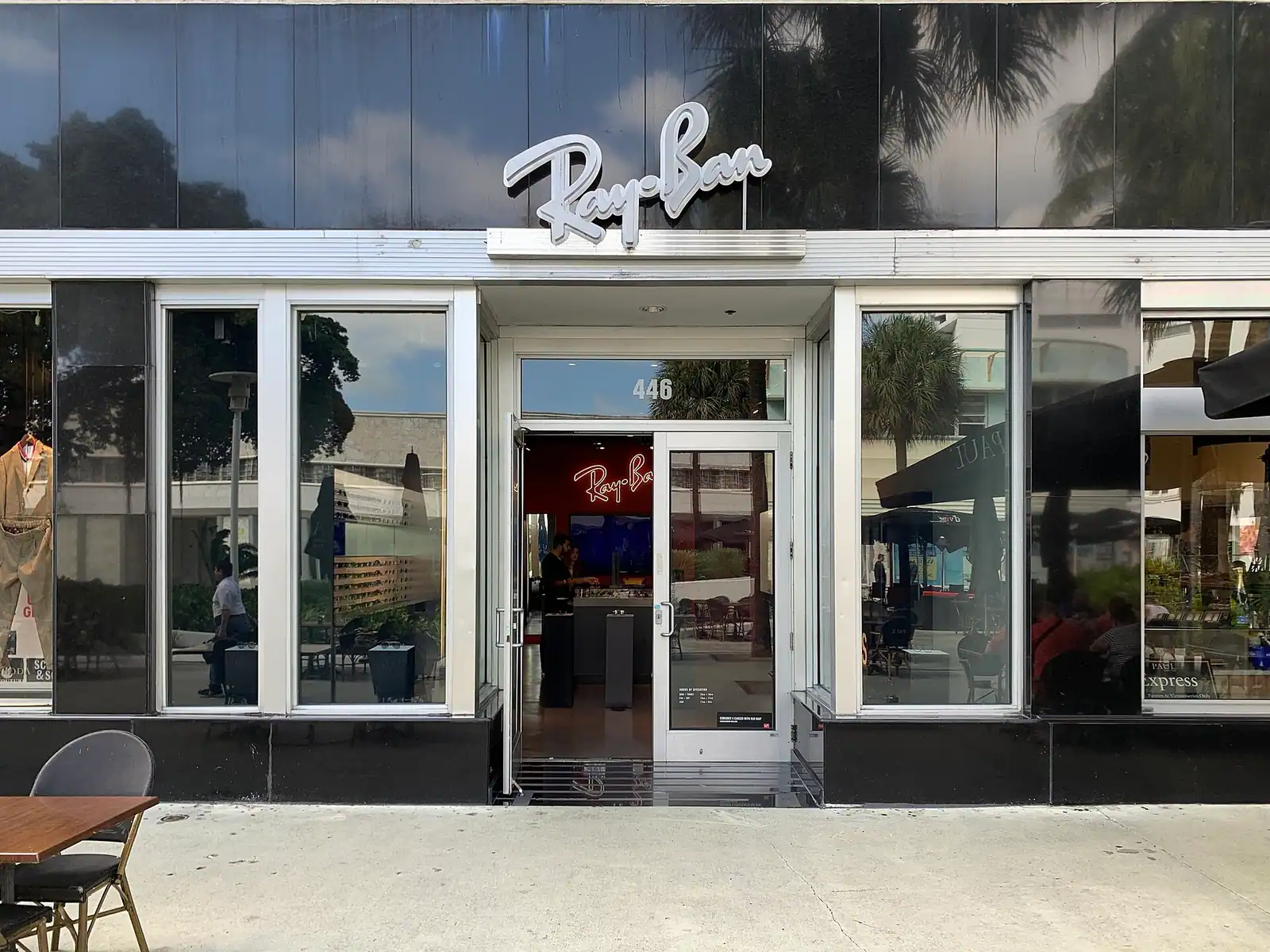
Through the 1980s and early 1990s the road was cheap. The mall had declined along with the rest of South Beach, rents were low, and artists took the empty storefronts — most notably a non-profit that ran subsidised studios on the road for decades, putting working artists behind plate glass in the middle of a shopping street. Galleries followed. That period is the reason Lincoln Road acquired a reputation as an arts district at all.

Then the neighbourhood recovered, spectacularly, and the recovery priced out the thing that caused it. Ground-floor rents on the eastern blocks rose to levels only international retail and high-volume restaurants can sustain. The subsidised studios were sold and relocated. Galleries went to Wynwood on the mainland, where the same cycle then repeated on a shorter timescale.

What is left is a Lapidus landscape with chain tenants in it, which is not nothing — the landscape is the listed, protected, interesting part, and it is free. But it does mean the road no longer does what people remember it doing.

The counter-argument, and it is a fair one: the western blocks past Lenox still hold independents, the Colony Theatre still programmes, the bookshop is still there, and 1111 Lincoln Road is a better piece of architecture than anything built on the eastern end in fifty years. Walk west and Lincoln Road is still worth an hour.

Getting there and parking

  • From Ocean Drive, walk north to 16th or 17th Street and west. It is about fifteen minutes from 10th Street and there is no faster way.
  • Lincoln Road is not on the beach. It runs across the island at 16th and a half Street, two long blocks back from the sand, which surprises people who have pictured it oceanfront.
  • Parking. The 1111 Lincoln Road garage at the Alton Road end is the obvious one and the only car park in South Beach worth visiting on its own account. The 17th Street garage behind the convention centre is larger and usually cheaper. Meters on the cross streets fill by mid-morning at weekends.
  • The eastern end connects to Soundscape Park and the New World Center at 17th and Washington, where large-scale films and concerts are projected onto the hall's exterior wall on scheduled evenings. Free, outdoors, bring a blanket.
  • The western end connects to Sunset Harbour, a low-key neighbourhood of restaurants and coffee shops around Purdy Avenue that locals use and most visitors never reach.
  • Bikes and scooters are not permitted on the mall itself. Walk them across.
  • Restrooms are in the businesses rather than public, with the exception of the garages.

Tours that visit Lincoln Road

Operators run these trips past Lincoln Road, or stop there as part of a longer route. We list what the booking data supports — not everything that mentions the name.

These earn us a commission through Viator. Same price for you, and the commission had no hand in the order.

Shared departurespriced per seat, best value for one or two

Private and small-group optionsoften cheaper per head for a family or a group of six

Near Lincoln Road

Straight-line distances, so allow more on the road — the island is long and has one main parkway.

  • A narrow low-rise street with pale stucco buildings and palms under bright midday sun

    Historic site

    Española Way

    Free

    A single block of 1925 Mediterranean Revival, built as an artists' colony and now the prettiest two hundred yards on the island.

    0.5–1.5 hoursFree to walk. The restaurants and bars along it are not.0.4 mi away

  • A visitor standing in a gallery looking at framed works hung on a white wall

    Neighbourhood

    Washington Avenue

    Free

    Two blocks back from the ocean and about a third of the price, with the district's best museum and all four cheap garages on it.

    1–3 hoursThe street is free, as is the post office lobby. The Wolfsonian and the Jewish Museum of Florida charge admission.0.6 mi away

  • A darkened auditorium with tilted seating and projected imagery filling the ceiling above

    Entertainment

    New World Center

    Frank Gehry's hall for an orchestral academy, with a 7,000-square-foot wall that plays the concert to the park for free.

    1–2.5 hoursTicketed for concerts inside, with many performances published starting at around $25. WALLCAST concerts projected onto the east wall and watched from SoundScape Park are free and need no ticket.0.3 mi away

  • Curving paved walkways through low planting in a landscaped urban park

    Park

    SoundScape Park

    Free

    Two and a half acres of Dutch-designed lawn and shade whose best feature is the building next door playing concerts onto its wall for free.

    0.5–2.5 hoursFree, including the WALLCAST concert simulcasts and outdoor film screenings.0.3 mi away

Lincoln Road: common questions

Is Lincoln Road worth visiting?

For the landscape, yes; for the shopping, only at the western end. Morris Lapidus designed the pedestrian mall that opened in 1960 and his shade structures, paving and planting are still there and still work. The eastern blocks between Washington and Meridian are now international chains and restaurant terraces. Walk west past Lenox, where the 1935 Colony Theatre, the long-standing bookshop and the surviving independents are, and finish at 1111 Lincoln Road.

Is Lincoln Road on the beach?

No, and this catches people out. Lincoln Road runs across the island at what would be 16th and a half Street, two long blocks back from the sand. Its eastern end is at Washington Avenue near the New World Center and Soundscape Park; its western end is at Alton Road on the bay side. To reach the beach from the mall, walk east on 16th or 17th Street for about ten minutes.

What is 1111 Lincoln Road?

A car park that is also a building worth going to see. Designed by Herzog and de Meuron and opened in 2010, it is an open frame of concrete slabs at deliberately varying heights with no exterior cladding at all, containing shops, restaurants, event space and parked cars in the same structure. You can drive or walk up it. The top deck is free and gives a clean, uncluttered view west across the island to Biscayne Bay.

Is the Colony Theatre the same as the Colony Hotel?

No, and it is a common mix-up. The Colony Theatre is a 1935 cinema at 1040 Lincoln Road, restored and now used as a performing arts venue. The Colony Hotel is a 1935 Henry Hohauser building at 736 Ocean Drive, seven blocks away, and it is the one with the vertical blue neon sign that appears on most South Beach postcards. Same name, same year, different buildings, different streets.

When is the Lincoln Road market?

A growers and farmers market has run on Lincoln Road on Sunday mornings for years, with produce, plants, prepared food and a crowd that is noticeably more local than the rest of the week. It occupies the eastern blocks and changes their character completely for a few hours. Schedules and stall lists do change, so check before you build a Sunday morning around it.