Skip to content
Menu

These earn us a commission through Viator. Same price for you, and the commission had no hand in the order.

Search
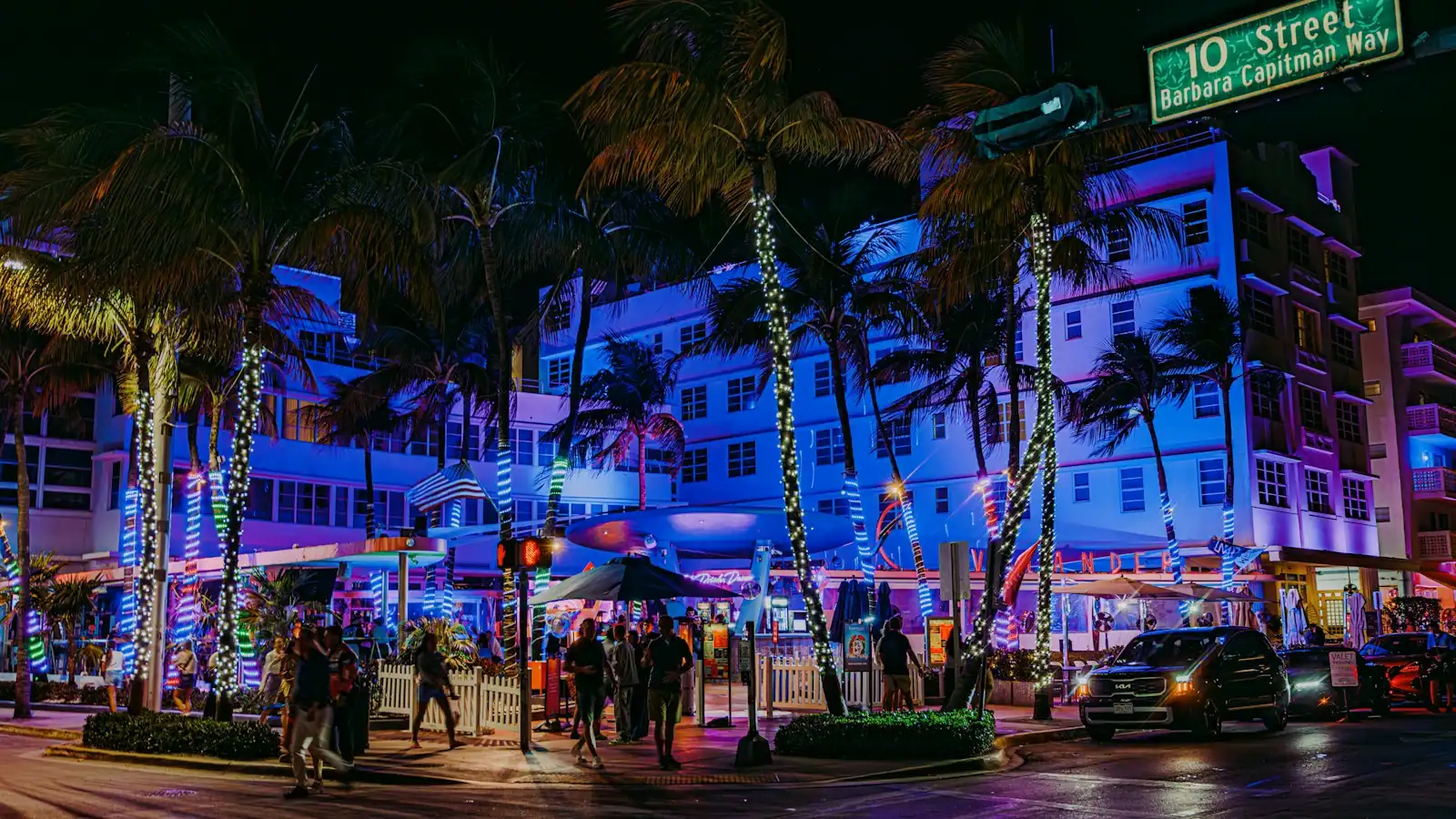
Lit signage and enclosed gondolas beside a waterfront promenade photographed at dusk
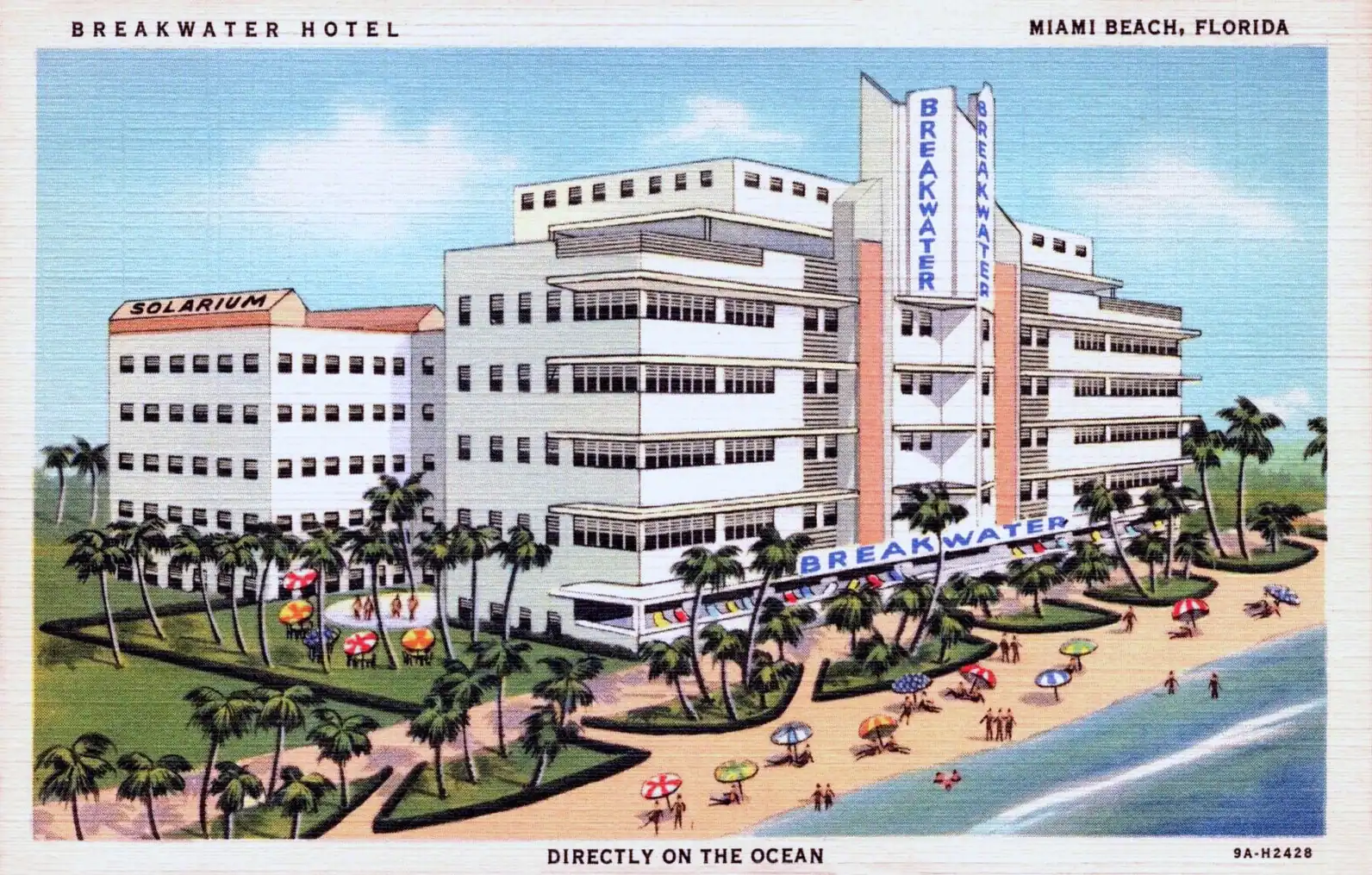
Curt Teich & Co., Chicago (publisher)

Historic site

Breakwater Hotel

Last updated

The blue-and-white pylon at 940 Ocean Drive whose neon sign is the single most photographed object on the strip after dark.

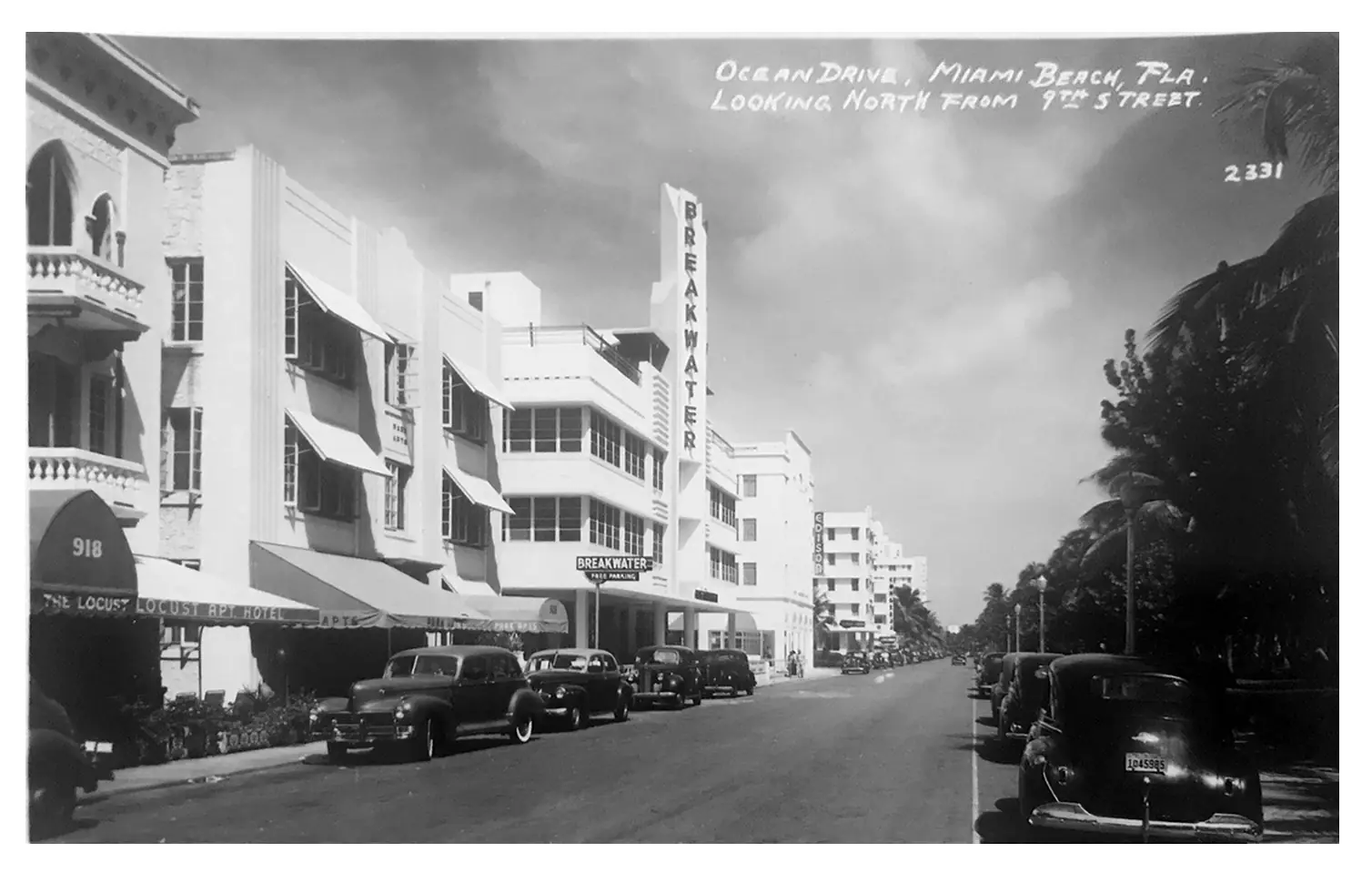
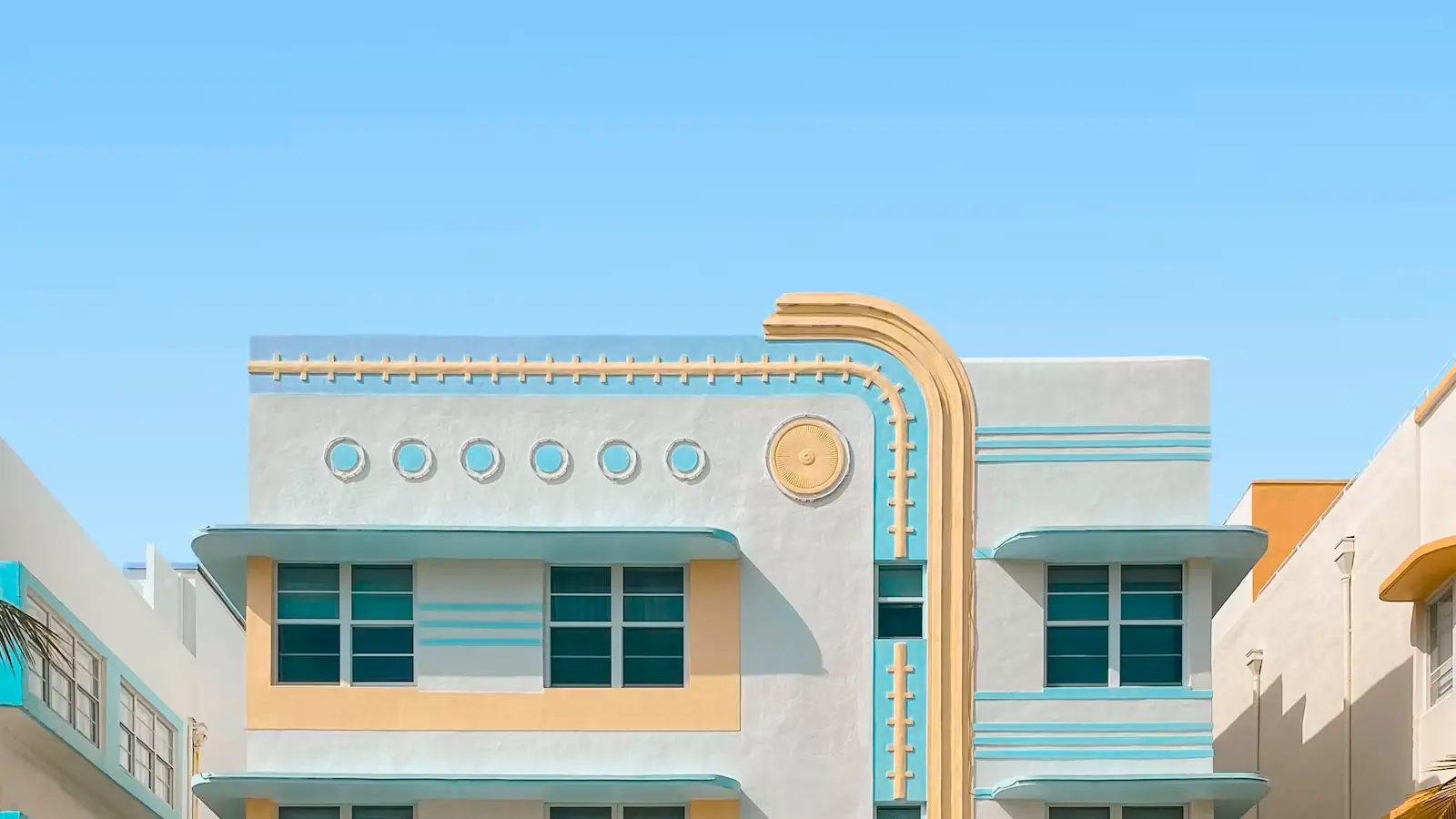
The Breakwater is the one with the tower. Anton Skislewicz designed it in the second half of the 1930s — sources give 1936 and 1939 — and its central feature is a vertical pylon rising above the roofline with the hotel's name running down it in neon. At night it reads as a column of blue light from anywhere in Lummus Park, and it is the reason this stretch between 9th and 10th Streets is the most photographed hundred yards of Ocean Drive after dark.

The rest of the front is a careful exercise in symmetry. Two wings step back from the pylon in mirror image. Thin racing stripes run horizontally across the stucco. The windows sit under flat concrete eyebrows. Nothing is expensive and nothing is carved; the whole effect comes from proportion, repetition and paint, which is the deco method on this island in one building.

Unlike several of its famous neighbours, the Breakwater still runs as a hotel, which means there is a lobby, a front desk and staff, and you are not trespassing by stepping in out of the sun for a moment. That distinction matters more than it sounds on a street where at least one landmark façade now fronts private apartments.

It also sits at the heart of Ocean Drive's sidewalk café strip, and that deserves plain speaking. The terraces along this block operate on an aggressive model: a host on the pavement with a laminated card, a large printed drinks special, and a bill that arrives carrying an automatic service charge on top of the food. The charge is legitimate and Miami Beach requires it to be disclosed on the menu. The problem is that the printed slip usually leaves a tip line blank underneath it, and a great many visitors pay the service charge twice. Read the bottom of the menu before you sit down, and read the bill before you sign it.

Look up, though, and none of that is the building's fault. The pylon is a genuinely good piece of design doing a genuinely commercial job, which is what Ocean Drive has always been.

Getting there and parking

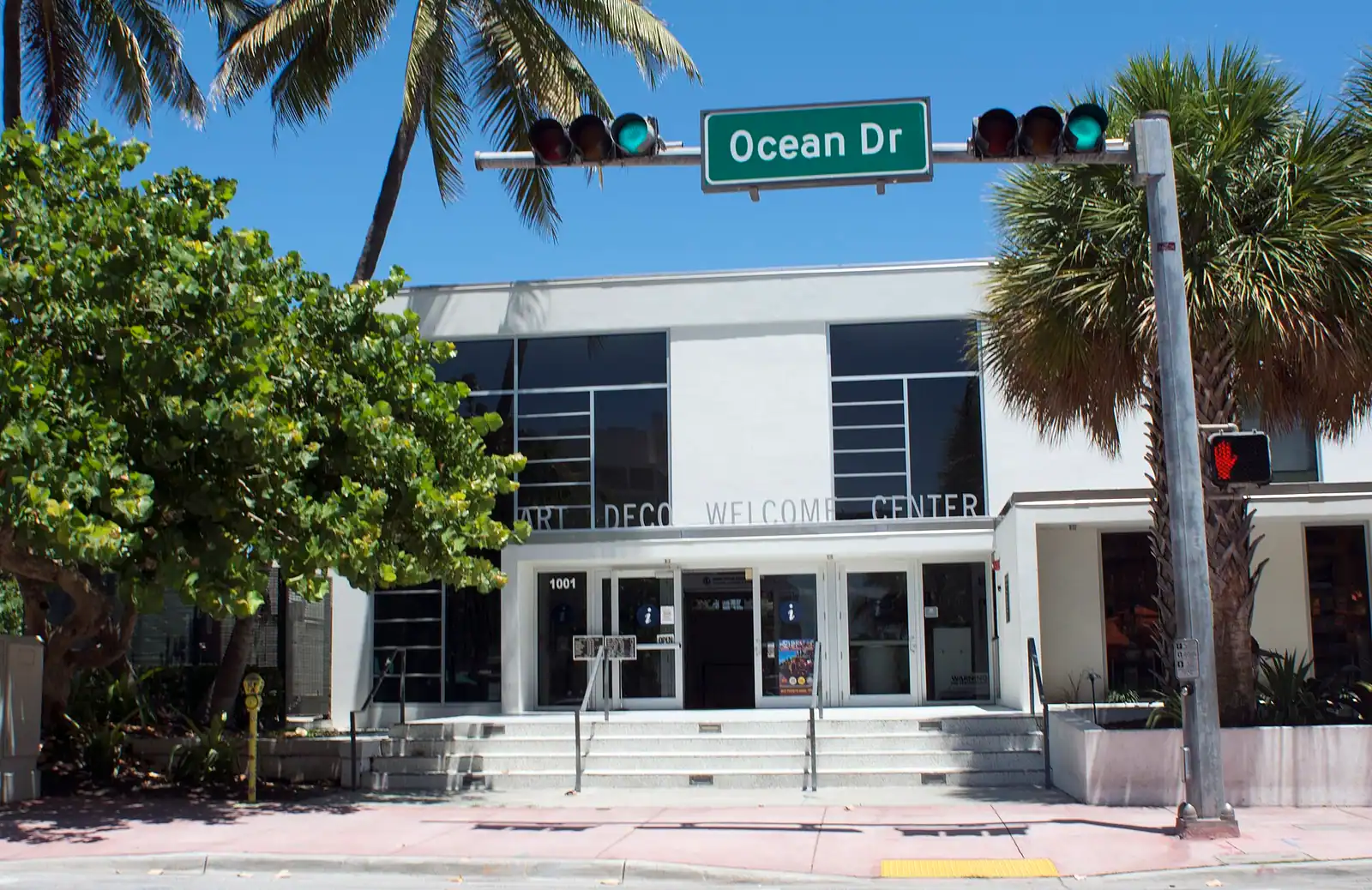
West side of Ocean Drive between 9th and 10th Streets, one door south of the 10th Street corner where the Art Deco Welcome Center sits.

Walking is the answer from anywhere in South Beach. Five minutes from 5th Street, twelve from Lincoln Road, eight from Española Way.

Trolley and bus. The free Miami Beach Trolley's South Beach loop and the South Beach Local bus both run on Washington Avenue, two blocks west. Get off at 10th and walk east.

Driving is the wrong choice. Ocean Drive between 5th and 15th is a slow single lane with contested metered spaces, frequent event closures and valet queues. Use the 12th or 13th Street municipal garage, or the 7th Street garage at Collins, and walk.

From the mainland, the MacArthur Causeway lands at 5th Street; turn north on Ocean Drive or, better, on Collins and park in a garage. There is no rail service to Miami Beach.

At night, this block is well lit and busy until late. The walk west to the Washington Avenue garages is straightforward; the quieter cross streets between Collins and Washington are less so after the bars empty.

Shooting the neon: the twenty-minute window

Neon photographs badly in full darkness and beautifully in the gap either side of it.

Blue hour is the window. From roughly fifteen minutes after sunset to about forty, the sky still carries colour and the tubes are already lit. Sky and sign sit within a stop or two of each other, so you get the building and the neon in the same frame. Wait until nine and the sign is a blown-out smear on a black rectangle.

Stand back and stand east. Cross Ocean Drive into Lummus Park and shoot from the path or the grass. The pylon needs distance to read as a vertical; from the pavement directly below it, you get foreshortening and a lot of parasol.

The whole block lights up, not just this one. Working north from 9th Street you have the Breakwater's blue pylon, the Edison next door at 960, and a run of smaller signs through to 10th. From about forty feet back you can get three in one frame.

Winter evenings are better than summer ones, and not only for the crowds. Sunset in December falls around half past five, so the blue-hour window arrives before the dinner rush and before the street gets loud. In June the sun sets after eight and the same window lands in the middle of the busiest hour on the strip.

A tripod on the Lummus Park path is fine. A tripod on the Ocean Drive pavement, in front of a restaurant's seating, is not going to go well for you.

How the Ocean Drive café bill actually works

This is the single most common complaint visitors make about South Beach, and it is entirely avoidable.

The pattern. A host stops you on the pavement with a card showing a drinks deal. You sit. The menu you are handed may not be the one advertised. Drinks arrive in large formats. The bill carries an automatic service charge, commonly in the high teens to twenty per cent, added to the food and drink total.

The charge is legal and must be disclosed. Miami Beach requires restaurants to state an automatic gratuity on the menu. The catch is the slip: below the service charge there is very often an additional tip line, pre-printed, sometimes with suggested amounts calculated on the post-charge total. If you fill it in without reading, you have tipped twice.

What to do. Read the fine print at the bottom of the menu before you sit down. Ask what the total for the advertised special actually comes to, including the charge. When the bill comes, find the service charge line first, then decide what if anything goes on the tip line. Pay by card and keep the itemised copy.

The cheaper version of the same view. Buy a coffee, walk twenty metres east into Lummus Park, and sit on a bench facing the same buildings. The view is better from there anyway, because you can see the whole façade rather than the underside of an awning.

None of this is a reason to avoid Ocean Drive. It is a reason to sit down on purpose rather than because someone waved a card at you.
What Skislewicz was doing

Anton Skislewicz is a lesser-known name than Henry Hohauser or L. Murray Dixon, and the Breakwater is the building that keeps him in the conversation.

The move is the pylon. Most Ocean Drive fronts are horizontal — long eyebrow lines, banded stucco, a low parapet. Skislewicz cut a single strong vertical through the middle of that and put the hotel's name on it. In 1930s terms this was signage architecture: the building is the sign, readable from a moving car and from the beach. The neon was the point, not an addition.

The second move is the symmetry. Each wing repeats the other exactly, which is unusual even here, and it gives the front a formality most of the strip lacks. Deco on Miami Beach is usually asymmetrical at the corner — a wrapped window, a curved end. The Breakwater refuses that and squares up to the street instead.

The third is colour. The blue-and-white scheme is a modern restoration choice rather than a 1930s original, like most of the palette on this street. It works because the neon is blue too, so the building reads as one object by day and by night.

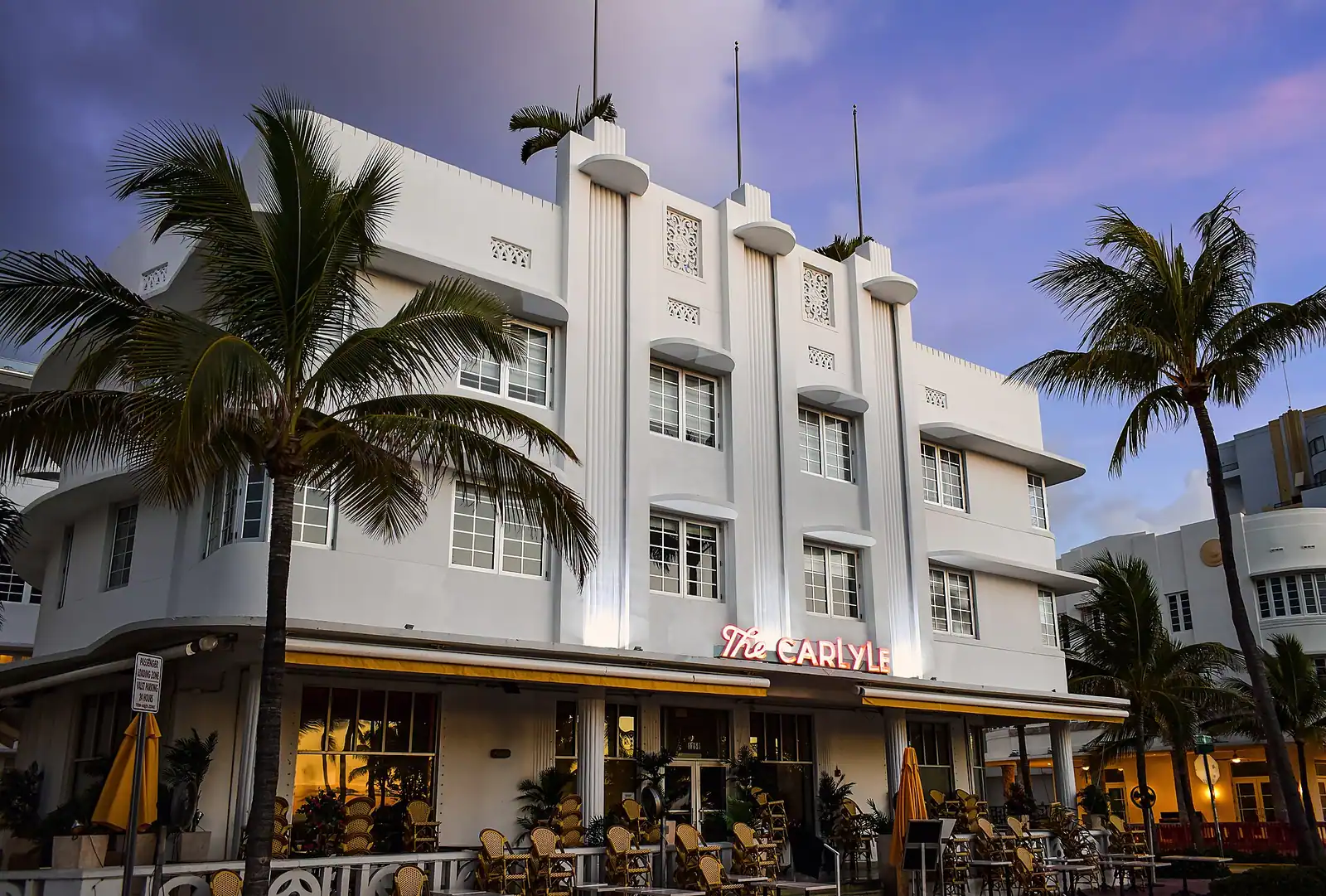
If you want the contrast, walk two doors either way. The Edison at 960 is softer and rounder. The buildings south towards 9th are smaller and plainer. The Breakwater is the loud one, deliberately.

Going in, and what is nearby

The lobby. It is an operating hotel with a public front desk, so stepping inside briefly is normal. Sitting down at the bar or using the pool is for guests. Nobody minds a look; everybody minds a photoshoot in the doorway.

Booking a room here. The trade-off on Ocean Drive is constant and worth knowing before you pay for the view: a front-facing room on this block puts you above live music, pavement crowds and delivery traffic until late. A rear room is quieter and has no view. Whichever you choose, rates on this street move enormously with the calendar — Art Basel week in early December and the March spring-break weeks are the extremes.

Within two minutes on foot.

  • 10th Street and Ocean — the Art Deco Welcome Center, the district's visitor centre and the starting point for guided walks.
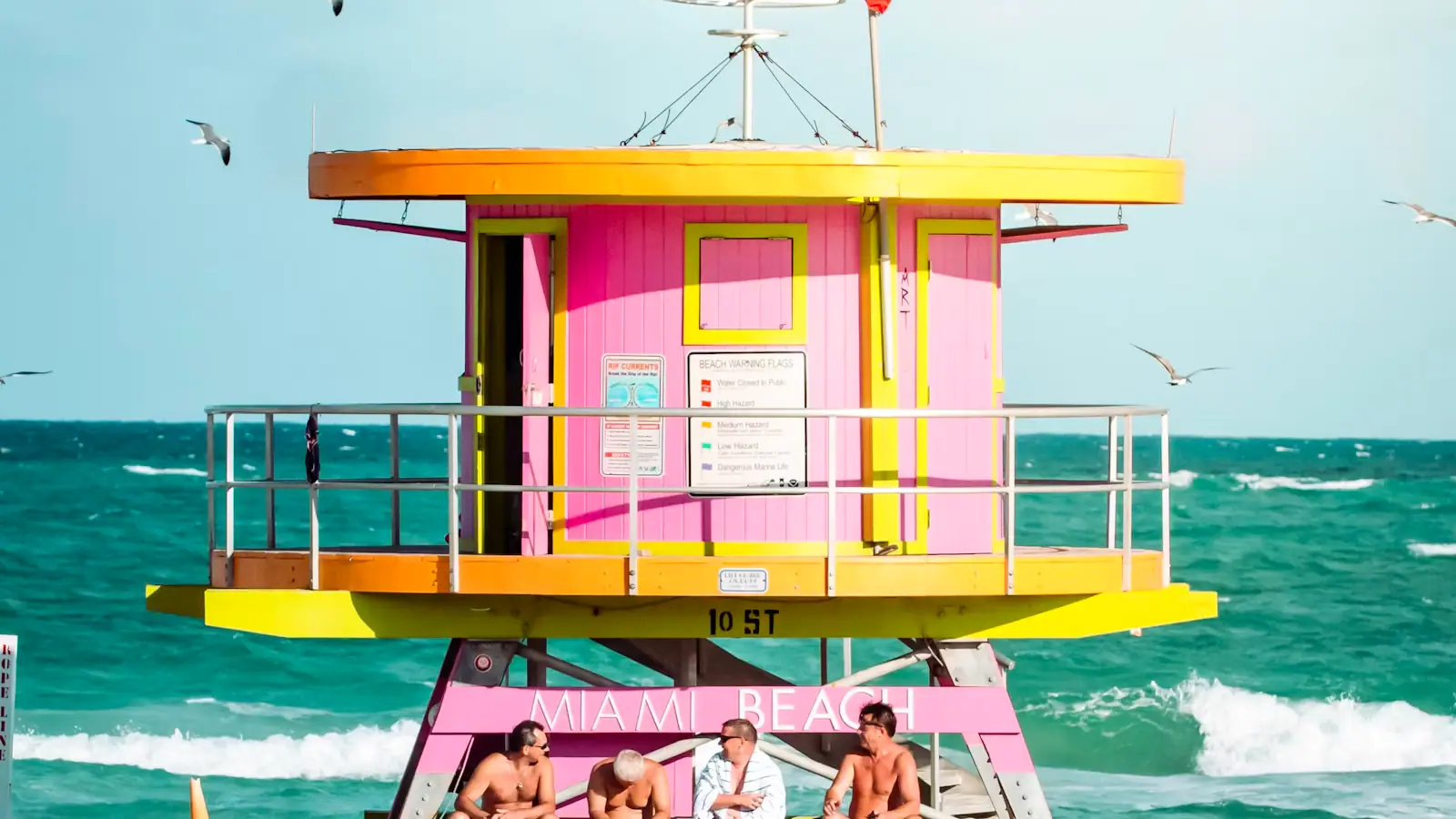
  • 10th Street beach — the pink-and-yellow lifeguard tower, the most photographed of the numbered stands.
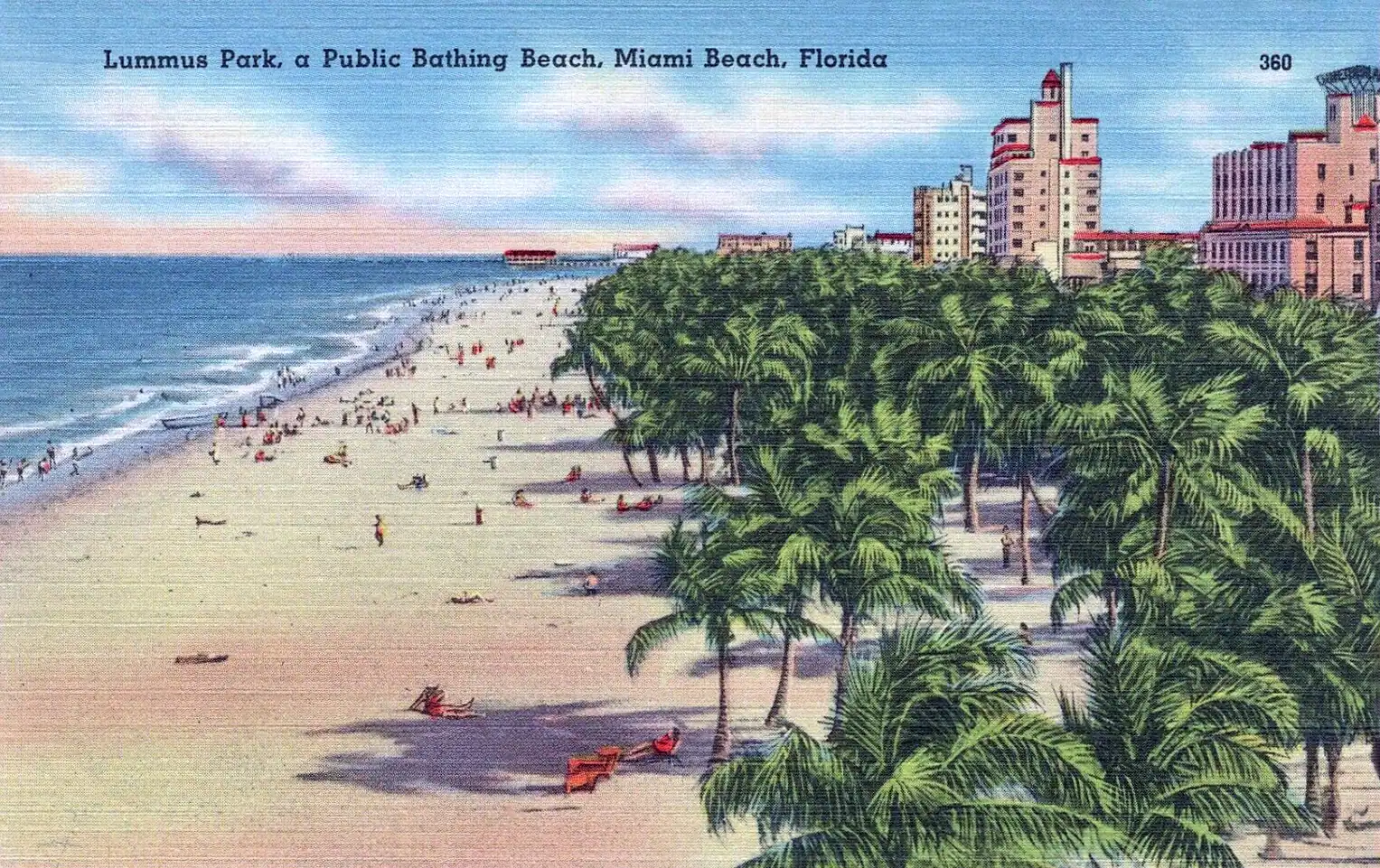
  • Lummus Park — directly opposite, with the paved path running the length of the strip.
  • Collins Avenue, one block west — the same era of architecture with a fraction of the foot traffic.

Parking. Do not try on Ocean Drive. The municipal garages on 12th and 13th Streets between Collins and Washington are five minutes away on foot and a great deal cheaper than the valet.

Tours that visit Breakwater

Operators run these trips past Breakwater, or stop there as part of a longer route. We list what the booking data supports — not everything that mentions the name.

These earn us a commission through Viator. Same price for you, and the commission had no hand in the order.

Shared departurespriced per seat, best value for one or two

Private and small-group optionsoften cheaper per head for a family or a group of six

Near Breakwater

Straight-line distances, so allow more on the road — the island is long and has one main parkway.

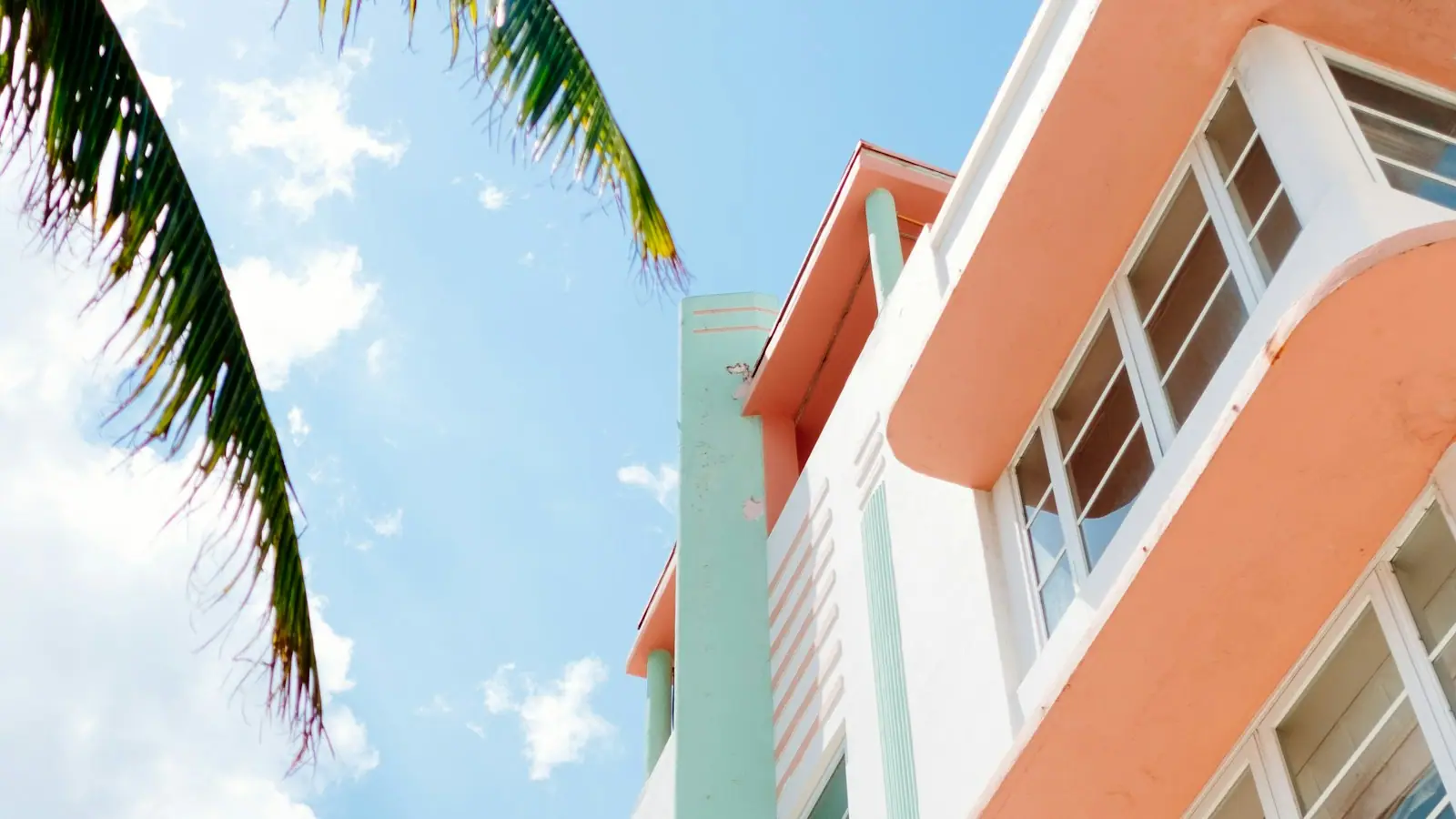
  • The peach and mint facade of a three-storey Art Deco hotel seen from below with a palm frond crossing the frame

    Neighbourhood

    Ocean Drive

    Free

    Ten blocks of deco facade on one side and open park on the other, and almost everything depends on which side you choose.

    1–2.5 hoursFree to walk. The sidewalk cafes, hotel bars and beach loungers are not.110 ft away

  • A visitor standing in a small gallery looking at framed works hung on a white wall

    Museum

    Art Deco Welcome Center

    The preservation league's own building, and the ten minutes that make the next two hours of walking make sense.

    0.5–2.5 hoursThe Welcome Center, shop and information desk are free to enter. The Art Deco Museum, guided walking tours and the self-guided audio tour are ticketed, with museum admission included in the guided tour.80 ft away

  • A symmetrical pastel hotel facade with banded concrete window shades and a stepped central parapet

    Historic site

    Art Deco Historic District

    Free

    Roughly 800 protected buildings in twenty-odd blocks, and a visual grammar you can learn in about ten minutes.

    1.5–4 hoursFree to walk. Guided tours, the Art Deco Museum, the Wolfsonian and the Jewish Museum of Florida charge separately.1,030 ft away

  • Curving paved walkways running through low coastal planting in a landscaped seafront park

    Park

    Lummus Park

    Free

    Ten blocks of palm, path and free outdoor gym, and the decision that kept anyone from building between Ocean Drive and the Atlantic.

    0.5–3 hoursFree. The park, the outdoor gym, the volleyball courts, the restrooms and the beach access cost nothing.210 ft away

Breakwater: common questions

Why do Ocean Drive restaurants add a service charge?

It is standard practice on this strip, commonly in the high teens to twenty per cent, and Miami Beach requires it to be disclosed on the menu. The charge itself is legitimate. The problem is the printed bill, which frequently leaves an additional blank tip line underneath, sometimes with suggested amounts calculated on the already-charged total. Find the service charge line before you write anything, and keep the itemised copy.

Can you go inside the Breakwater Hotel?

Yes, in the sense that it is a working hotel with a public lobby and front desk, so stepping in is normal and nobody will stop you looking. The pool, bar service and guest floors are for people staying there or buying something. This is a genuine difference from some of the famous façades further north on Ocean Drive, several of which are now private residential buildings with no public interior at all.

When is the neon on Ocean Drive turned on?

At dusk, nightly. The useful window for looking at it or photographing it is the twenty to forty minutes after sunset, while the sky still holds colour and the tubes are already burning. That is around six in the evening in December and after eight in June. Once it is fully dark the signs overexpose against a black sky and the buildings behind them disappear.

Is it worth staying on Ocean Drive?

It depends how you sleep. A front-facing room puts you directly above pavement crowds, amplified music and delivery traffic that runs late, particularly at weekends and through March. A rear room is quieter and has no view. If you want the deco district without the noise, one or two blocks west on Collins or in the Flamingo Park streets gets you the same architecture and a considerably better night.

Who designed the Breakwater Hotel?

Anton Skislewicz, in the second half of the 1930s — published dates vary between 1936 and 1939. He is a less-cited name than Henry Hohauser or L. Murray Dixon, and the Breakwater is what keeps him on the district's tours. Its defining move is the vertical neon pylon rising through a strictly symmetrical front, which treats the building itself as signage in a way most of the strip does not.