Skip to content
Menu

These earn us a commission through Viator. Same price for you, and the commission had no hand in the order.

Search
A bright double-height gallery with large-scale contemporary works and a window onto daylight
Unknown

Museum

The Bass

Last updated

A 1930 keystone library built by the family that made this island, now showing contemporary art four blocks from Ocean Drive.

Photo: UnknownPublic domain

The Bass occupies a building that explains Miami Beach better than most of the ones people queue to photograph. It opened in 1930 as the Miami Beach Public Library and Art Center, designed by Russell Pancoast, grandson of John Collins, the New Jersey Quaker whose failed avocado plantation and improbable wooden bridge across Biscayne Bay turned a mangrove sandbar into a city. Collins Avenue is named for him. So is the park the museum stands in. The family that built the island designed the building.

It is made of keystone, the pale, pitted coral limestone quarried in the Florida Keys, with carved relief panels over the entrance and the squared-off geometry of early deco rather than the streamlined kind on Ocean Drive. That is worth noticing: within four blocks you can see the two halves of the style that made this district, and they look almost nothing alike.

The museum came later. John and Johanna Bass gave their private collection of European old masters, Renaissance and Baroque painting and tapestries to the City of Miami Beach in 1963, and the library building reopened as the Bass Museum of Art in 1964. Arata Isozaki added a wing in 2001, and a further rebuild inside the existing shell reopened the museum in 2017 with roughly double the gallery space. Along the way the programme swung decisively towards contemporary art, which leaves the institution with an unusual double identity: a deco library holding Renaissance panels and showing new international work.

Practically, this is the room South Beach lacks elsewhere. The island has one serious contemporary art museum, no cinema district to speak of, and an afternoon thunderstorm season that runs June to September. The Bass is small enough to do in an hour and good enough to be worth the hour. It is also the north end of the deco district, at 21st Street, where the crowds have already thinned.

Outside, in Collins Park, Ugo Rondinone's Miami Mountain stands in the open and costs nothing to look at: five stacked, fluorescent-painted limestone boulders about forty feet high.
Getting there and parking

In Collins Park, on the west side of Collins Avenue between 21st and 22nd Streets, one block back from the beach at the northern end of the Art Deco Historic District.

Walking. Eight minutes north-east from Lincoln Road. About twenty-five minutes north from Ocean Drive at 10th Street, either along Collins Avenue or along the beach path, which is nicer and hotter.

Trolley and bus. The free Miami Beach Trolley's South Beach loop and city bus routes run on Collins and Washington Avenues and stop within a block or two.

Parking. A municipal garage on 22nd Street sits behind the museum, with metered spaces around Collins Park. This is among the more manageable parking situations in South Beach, though it fills during Art Basel week in early December and on winter weekends.

From the mainland. MacArthur Causeway to 5th Street, then north on Collins for about twenty blocks, or the Julia Tuttle Causeway to 41st Street and south. There is no rail link to Miami Beach.

From the beach. The 21st Street beach access is directly opposite, so this is an easy stop on the way off the sand.

The building, and the family that named the street

John Collins arrived in the 1900s to farm avocados on the sandbar across the bay from Miami. The farming failed. The bridge he built to get his produce to the mainland — at the time the longest wooden bridge in the world — did not, and it opened the island to the development that became Miami Beach. His grandson Russell Pancoast trained as an architect and designed this library for the city in 1930.

What he built is early deco, and it is instructive to compare it with Ocean Drive. No eyebrows, no racing stripes, no rounded liner corners. Instead: mass, symmetry, a squared-off entrance block, carved relief panels, and keystone facing. Keystone is fossilised coral, quarried in the Keys, and if you look closely at the walls you can see the shells. The style here is closer to the civic deco of the 1920s than to the streamlined 1930s resort architecture eight blocks south.

Isozaki's 2001 addition sits behind and beside it rather than on top of it — a restrained grey volume that lets the keystone front keep the street. The 2017 work was mostly internal: floors lowered, ceilings raised, circulation rethought, gallery area roughly doubled without adding to the footprint.

The result is a small museum that reads clearly from the street and opens up inside, which is more or less the opposite of how Miami Beach usually works.

What you will actually see

The Bass is not a permanent-collection museum in the way its origins suggest. Most of the floor is given to temporary exhibitions of contemporary art, often a single artist at reasonable scale, with the historic Bass holdings appearing in rotation and in dialogue with new work rather than hung as a survey.

That means two things for a visitor. First, check what is on before you go, because the show is the museum. Second, do not arrive expecting a room of Rubens; the European collection exists but is not permanently on view in full.

The scale is manageable. This is an hour, not an afternoon, and it does not attempt the breadth of a city museum. What it does have is a commissioning habit — the institution buys and installs work that stays, which is how Miami Mountain ended up permanently in the park outside.

The shop is small and good on design and exhibition titles. There is a café operation on site; assume it keeps museum hours rather than restaurant ones.

If you are in South Beach during Art Basel Miami Beach in early December, the Bass programmes around the fair and the whole Collins Park block becomes part of the week's circuit, with outdoor commissions in the park. It is the busiest and most interesting week of the museum's year, and the least restful.

Hours, tickets and the free parts

Days. The published pattern is Wednesday to Sunday, closed Monday and Tuesday. A great many visitors walk over on a Monday and find the doors shut, which on a rainy Monday in South Beach is a genuinely annoying outcome. Check before you cross town.

Hours. Afternoon-weighted — published opening has recently been around midday to 5pm. That is a short day by museum standards and it catches people out. Arriving at four gives you an hour; arriving at ten gives you a coffee and a wait.

Admission. Adult entry has been published at about $15, with reduced rates for seniors, students and children, and free entry for Miami Beach and Surfside residents on proof of address. There are recurring free slots — an evening once a month and a family day at the end of the month have both run for years. Treat any figure as indicative and check the current listing.

Free without a ticket. Collins Park itself, and Miami Mountain standing in it. The park is public, open and has grass, shade and benches. If you want the sculpture and not the museum, that is a legitimate visit.

Value judgement. For a rainy hour, a hot afternoon or the day after a late one, this is the best fifteen dollars on the island. For someone who has come to Miami Beach specifically for art, the bigger institutions are across the bay in Miami — which is a different city and a causeway away.

Collins Park and the north end of the district

The Bass sits in Collins Park, bounded by Collins Avenue, 21st and 22nd Streets, one block back from the sand. This is the quiet end of the Art Deco Historic District, which officially runs out around 23rd Street.

What else is on this block.

  • The Miami Beach Regional Library, immediately adjacent, which is air-conditioned, free and has public restrooms.
  • The Miami City Ballet, across the park on Liberty Avenue, with a glass-fronted studio you can sometimes see rehearsals through from the pavement.
  • The 21st Street beach access and lifeguard tower, a block east, which is markedly calmer sand than anything below 14th.
  • The Miami Beach Boardwalk, which begins its northward run near here along the dune line.

Walking distances. Lincoln Road is about eight minutes south-west. Ocean Drive at 10th Street is about twenty-five minutes south along the beach path, which is a pleasant walk in January and a slog in August. Española Way is around fifteen minutes.

Parking. There is a municipal garage on 22nd Street and metered parking around Collins Park. This is one of the easier parts of South Beach to park in, which is not saying a great deal.

Trolley. The free Miami Beach Trolley's South Beach loop runs nearby on Collins and Washington and is the cheapest way up here from the lower numbered streets.

Tours that visit The Bass

Operators run these trips past The Bass, or stop there as part of a longer route. We list what the booking data supports — not everything that mentions the name.

These earn us a commission through Viator. Same price for you, and the commission had no hand in the order.

Private and small-group departurespriced per boat or per vehicle, not per person

Near The Bass

Straight-line distances, so allow more on the road — the island is long and has one main parkway.

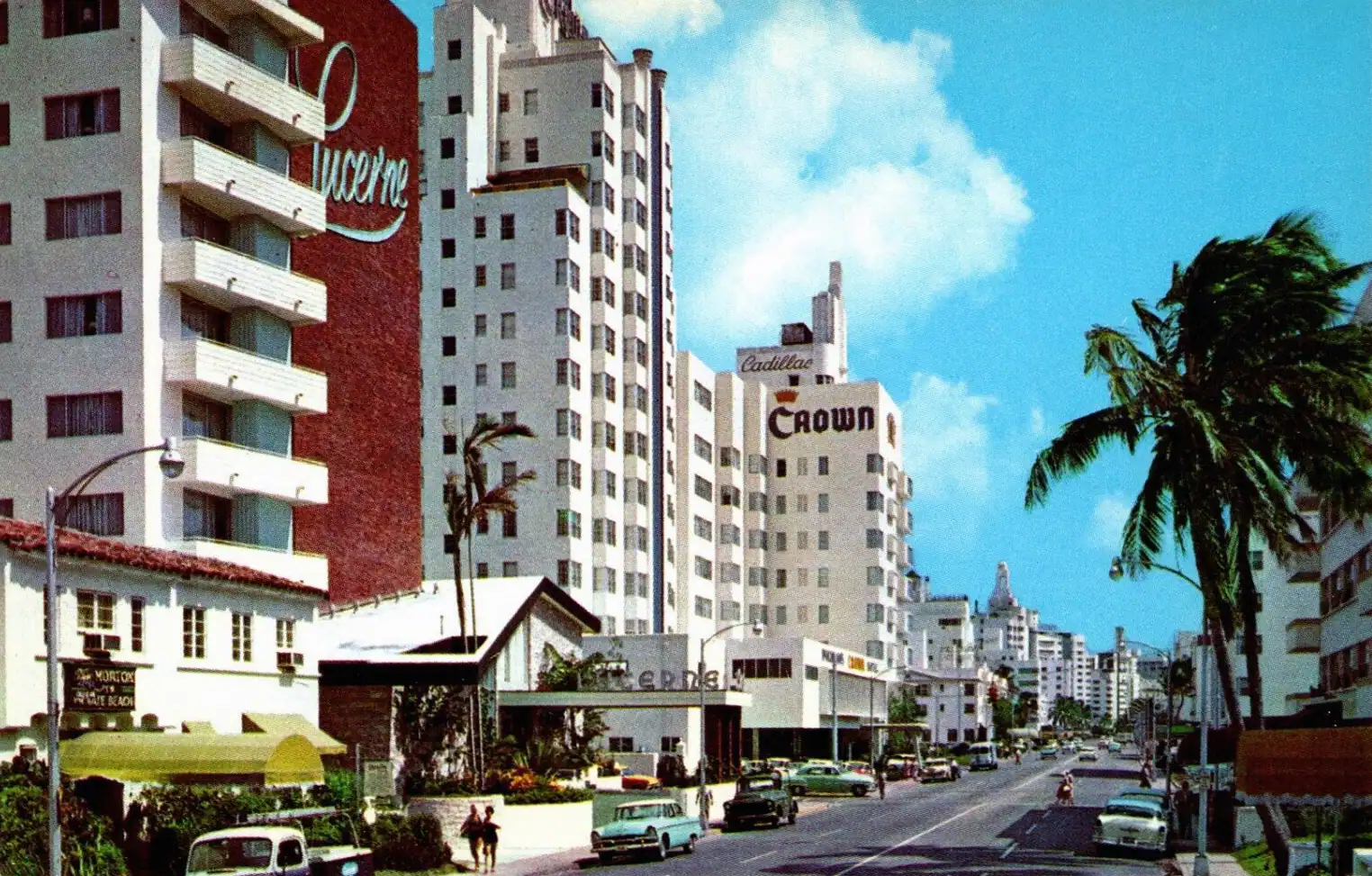
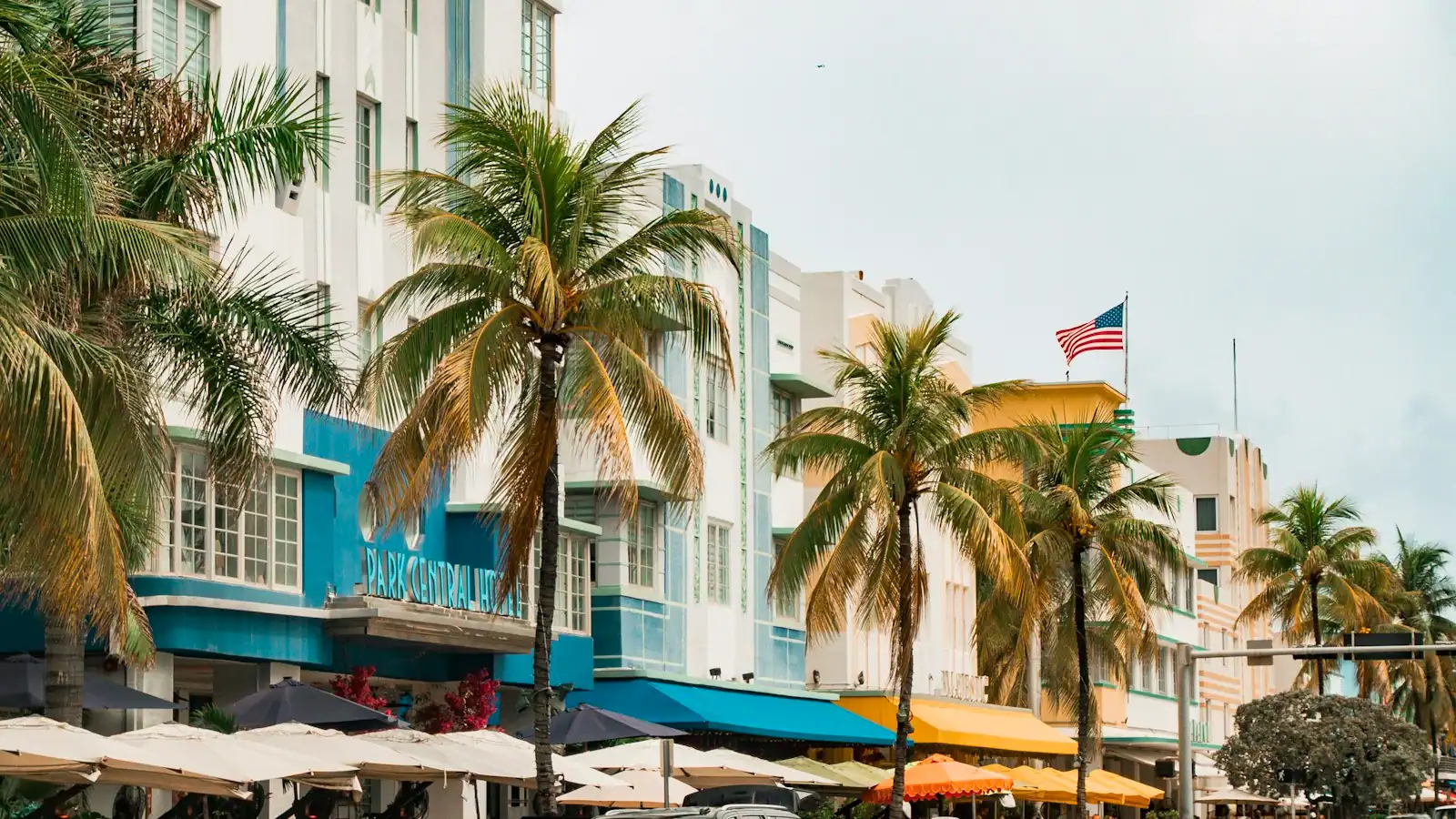
  • A palm-lined beach in front of a row of mid-rise hotel buildings

    Neighbourhood

    Collins Avenue

    Free

    One block back from the ocean, named for a New Jersey avocado farmer, and the reason anyone could reach this island at all.

    0.5–2 hoursFree to walk. Hotels, shops and restaurants are not.0.5 mi away

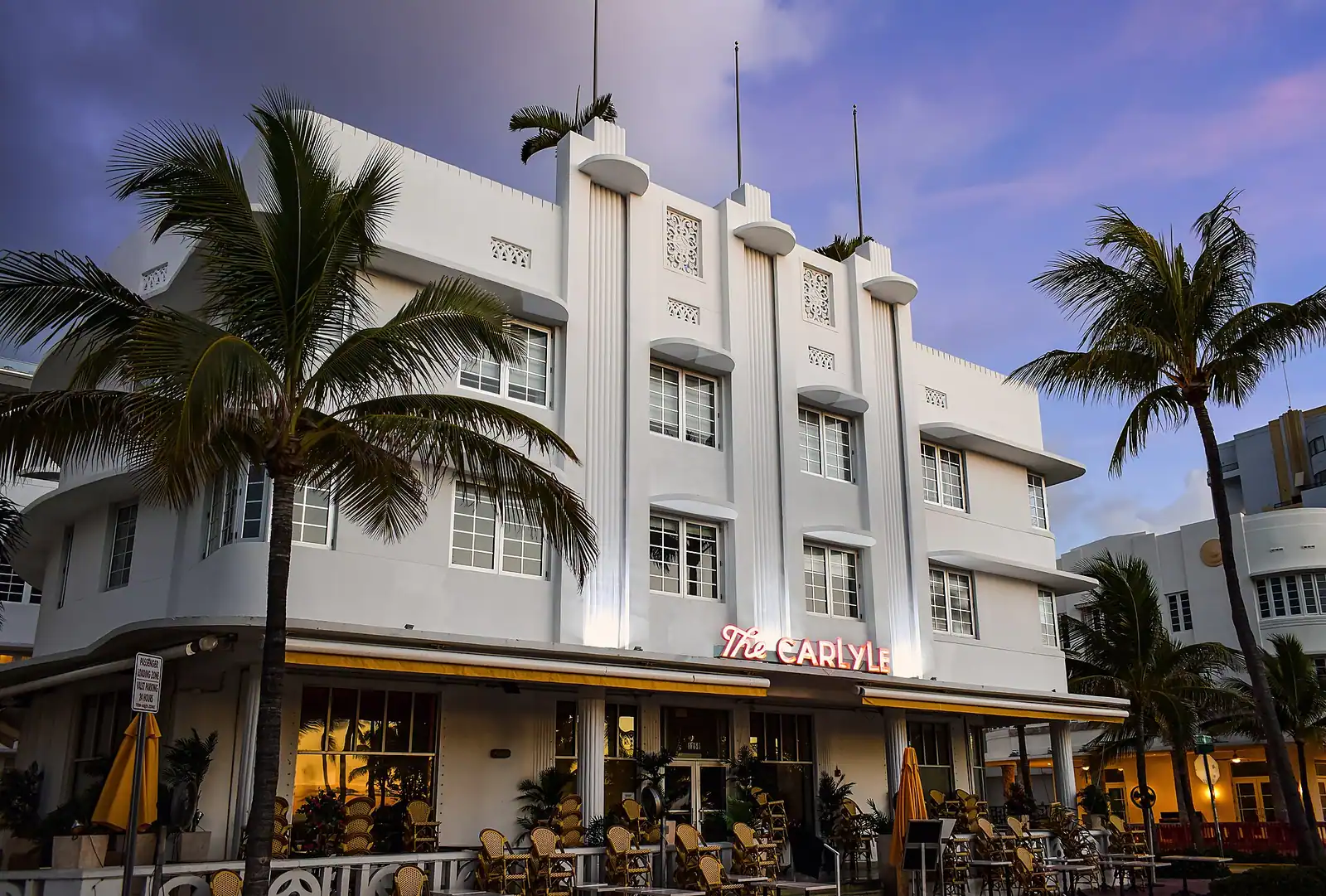
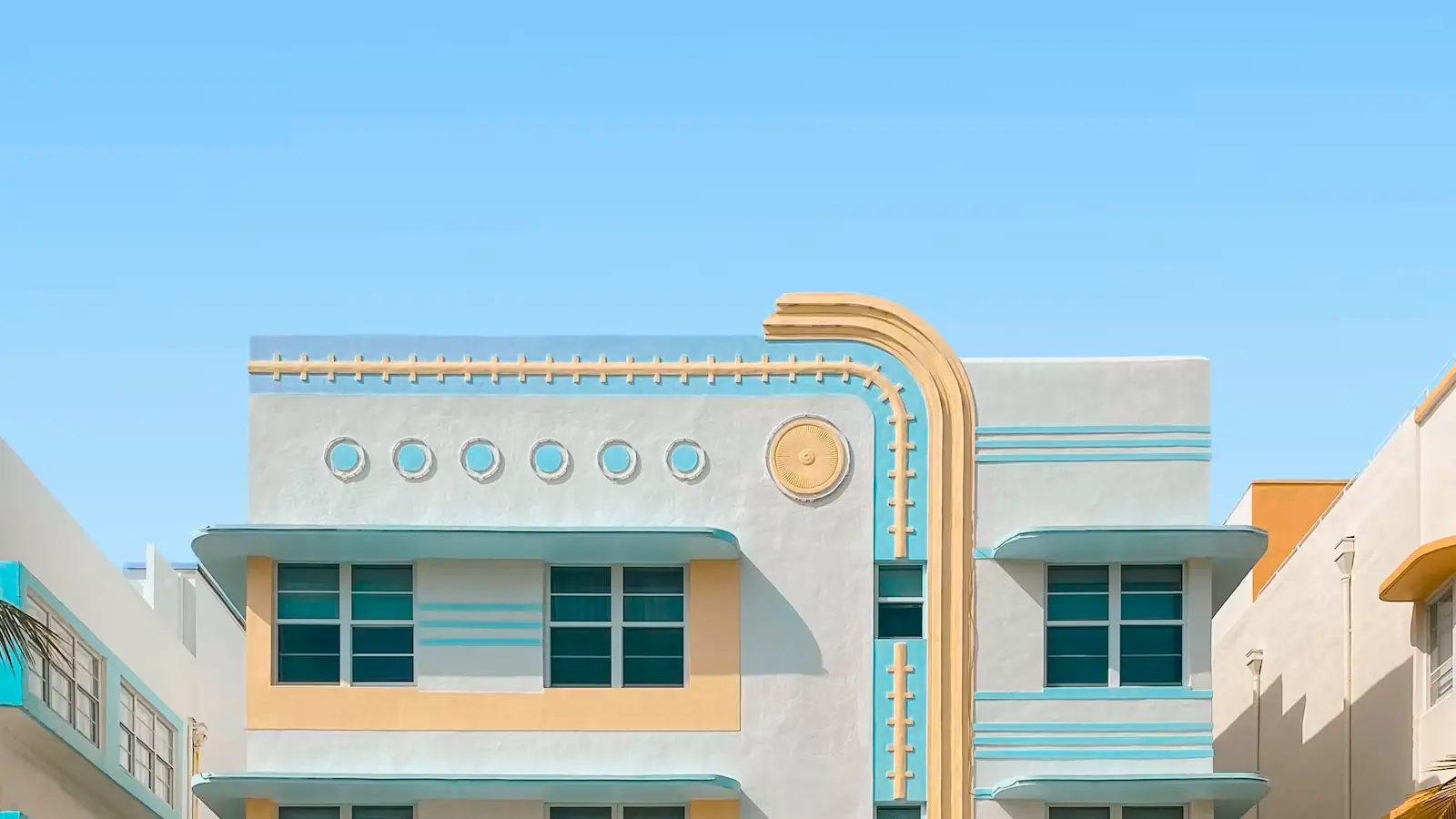
  • A symmetrical pastel hotel facade with banded concrete window shades and a stepped central parapet

    Historic site

    Art Deco Historic District

    Free

    Roughly 800 protected buildings in twenty-odd blocks, and a visual grammar you can learn in about ten minutes.

    1.5–4 hoursFree to walk. Guided tours, the Art Deco Museum, the Wolfsonian and the Jewish Museum of Florida charge separately.0.5 mi away

  • A paved shoreline walkway running between planted borders with the ocean on one side

    Trail

    Miami Beach Boardwalk

    Free

    Seven continuous miles of shoreline path from South Pointe to the Surfside line, with almost none of the timber the name promises.

    0.5–3 hoursFree. The whole route is a public right of way with no entry point that charges.0.3 mi away

  • A wide pedestrian shopping street lined with palms and terraces under strong midday sun

    Shopping

    Lincoln Road Mall

    Free

    A Morris Lapidus landscape from 1960 that has become a chain high street, with three blocks at the western end that have not.

    1–3 hoursFree to walk. Shops, restaurants, cinema and theatre tickets are not.0.6 mi away

The Bass: common questions

What days is The Bass open in Miami Beach?

The published pattern is Wednesday to Sunday, closed Monday and Tuesday, with afternoon-weighted hours in the region of midday to five. That short day catches visitors out, particularly anyone planning it as a rainy-Monday fallback. Check the museum's own listing for the week you are travelling, because hours also move around exhibition changeovers and around Art Basel in early December.

Do you need a ticket to see Miami Mountain at The Bass?

No. Ugo Rondinone's Miami Mountain — five stacked, fluorescent-painted limestone boulders standing around forty feet high — is installed outdoors in Collins Park, which is a public park open at all hours. You can walk right up to it without paying anything. The Bass commissioned and owns it, and it is the museum's most-photographed work, but it sits entirely outside the ticketed building.

Is The Bass worth visiting?

For an hour, yes, especially in rain or heat. It is a small museum showing contemporary exhibitions in a 1930 keystone deco building, and the building is half the reason to go. It is not a large collection museum — if that is what you want, the bigger institutions are across the bay in Miami, which is a separate city and a causeway away. As the one serious indoor art hour in South Beach, it earns its place.

Who designed the Bass Museum building?

Russell Pancoast, in 1930, as the Miami Beach Public Library and Art Center. Pancoast was the grandson of John Collins, the farmer whose long wooden bridge across Biscayne Bay opened the island to development and whose name is on Collins Avenue and Collins Park. The building is early deco — mass, symmetry, carved relief panels and coral keystone facing — and looks almost nothing like the streamlined 1930s hotels on Ocean Drive.

How far is The Bass from Ocean Drive?

About twenty-five minutes on foot, or roughly ten blocks and a bit more. It sits at 21st Street and Collins Avenue, at the northern edge of the Art Deco Historic District, where the crowds thin noticeably. You can walk up Collins Avenue or along the beach path; in January either is pleasant, in August the beach path in particular is a serious walk. The free Miami Beach Trolley covers the same ground.