Skip to content
Menu

These earn us a commission through Viator. Same price for you, and the commission had no hand in the order.

Search
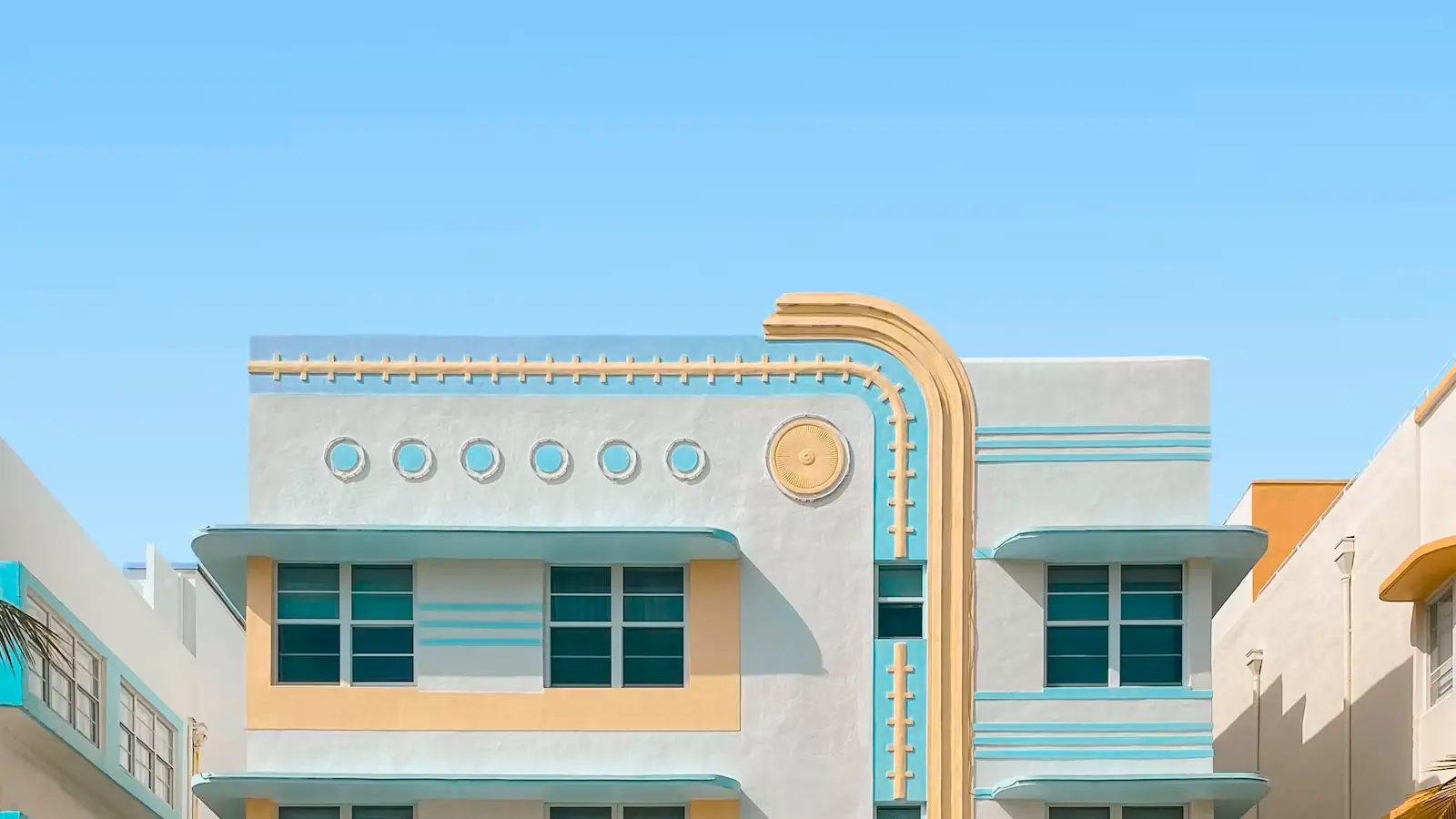
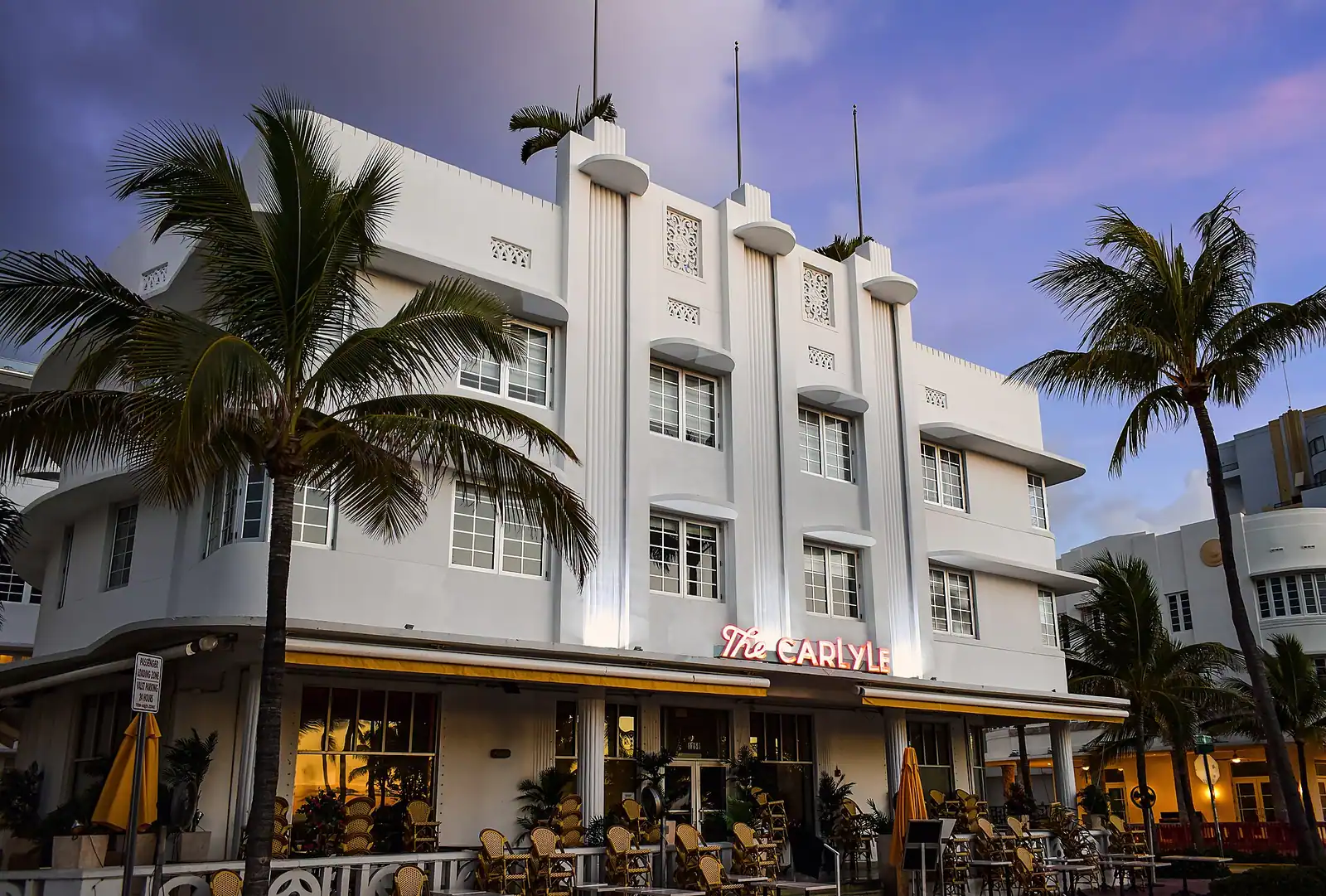
A symmetrical pastel hotel facade with banded concrete window shades and a stepped central parapet
Photograph: Radomianin

Historic site

Art Deco Historic District

Last updated

Roughly 800 protected buildings in twenty-odd blocks, and a visual grammar you can learn in about ten minutes.

Photo: Photograph: RadomianinPublic domain

On 14 May 1979 the Miami Beach Architectural District went onto the National Register of Historic Places with around 800 contributing buildings. It was the first urban district of twentieth-century architecture in the United States to be listed, which at the time was a genuinely radical proposition: the buildings were forty years old, several were flophouses, and the prevailing view in the city was that the correct thing to do with 1930s Miami Beach was knock it down and build towers.

The person who stopped that was Barbara Baer Capitman, a design writer who founded the Miami Design Preservation League in 1976 and spent the next decade arguing, lobbying and occasionally standing in front of demolition equipment. She lost buildings. The Senator Hotel on Collins came down in 1988 and became a car park, which is the loss local preservationists still cite. But the district survived, and the reason South Beach looks the way it does is that a small group of people made an unfashionable argument early enough.

The legal boundaries run from the Atlantic west to Lenox Court, and from 6th Street north to Dade Boulevard along the Collins Canal. The walkable core most visitors mean is narrower: roughly 5th to 23rd Streets across Ocean Drive, Collins and Washington, which is about twenty-three blocks of a barrier island.

Three styles share those blocks and they are easy to tell apart once you know what separates them.

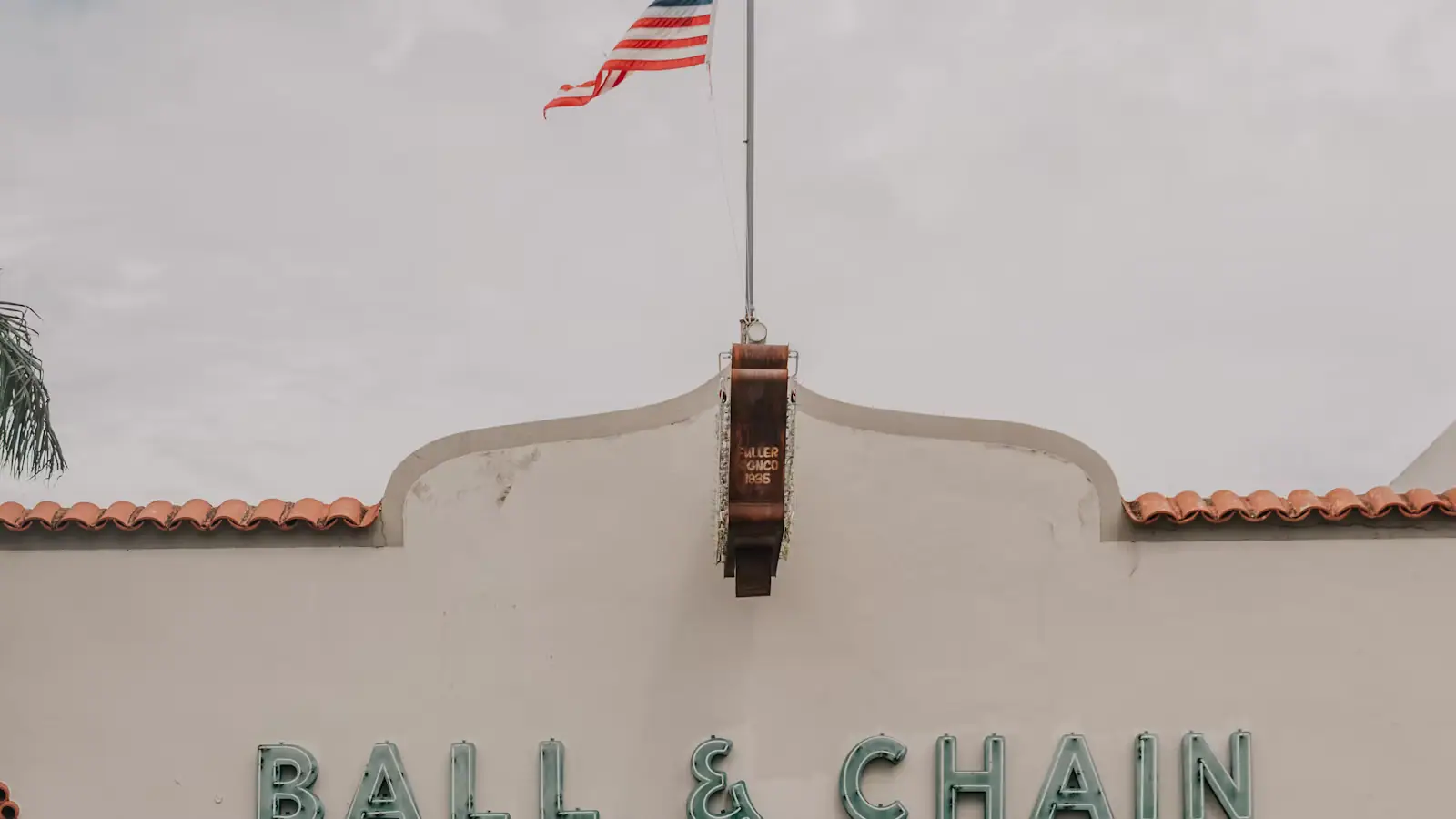
Mediterranean Revival came first, in the 1920s boom: stucco in warm ochres, barrel-tile roofs, arched openings, twisted columns, wrought iron. Española Way is a whole block of it.

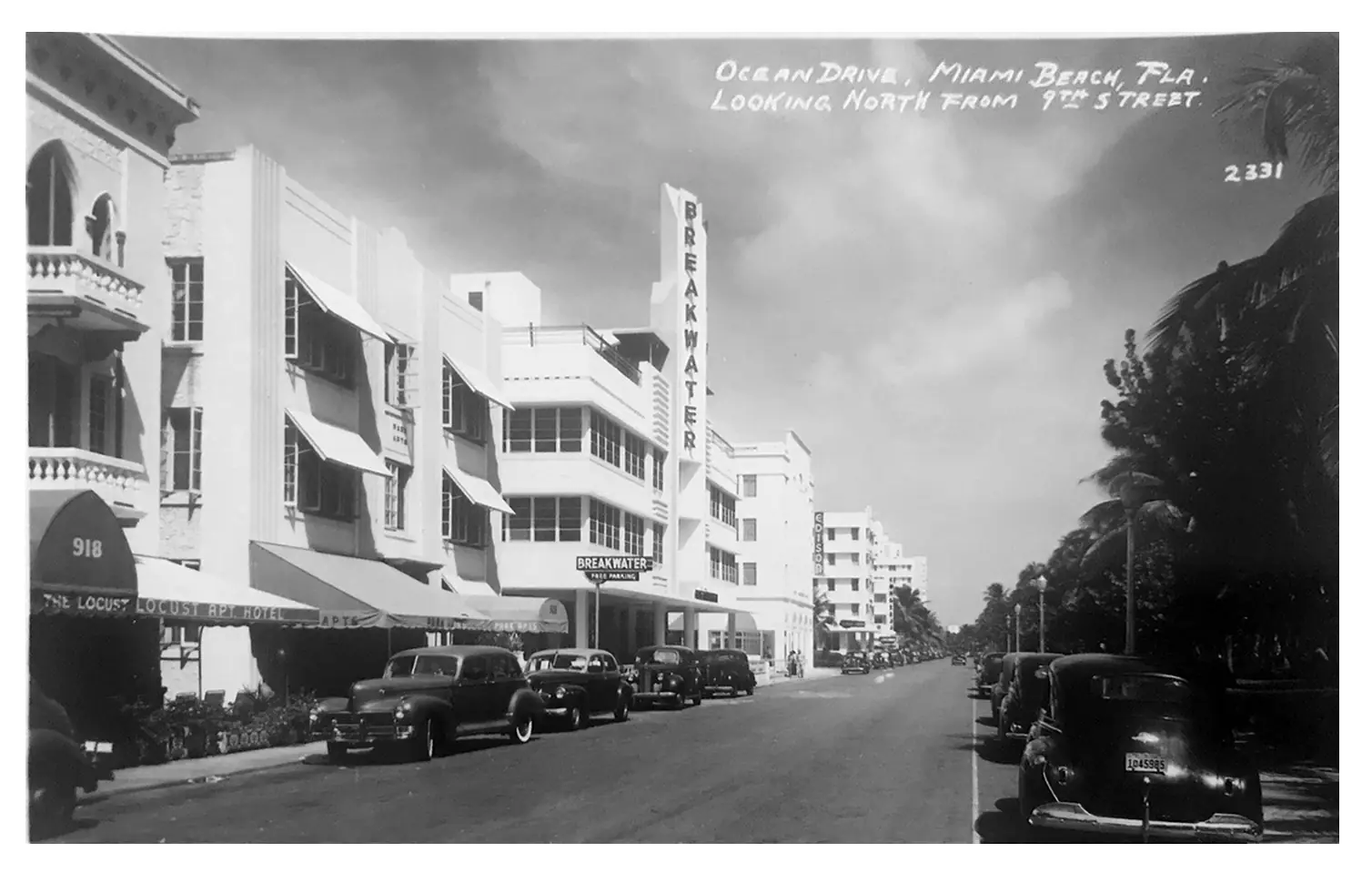
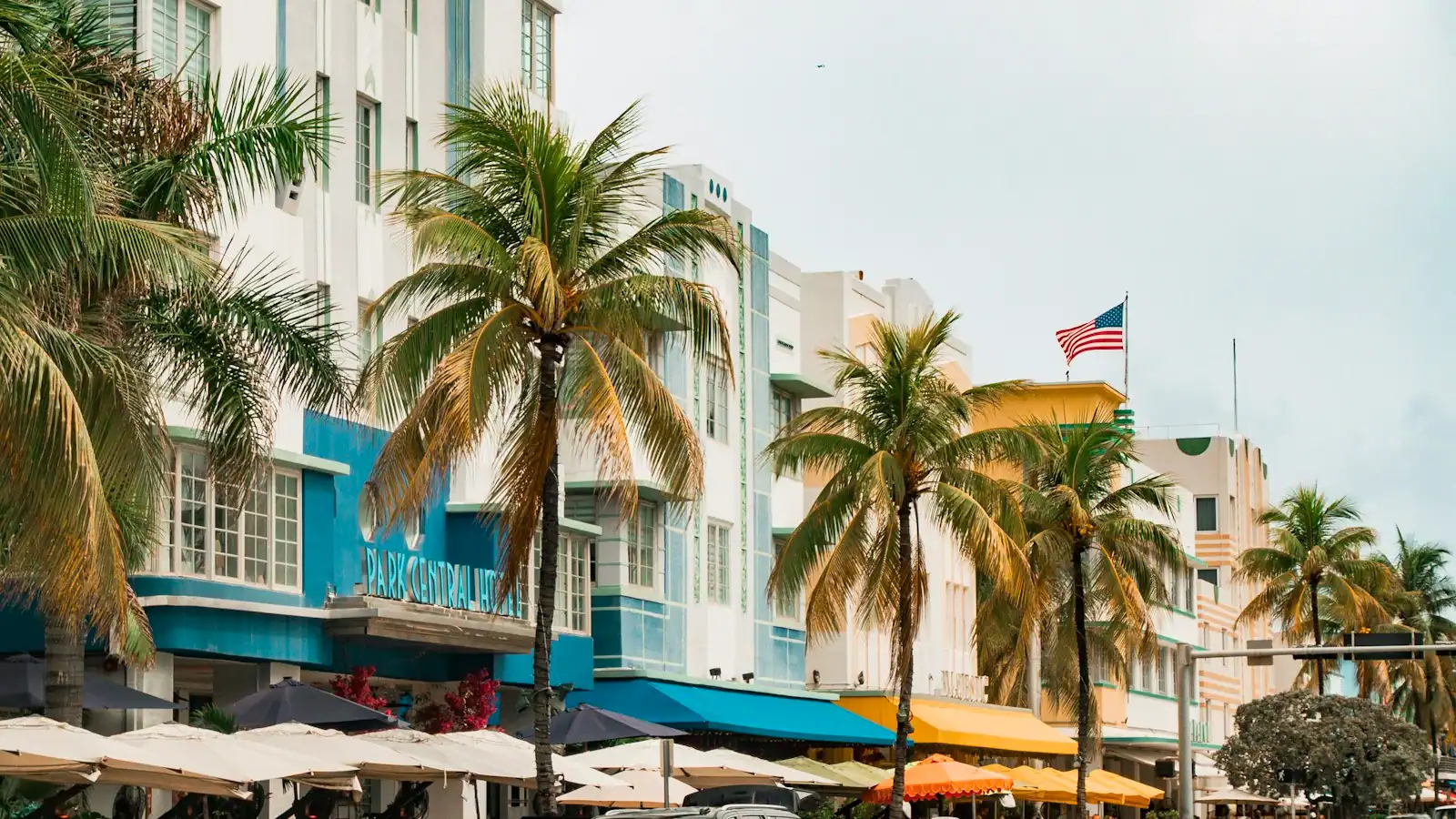
Art Deco is the 1930s answer, and it is the one people come for. Flat roofs with stepped parapets, horizontal banding, curved corners, glass block, vertical name signs, and the "eyebrows" — flat concrete shades cantilevered over each window, which exist because this is a subtropical city and shade is structural, not decorative.

Miami Modern, MiMo, is the postwar third act further north: cheese-hole concrete screens, boomerang shapes, cantilevered canopies over driveways.

Learn those three and the district stops being pretty and starts being legible.
Getting there and parking

The district is the southern end of the island and you are almost certainly already standing in it. The walkable core runs roughly from 5th Street north to 23rd Street, across the three parallel spines of Ocean Drive, Collins Avenue and Washington Avenue.

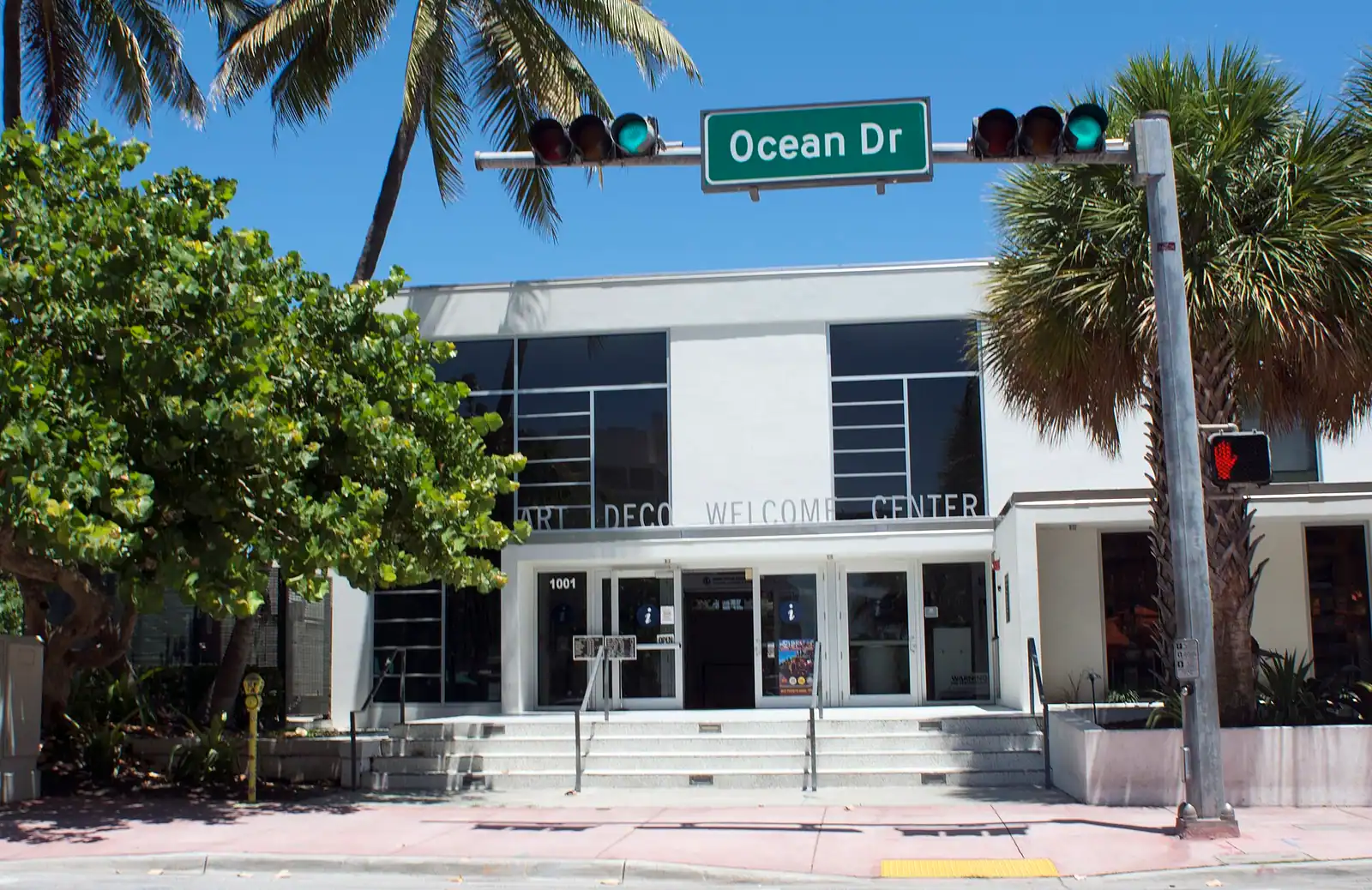
Start at 1001 Ocean Drive if you want a fixed point: the Art Deco Welcome Center, at 10th Street, is where the guided walks leave and where the small museum is.

Parking. The four municipal garages serving the district sit on and around Washington Avenue between 7th and 17th Streets. They are the practical choice: cheaper over a day than the meters, and they put you in the middle of the grid rather than at the edge of it.

By bus and trolley. The free Miami Beach trolley and the South Beach Local circulator both run the Washington and Collins corridors. From the mainland, buses cross the MacArthur Causeway onto 5th Street at the district's southern edge.

There is no train. Metrorail does not cross the bay, and the Metromover loop is on the mainland in downtown Miami and Brickell.

On foot, the whole core is about twenty-three blocks north to south and three long blocks east to west. Nothing in it is more than a twenty-five minute walk from anything else.

The rule of three, and how to date a building from the opposite pavement

Stand across the street. Almost every deco building here is organised in threes, and once you see it you cannot stop seeing it.

  • Three vertical divisions. A central bay, usually raised, with a wing on either side. The centre carries the entrance and the name.
  • Three horizontal bands. Often three storeys, often three racing stripes running across the façade, often three windows in the central bay.
  • Three steps in the parapet. The roofline rises in stages towards the middle, borrowing a skyscraper's silhouette for a small building.

Then look for the specific vocabulary:

Eyebrows. Flat concrete slabs projecting over the windows. These are the single most reliable South Beach detail and they are functional — they throw shade onto the glass in a city at 25 degrees north. A building with eyebrows is almost certainly 1930s.

Glass block and porthole windows. Nautical borrowings, sometimes called Nautical Deco, on buildings facing an ocean.

Terrazzo. Poured floors with chips of stone set in, often with the hotel's name or a geometric pattern laid into the lobby threshold. Look down at the doorway; a surprising number are original.

Neon. Not original to most buildings in the form you see it. Much of the current neon is restoration work from the 1980s onwards, which does not make it less good, only less old.

Keystone. The pitted, fossil-flecked local limestone quarried in the Florida Keys, used for sills, planters and door surrounds. If it looks like coral, it is.

Walking the core: three streets, one loop

The efficient version is a loop rather than a line, and it takes about two hours at a looking pace.

Start at 1001 Ocean Drive, the Art Deco Welcome Center, because ten minutes in the museum there does more for the next two hours than any amount of walking blind.

North up Ocean Drive to 15th. This is the postcard row, best seen from the Lummus Park side. The density of intact frontages between 8th and 14th is the highest in the district.

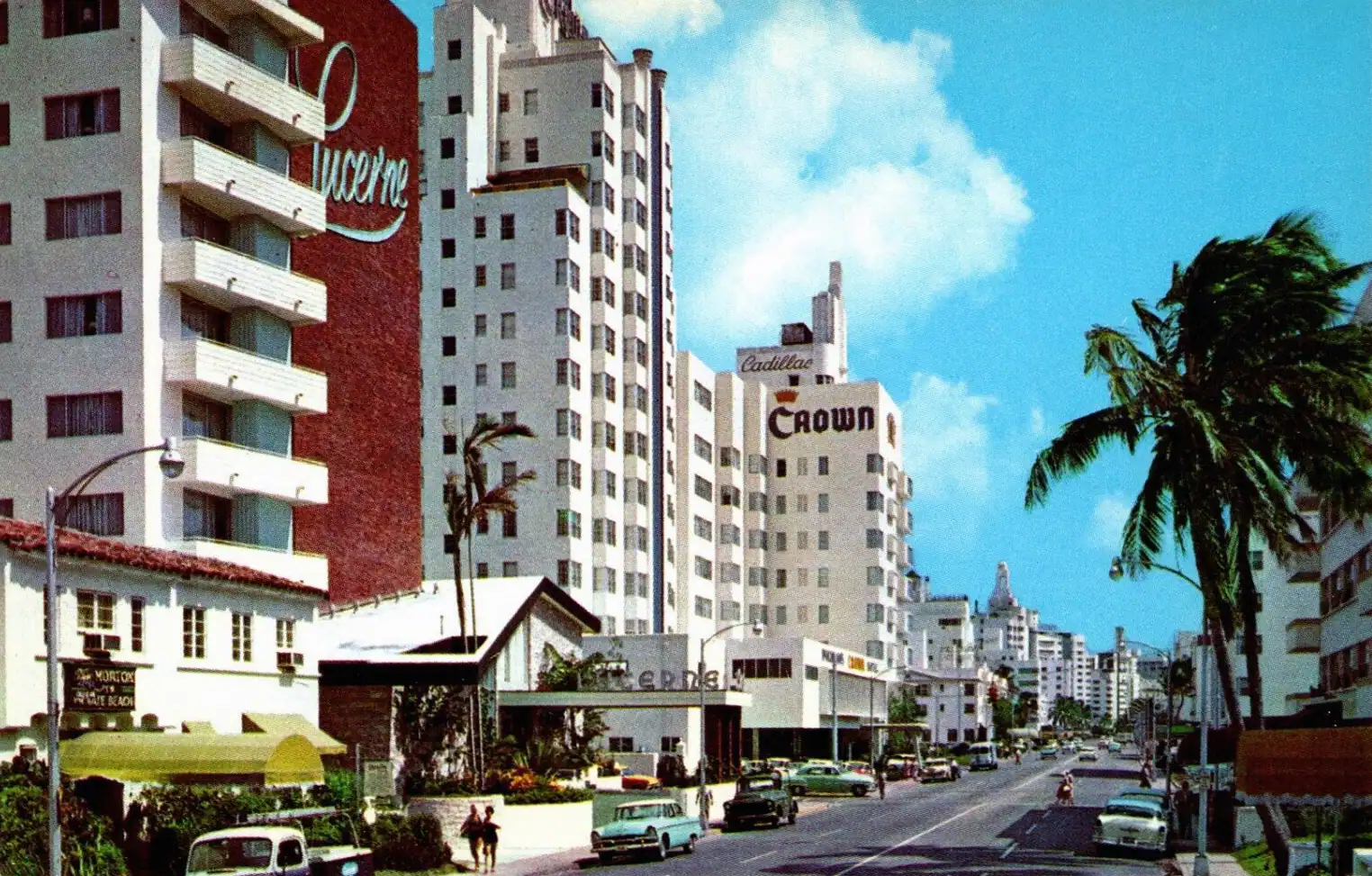
West on 14th or 15th to Collins Avenue, then south. Collins is the hotel spine and its buildings are taller and plainer at street level, but the upper floors and the corner towers are where the better detailing survives.

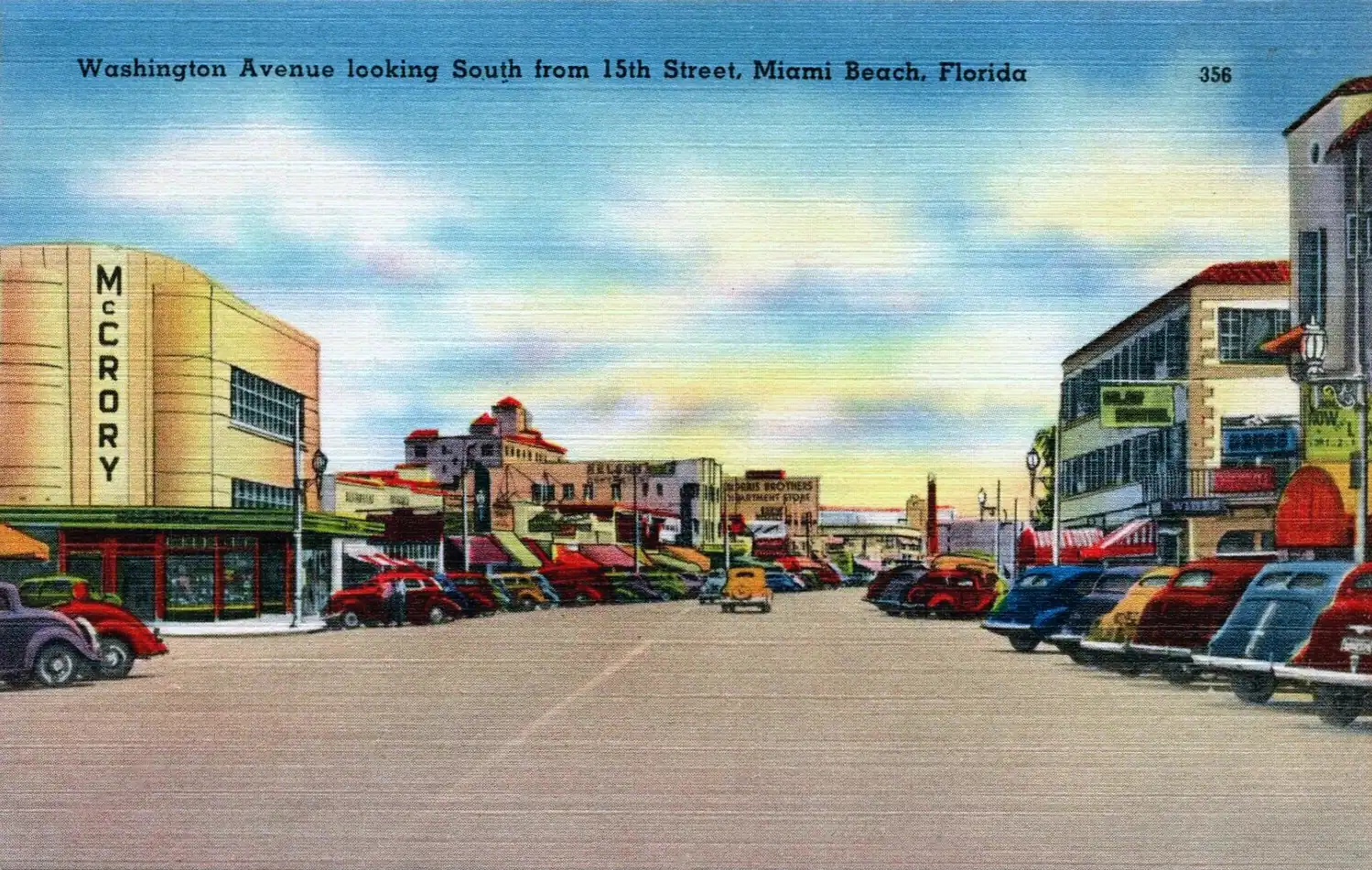
West again to Washington Avenue, where the district stops being hotels. The 1937 post office at 1300 Washington has a circular lobby with a domed skylight and a 1940 mural cycle inside, and it is open, free and almost always empty of visitors. The Wolfsonian at 1001 Washington is in a 1927 storage warehouse and is the best museum in the neighbourhood.

North to Española Way for the Mediterranean Revival contrast, then Lincoln Road for the 1960 Lapidus mall at the district's northern end.

Two things to know about walking it. There is essentially no shade on Washington and Collins between noon and four. And the district's best hour is early — the light is on the Ocean Drive façades from sunrise, and on the Collins and Washington frontages later in the day.

What was saved, what was not, and what it costs to keep

Preservation here is not settled history. It is an ongoing argument with money on one side.

The district was listed in 1979, but listing on the National Register does not by itself prevent demolition — the protection that matters is local. Miami Beach's own historic preservation ordinances and its Historic Preservation Board came later and are what actually govern what an owner may do to a façade. That gap is why buildings were still coming down in the 1980s after the district had been listed.

What survives is around 800 contributing structures, which is the largest concentration of 1920s-to-1940s architecture of this kind anywhere. What did not survive includes the Senator, demolished in 1988, and a long list of smaller buildings that went before anyone was counting.

The live pressure now is different and physical. These are low-lying buildings on a barrier island with a rising water table, and Miami Beach has spent years raising roads and installing pumps, which changes the relationship between a 1930s ground floor and the street outside it. Several blocks now sit noticeably below the road they face. Walk Alton Road or the western edge of the district and you can see the level change in the kerbs.

The reasonable way to hold this: the district is not a film set that happens to still be standing. It is roughly eight hundred working buildings, most of them occupied, being maintained under a code, on ground that is getting wetter.

Guided, self-guided, or neither

OptionRunsSuits
MDPL official walking tourDaily from 1001 Ocean Drive, typically 10:30am, with an evening tour on ThursdaysAnyone who wants the history and the architect names, and who will use the included museum admission
MDPL self-guided audio tourAny time, roughly 90 minutes, several languagesIndependent walkers, late risers, people travelling with children who will not stand still
Commercial walking toursSeveral operators, various start pointsCombining deco with food or nightlife rather than architecture alone
Doing it yourselfFreeAnyone who has read the section above on the rule of three and wants two hours alone

The honest ranking: the MDPL tour is the one that earns its fee, because it is run by the organisation that saved the district and it goes inside buildings. The audio tour is the best value. Doing it yourself works perfectly well if you start at the Welcome Center museum first.

Times and prices move. Check with the Miami Design Preservation League before you plan a morning around a specific departure.

Tours that visit Art Deco District

Operators run these trips past Art Deco District, or stop there as part of a longer route. We list what the booking data supports — not everything that mentions the name.

These earn us a commission through Viator. Same price for you, and the commission had no hand in the order.

Shared departurespriced per seat, best value for one or two

Private and small-group optionsoften cheaper per head for a family or a group of six

Near Art Deco District

Straight-line distances, so allow more on the road — the island is long and has one main parkway.

  • The peach and mint facade of a three-storey Art Deco hotel seen from below with a palm frond crossing the frame

    Neighbourhood

    Ocean Drive

    Free

    Ten blocks of deco facade on one side and open park on the other, and almost everything depends on which side you choose.

    1–2.5 hoursFree to walk. The sidewalk cafes, hotel bars and beach loungers are not.960 ft away

  • A visitor standing in a small gallery looking at framed works hung on a white wall

    Museum

    Art Deco Welcome Center

    The preservation league's own building, and the ten minutes that make the next two hours of walking make sense.

    0.5–2.5 hoursThe Welcome Center, shop and information desk are free to enter. The Art Deco Museum, guided walking tours and the self-guided audio tour are ticketed, with museum admission included in the guided tour.990 ft away

  • A visitor standing in a gallery looking at framed works hung on a white wall

    Neighbourhood

    Washington Avenue

    Free

    Two blocks back from the ocean and about a third of the price, with the district's best museum and all four cheap garages on it.

    1–3 hoursThe street is free, as is the post office lobby. The Wolfsonian and the Jewish Museum of Florida charge admission.250 ft away

  • A palm-lined beach in front of a row of mid-rise hotel buildings

    Neighbourhood

    Collins Avenue

    Free

    One block back from the ocean, named for a New Jersey avocado farmer, and the reason anyone could reach this island at all.

    0.5–2 hoursFree to walk. Hotels, shops and restaurants are not.530 ft away

Art Deco District: common questions

How many Art Deco buildings are there in South Beach?

Around 800 contributing structures were listed when the Miami Beach Architectural District went onto the National Register on 14 May 1979, and that remains the figure usually quoted. It is the largest concentration of 1920s-to-1940s architecture of this kind anywhere. Not all 800 are Art Deco in the strict sense: the district also holds a substantial body of 1920s Mediterranean Revival and, towards its northern edge, postwar Miami Modern.

What are the eyebrows on South Beach buildings?

The flat concrete slabs projecting over the windows. They are the most reliable single identifier of a 1930s Miami Beach building, and they are functional rather than decorative: at this latitude a horizontal shade above a window keeps direct sun off the glass for most of the day. Once you have noticed them on one building you will see them on several hundred, usually in sets of three, which is the other deco habit here.

Where does the Art Deco district start and end?

The National Register boundaries run from the Atlantic west to Lenox Court, and from 6th Street north to Dade Boulevard along the Collins Canal. The stretch visitors actually walk is narrower: roughly 5th to 23rd Streets across Ocean Drive, Collins Avenue and Washington Avenue. That is about twenty-three blocks. Everything in the walkable core is within a twenty-five minute walk of everything else.

Who saved the Miami Beach Art Deco district?

Barbara Baer Capitman more than anyone. She founded the Miami Design Preservation League in 1976 and spent a decade arguing for buildings that the city at the time considered worthless, taking the case to a state hearing in December 1978 and securing the National Register listing the following May. The campaign did not save everything: the Senator Hotel on Collins was demolished in 1988. The league still runs the Welcome Center and the official walking tours.

Can you go inside the Art Deco hotels?

Several lobbies are open to anyone who walks in, and the lobbies are often where the best surviving detail is — original terrazzo floors, etched glass, keystone surrounds, period light fittings. The reliable tell is whether the front doors stand open to the street. Do not photograph guests, do not go past the lobby, and expect a doorman to turn you away at a handful of the more exclusive addresses. The 1937 post office at 1300 Washington Avenue is public, free and consistently open.