Skip to content
Menu

These earn us a commission through Viator. Same price for you, and the commission had no hand in the order.

Search
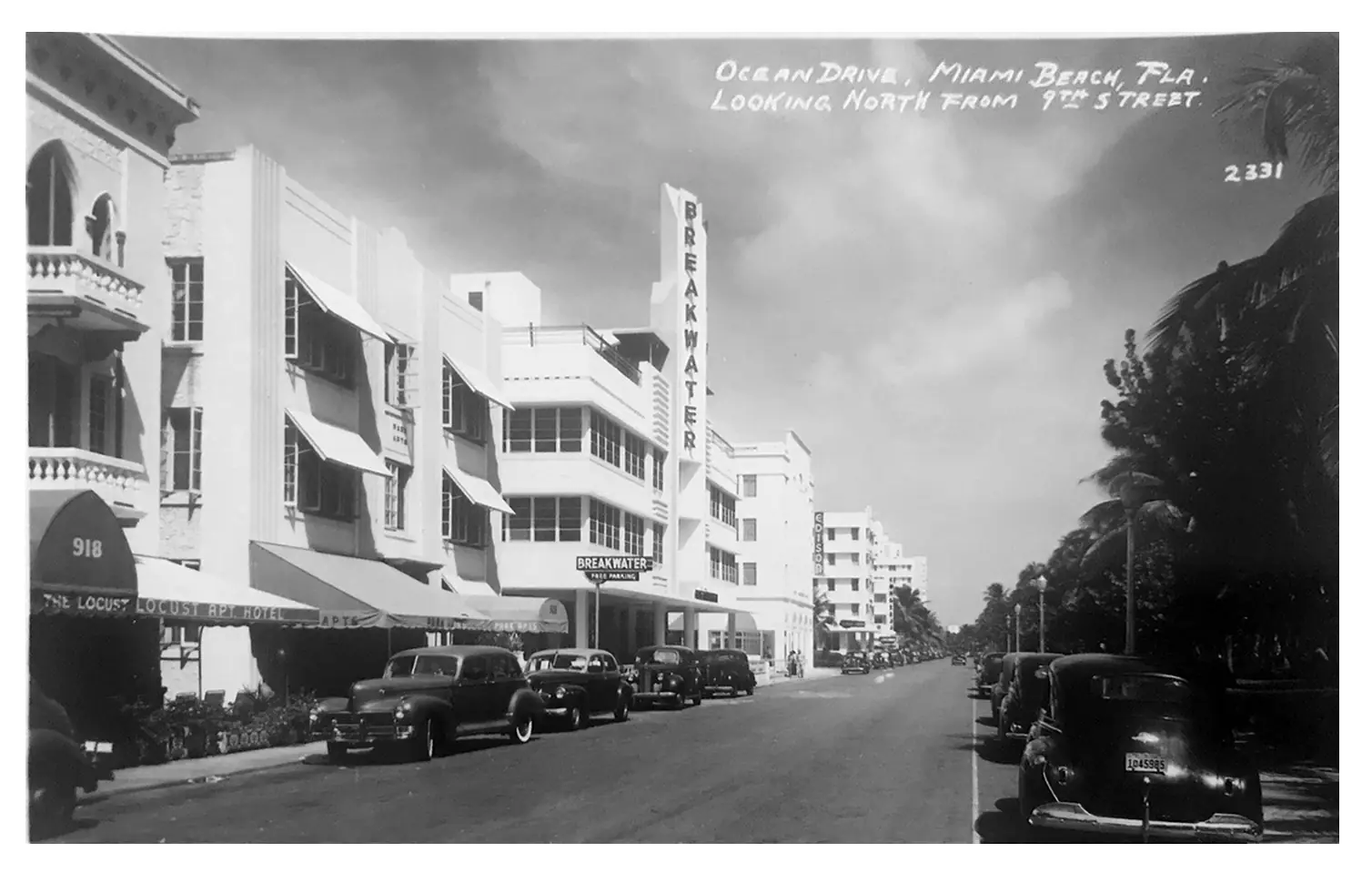
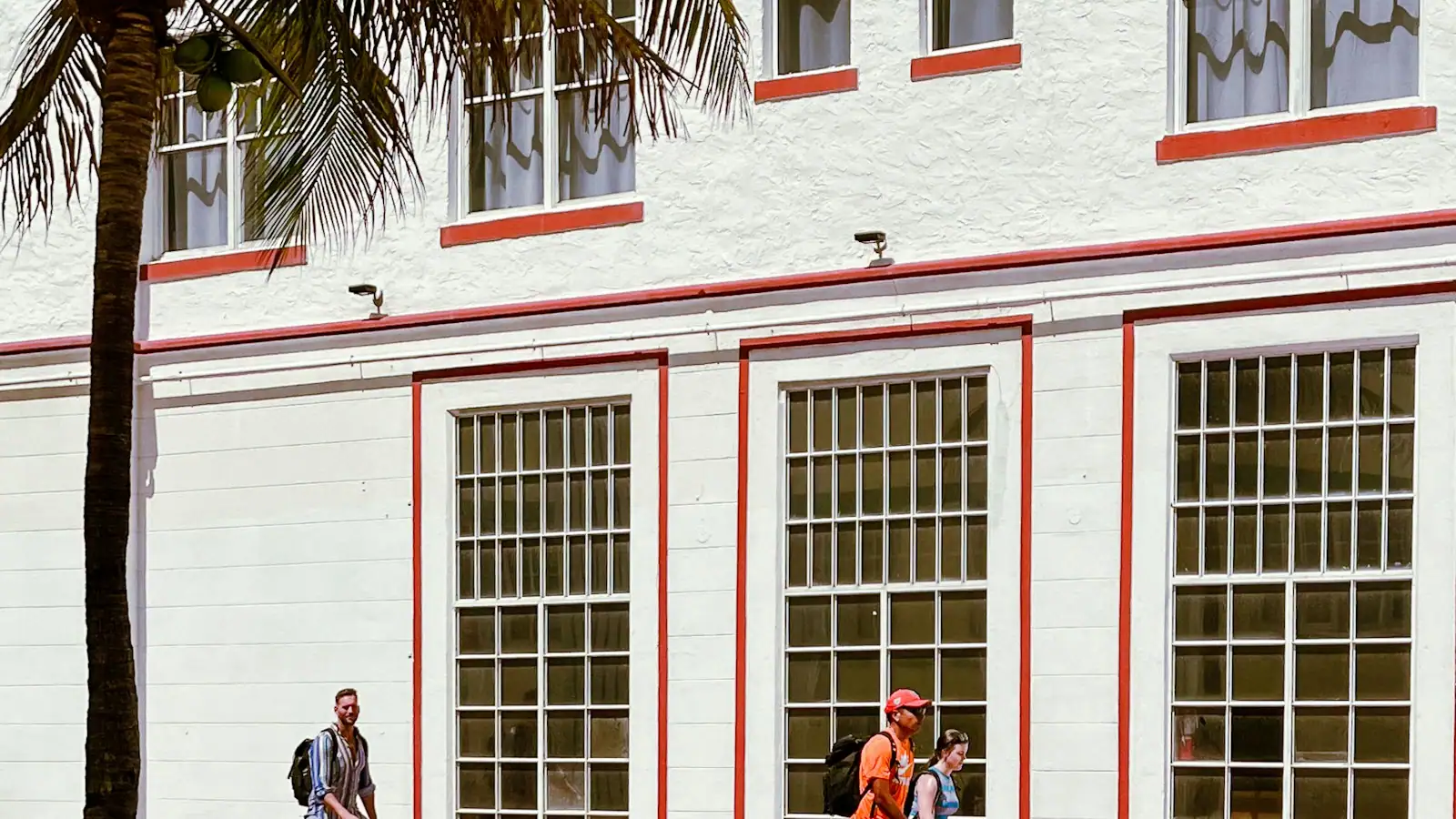
A wide city street with palms, shopfronts and pedestrians under strong midday sun
Curt Teich & Co., Chicago (publisher)

Historic site

The Carlyle

Last updated

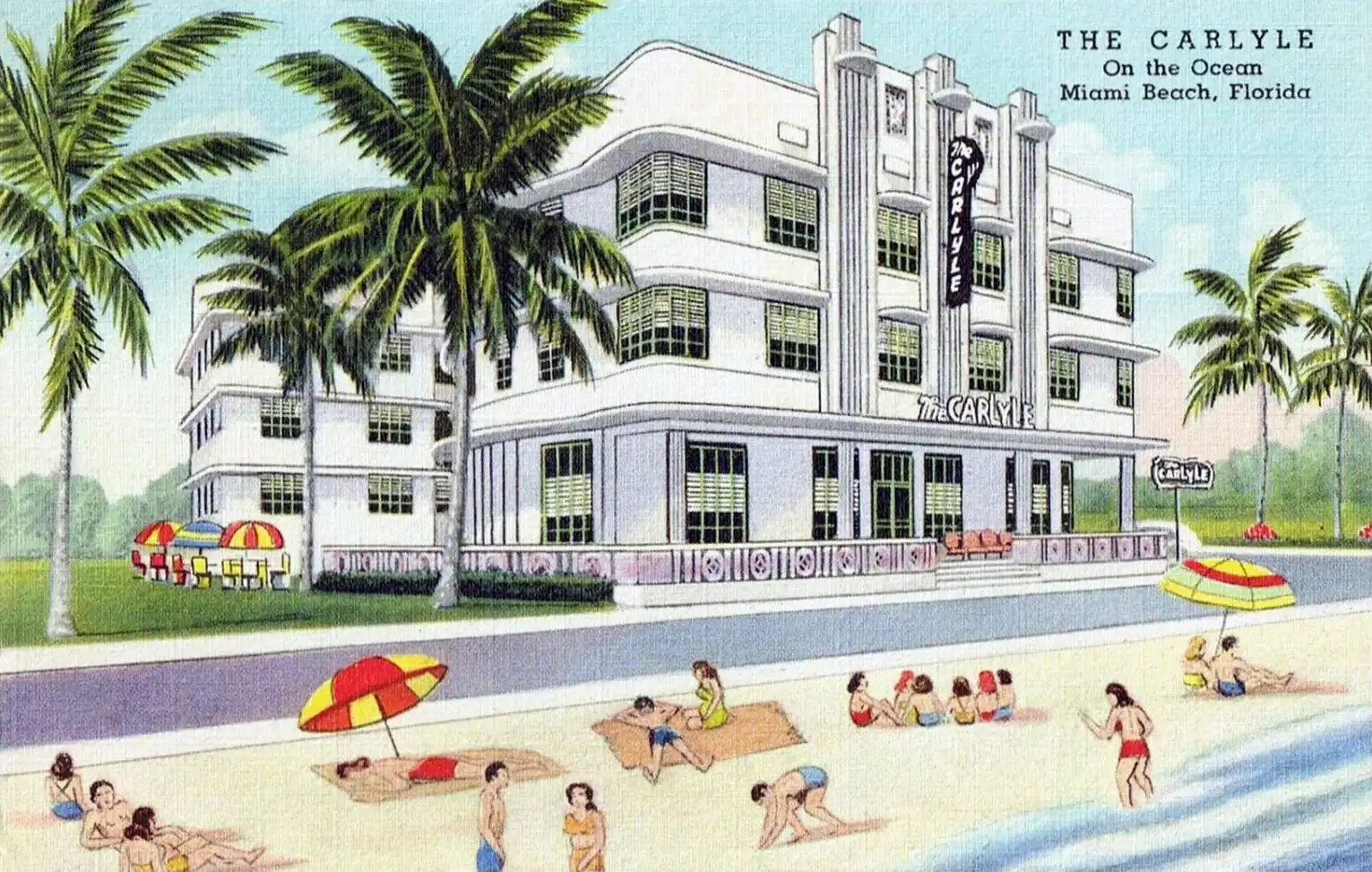
The three-fin Streamline Moderne front that stands in for South Beach in half a dozen films, and has no lobby you can enter.

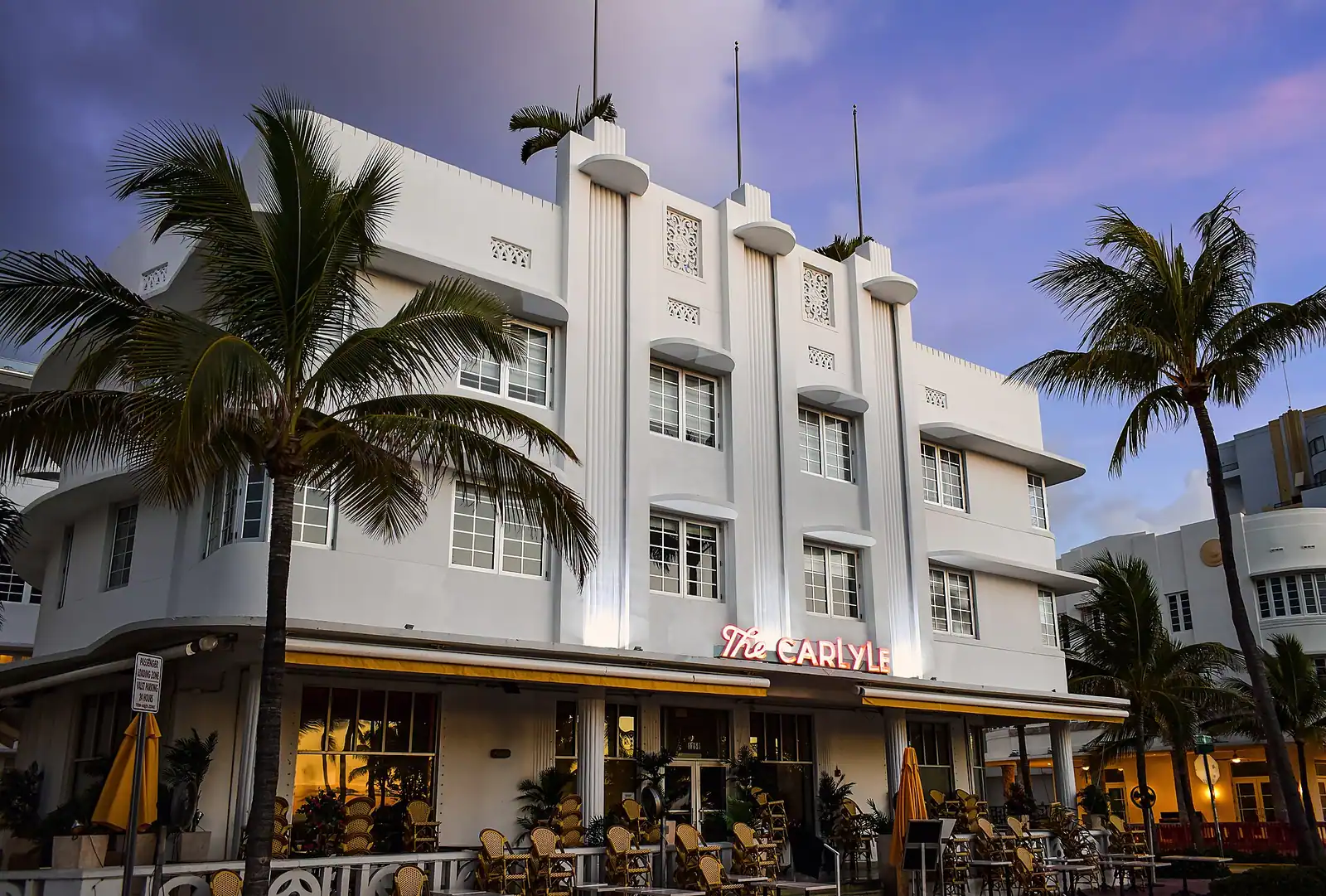
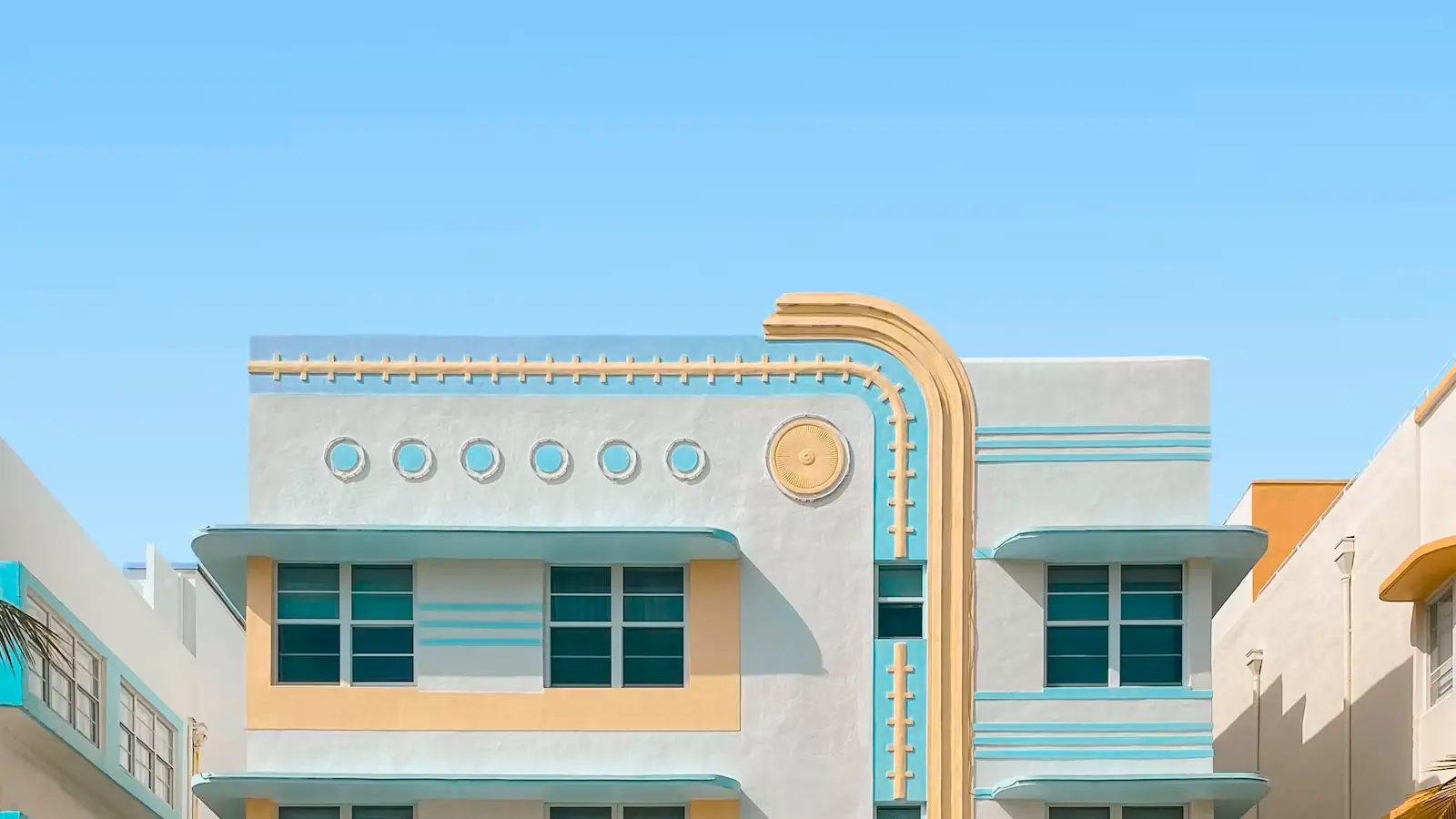
The Carlyle sits at 1250 Ocean Drive, on the short block between 12th and 13th Streets, and it is the building most people are actually picturing when they picture South Beach. Kiehnel and Elliott designed it at the end of the 1930s — most sources say 1939, a few property records say 1941 — and it is Streamline Moderne rather than the fussier early deco further south. Three vertical fins rise the full height of the front and wrap the corners like ribbon. Horizontal eyebrows shade each row of windows. The whole composition is symmetrical about a central bay, which is the deco habit this island never let go of.

The rule of three is the thing to look for, because once you have it you will see it repeated for twenty blocks. Three fins, three bands, three steps in the parapet. Miami Beach architects worked with almost no budget and no ornament, so they got their effect from repetition and symmetry, and from painting the result in colours that read from across the street.

Now the correction. The Carlyle has not been an operating hotel since 2006, when it was converted into roughly twenty condominium residences. There is no lobby bar, no reception desk you can browse, no tour. Visitors who have seen The Birdcage — whose exterior is this building — arrive looking for a club that was never inside it. Scarface and Bad Boys II used the front too. All of that was filmed against the façade or on sets elsewhere.

So this is an exterior. Treat it as one, and it becomes a better stop than most ticketed attractions on the island: two minutes of looking, from the right spot, at the right hour. Its immediate neighbours make the case. The Leslie at 1244, by Albert Anis in 1937, is the austere one. The Cardozo at 1300, by Henry Hohauser in 1939, is the rounded one with the wrapping corner. The Carlyle is between them, and the three read as a single composition that no individual building achieves alone.

Getting there and parking

On the west side of Ocean Drive between 12th and 13th Streets, in the middle of the Art Deco Historic District.

On foot is the only sensible approach. From the Art Deco Welcome Center at 10th and Ocean it is a three-minute walk north. From Lincoln Road it is about fifteen minutes south along Collins Avenue.

Do not drive to Ocean Drive. Between 5th and 15th the street is slow, frequently closed for events, and the metered spaces on it are among the most contested on the island. Park in one of the municipal garages a few blocks west — the 12th Street and 13th Street garages between Collins and Washington are the closest — and walk the last three minutes.

Trolley and bus. The free Miami Beach Trolley's South Beach loop runs on Washington Avenue, two blocks west, and the South Beach Local bus circulates through the same streets. Either drops you within a five-minute walk.

From the mainland, the MacArthur Causeway feeds onto 5th Street; it is then eight blocks north. There is no train to Miami Beach from anywhere, so budget for causeway traffic rather than distance.

Which side of the street, and at what hour

Ocean Drive runs north to south and every deco front on it faces due east. That one fact decides your whole visit.

Photograph in the morning. From first light until about ten, the sun is out over the Atlantic and falls directly on the façades. Colours read, the eyebrow shadows are crisp, and the pastel actually looks pastel. By two in the afternoon the sun has swung behind the buildings and the entire west side of Ocean Drive is in flat shadow for the rest of the day. Every disappointing photograph of Ocean Drive was taken after lunch.

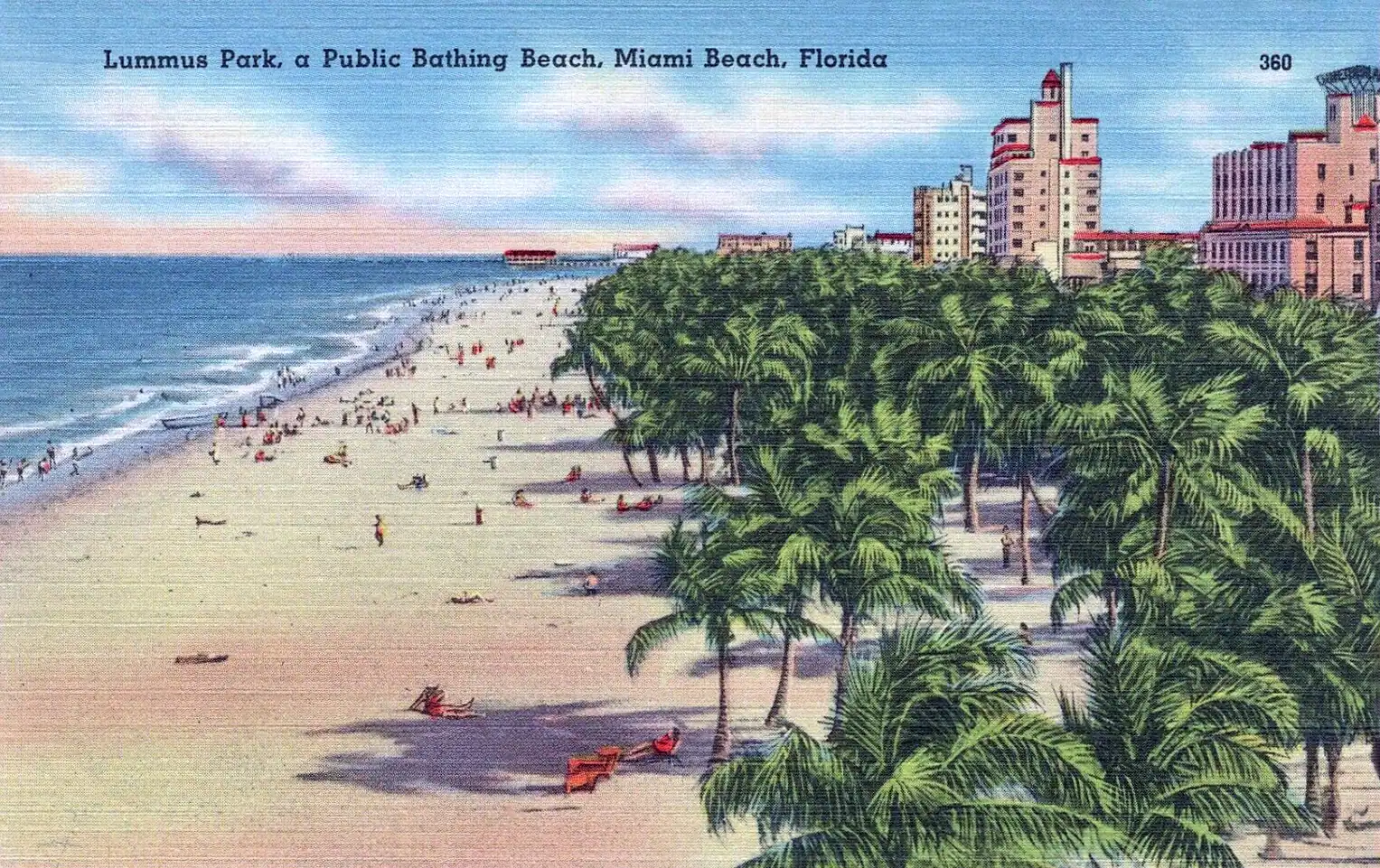
Stand on the east side. Cross into Lummus Park and shoot back across the road from the grass or the pavement edge. From directly beneath the building you get a distorted three-storey wedge; from forty or fifty feet back across the street you get the symmetry the architects designed for, and you can frame the Leslie, the Carlyle and the Cardozo as one run.

Before about nine on a weekday the sidewalk cafés have not yet set out their tables and stands, the pavement is clear, and the street is quiet enough to stand in for a moment between cars. From late morning onwards the café frontage is fully deployed and the building sits behind two rows of parasols.

Night is a different subject entirely. The neon comes on at dusk, and the twenty or so minutes after sunset — when the sky still holds colour — are when neon and daylight balance. Once it is fully dark the tubes blow out and the buildings behind them vanish.

How to read a Miami Beach deco front

The vocabulary repeats, so learning it once pays for the rest of the district.

  • Eyebrows. The flat concrete ledges over each window. They are not decoration; they are shade, in a city with no air conditioning in 1939.
  • Vertical fins. Piers that break the horizontal banding and give the building height it does not have. Three is standard. The Carlyle's are unusually deep.
  • Racing stripes. Two or three thin painted lines running the width of the front. Borrowed from ocean liners and aircraft, and the reason the style is called Streamline.
  • Rounded corners. A wrapped corner window or a curved parapet, again the liner reference.
  • The parapet. The stepped top hiding a flat roof. Often the only place the architect was allowed any flourish.
  • Keystone. The pale, pitted local coral limestone used for sills, banding and lobby floors. Look for the fossil shells in it.

One thing the colours are not: original. The pastel palette that defines Ocean Drive today was largely applied from the 1980s onwards, much of it associated with the designer Leonard Horowitz working alongside the preservation campaign. The 1930s buildings were mostly white and cream with darker trim. The pink-and-turquoise South Beach of postcards is a 1980s reading of a 1930s street, which is a more interesting fact than the postcard.

What is not possible here

Set expectations before you walk over, because the building gives nothing away from the pavement.

There is no public lobby. The Carlyle is residential. The entrance is for owners, their guests and staff. Walking in to look around is not a thing that happens, and the door staff on Ocean Drive are used to people trying.

There is no bar, restaurant or rooftop. Several Ocean Drive deco buildings do have publicly accessible lobbies and terraces — this is not one of them.

There is no tour of the interior. The Miami Design Preservation League's walking tours cover this stretch from the street, which is the right way to see it, and they go inside a selection of buildings that welcome visitors. The Carlyle is not among them.

Individual residences do appear on short-term rental platforms from time to time, which is a matter for the listing and the building's own rules rather than something this page can confirm. If staying inside the building matters to you, verify the listing against the current condominium policy before booking.

None of that makes it a poor stop. It makes it a two-minute stop, best combined with the walk north along Ocean Drive rather than treated as a destination of its own.
The rest of the block, in walking order

Working north from 12th Street, on the west side of Ocean Drive:

  • 1244 — the Leslie. Albert Anis, 1937. Yellow with grey trim, almost no ornament, and the plainest of the three. Anis was the restrained one.
  • 1250 — the Carlyle. The subject of this page.
  • 1300 — the Cardozo. Hohauser, 1939. The rounded corner at 13th Street, wrapping windows, and a lobby that has historically operated as a hotel.
  • 1320 — the Cavalier. Narrower, with vertical relief panels cut into the stucco, and a useful contrast: this is the early, geometric, Aztec-influenced deco that predates the streamlined kind next door.

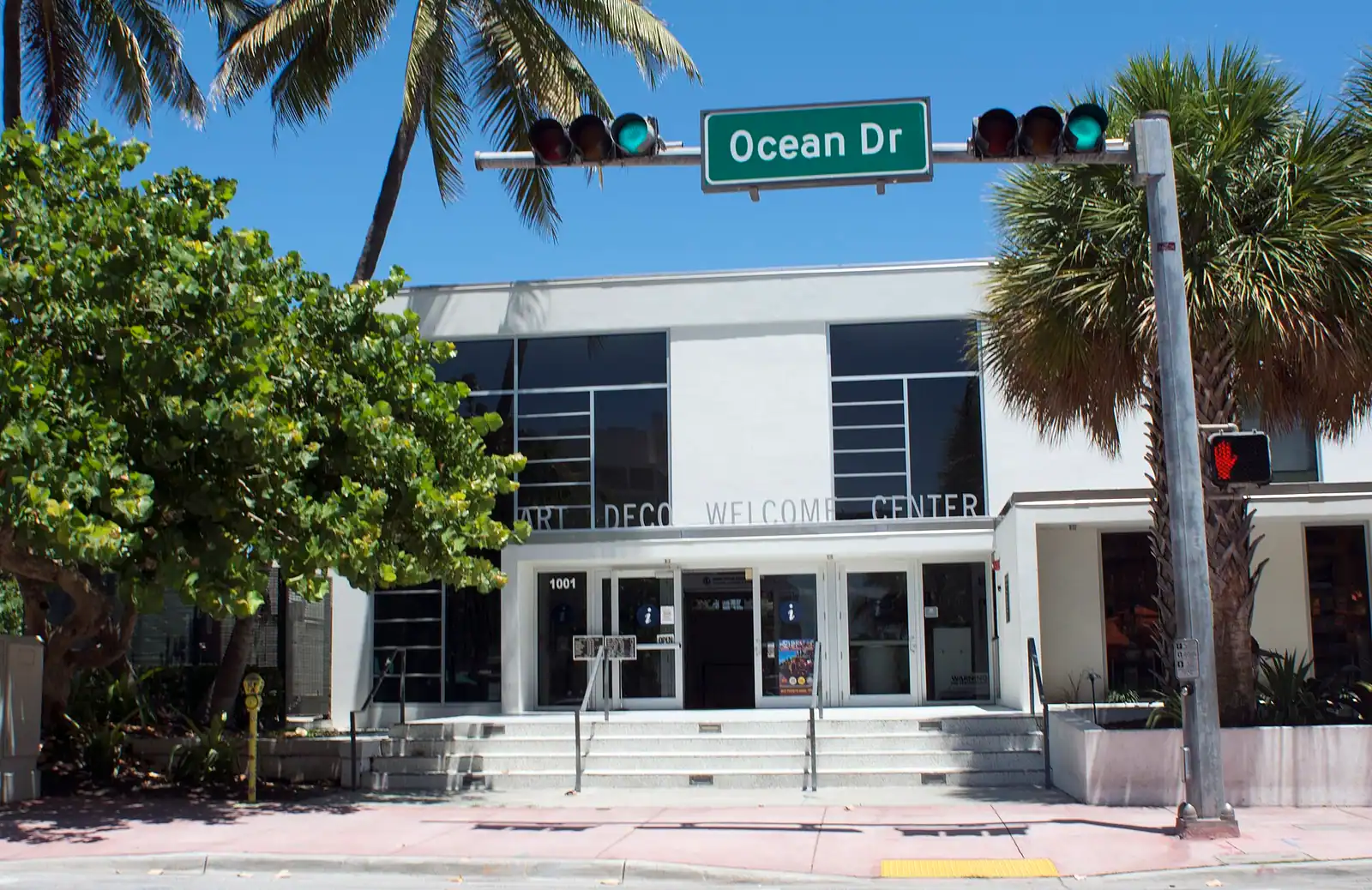
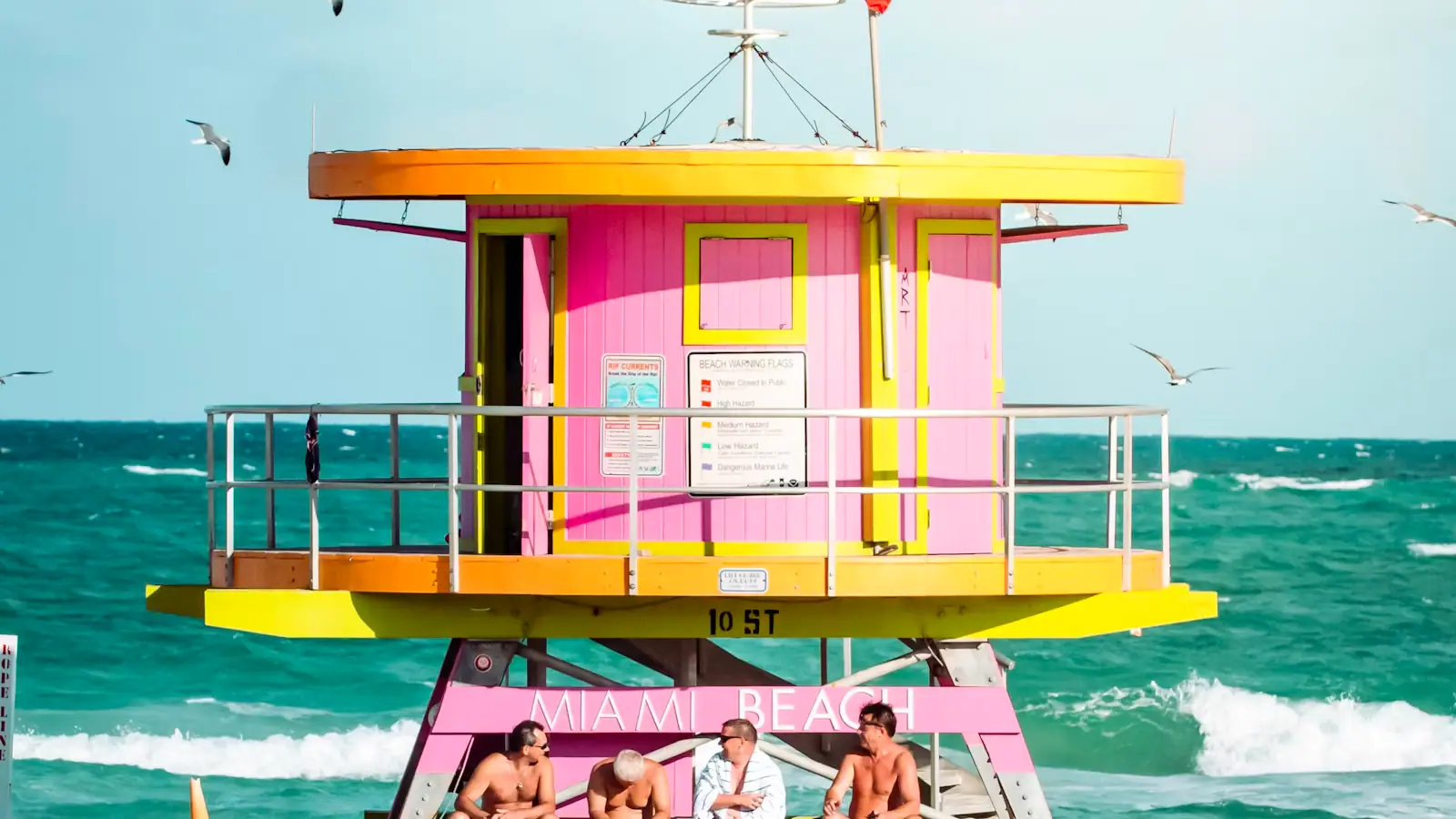
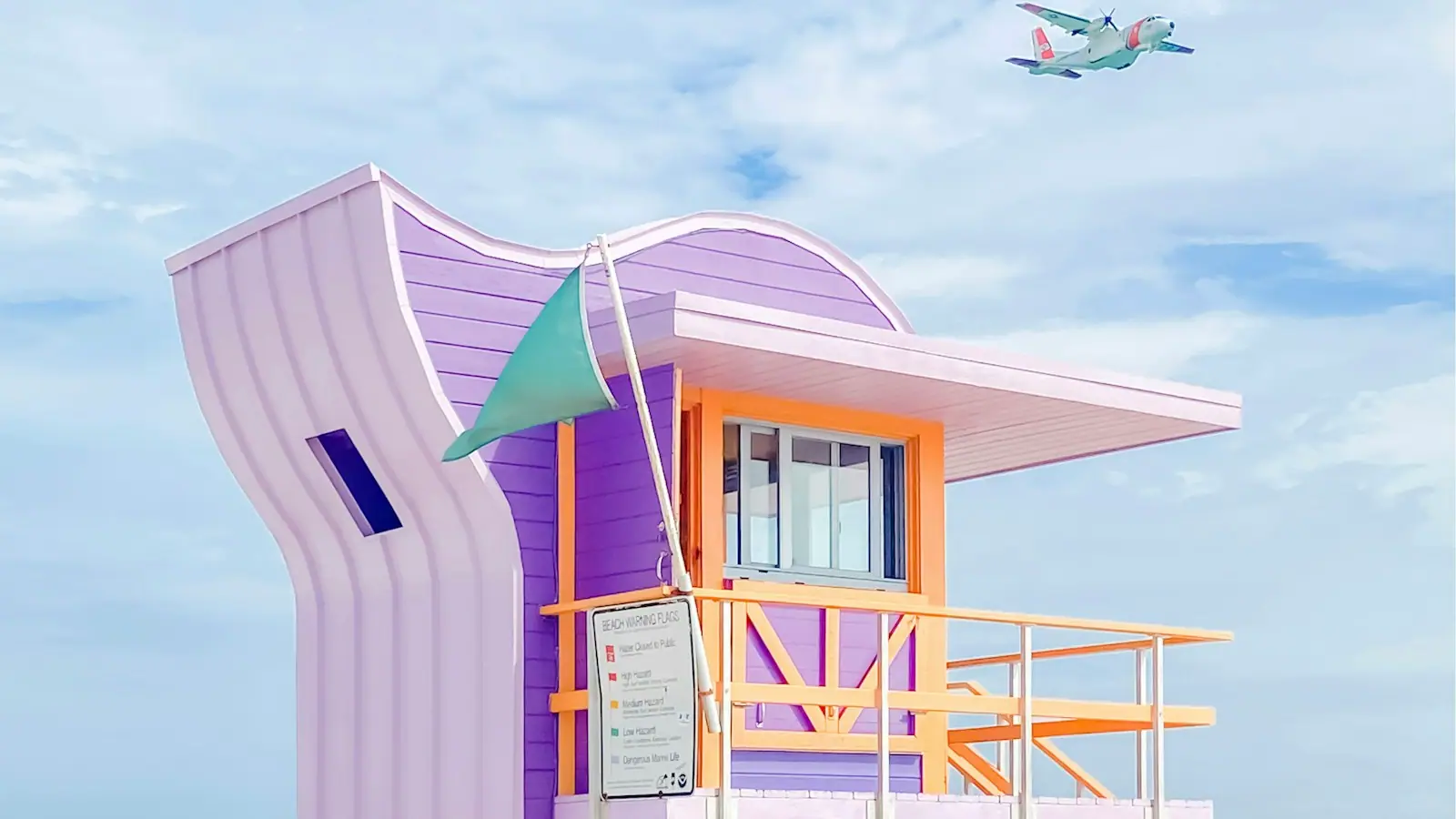
Two blocks south at 10th Street is the Art Deco Welcome Center, which is the sensible place to start a walk, pick up a map and join a guided tour. Two blocks north at 14th is the beach's turquoise lifeguard tower, which is the other thing everyone photographs on this stretch.

If you have an hour, walk 8th Street to 15th on Ocean Drive going north in the morning, then cut west one block and come back down Collins Avenue. Collins has fewer tourists, more intact ground floors and several deco fronts that nobody stops for.

Tours that visit The Carlyle

Operators run these trips past The Carlyle, or stop there as part of a longer route. We list what the booking data supports — not everything that mentions the name.

These earn us a commission through Viator. Same price for you, and the commission had no hand in the order.

Shared departurespriced per seat, best value for one or two

Private and small-group optionsoften cheaper per head for a family or a group of six

Near The Carlyle

Straight-line distances, so allow more on the road — the island is long and has one main parkway.

  • The peach and mint facade of a three-storey Art Deco hotel seen from below with a palm frond crossing the frame

    Neighbourhood

    Ocean Drive

    Free

    Ten blocks of deco facade on one side and open park on the other, and almost everything depends on which side you choose.

    1–2.5 hoursFree to walk. The sidewalk cafes, hotel bars and beach loungers are not.0.2 mi away

  • A symmetrical pastel hotel facade with banded concrete window shades and a stepped central parapet

    Historic site

    Art Deco Historic District

    Free

    Roughly 800 protected buildings in twenty-odd blocks, and a visual grammar you can learn in about ten minutes.

    1.5–4 hoursFree to walk. Guided tours, the Art Deco Museum, the Wolfsonian and the Jewish Museum of Florida charge separately.910 ft away

  • Curving paved walkways running through low coastal planting in a landscaped seafront park

    Park

    Lummus Park

    Free

    Ten blocks of palm, path and free outdoor gym, and the decision that kept anyone from building between Ocean Drive and the Atlantic.

    0.5–3 hoursFree. The park, the outdoor gym, the volleyball courts, the restrooms and the beach access cost nothing.0.3 mi away

  • A visitor standing in a small gallery looking at framed works hung on a white wall

    Museum

    Art Deco Welcome Center

    The preservation league's own building, and the ten minutes that make the next two hours of walking make sense.

    0.5–2.5 hoursThe Welcome Center, shop and information desk are free to enter. The Art Deco Museum, guided walking tours and the self-guided audio tour are ticketed, with museum admission included in the guided tour.0.2 mi away

The Carlyle: common questions

Can you go inside the Carlyle on Ocean Drive?

No. The Carlyle was converted from a hotel to private condominium residences in 2006, and there is no public lobby, bar, restaurant or interior tour. The entrance is for residents and their guests. You can photograph and admire it freely from the pavement and from Lummus Park across the street, which is how the building is designed to be read anyway. Individual units occasionally appear on rental platforms; that is between you and the listing.

Was The Birdcage filmed at the Carlyle?

The exterior, yes. The building at 1250 Ocean Drive stands in for the club's frontage in the 1996 film, and its façade also appears in Scarface and Bad Boys II. The interiors in those films were built or shot elsewhere, so there is no club, stage or bar behind the doors to visit. Plenty of people walk over expecting otherwise, which is the main reason this page exists.

What is the best time of day to photograph Ocean Drive?

Morning, without much competition. Every deco façade on Ocean Drive faces east, so the sun lights them from first light until roughly ten, then swings behind and leaves the entire west side in shadow for the rest of the day. Stand on the Lummus Park side of the street rather than directly under the building. The second window is the twenty minutes after sunset, when the neon is lit but the sky still holds colour.

Are the pastel colours on Ocean Drive original?

Mostly not. The 1930s buildings were painted in whites, creams and pale greys with darker trim. The pink, turquoise and lavender palette that defines the street now was applied from the 1980s onwards as the district was restored, much of it associated with the colourist Leonard Horowitz working alongside the preservation campaign. The buildings are genuinely historic; the colour scheme is a later interpretation of them.

Which Art Deco buildings on Ocean Drive can you actually walk into?

Several operating hotels on the strip keep publicly accessible lobbies, and the Art Deco Welcome Center at 10th Street is open to anyone. The Carlyle is not one of them. If walking through deco interiors matters to you, the Miami Design Preservation League's guided tours are the reliable route, because they are arranged with buildings that agree to admit groups rather than depending on whether a door attendant is in a good mood.