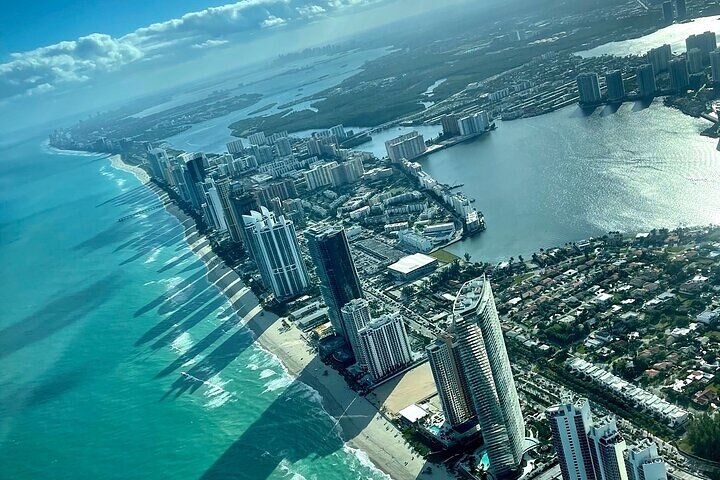
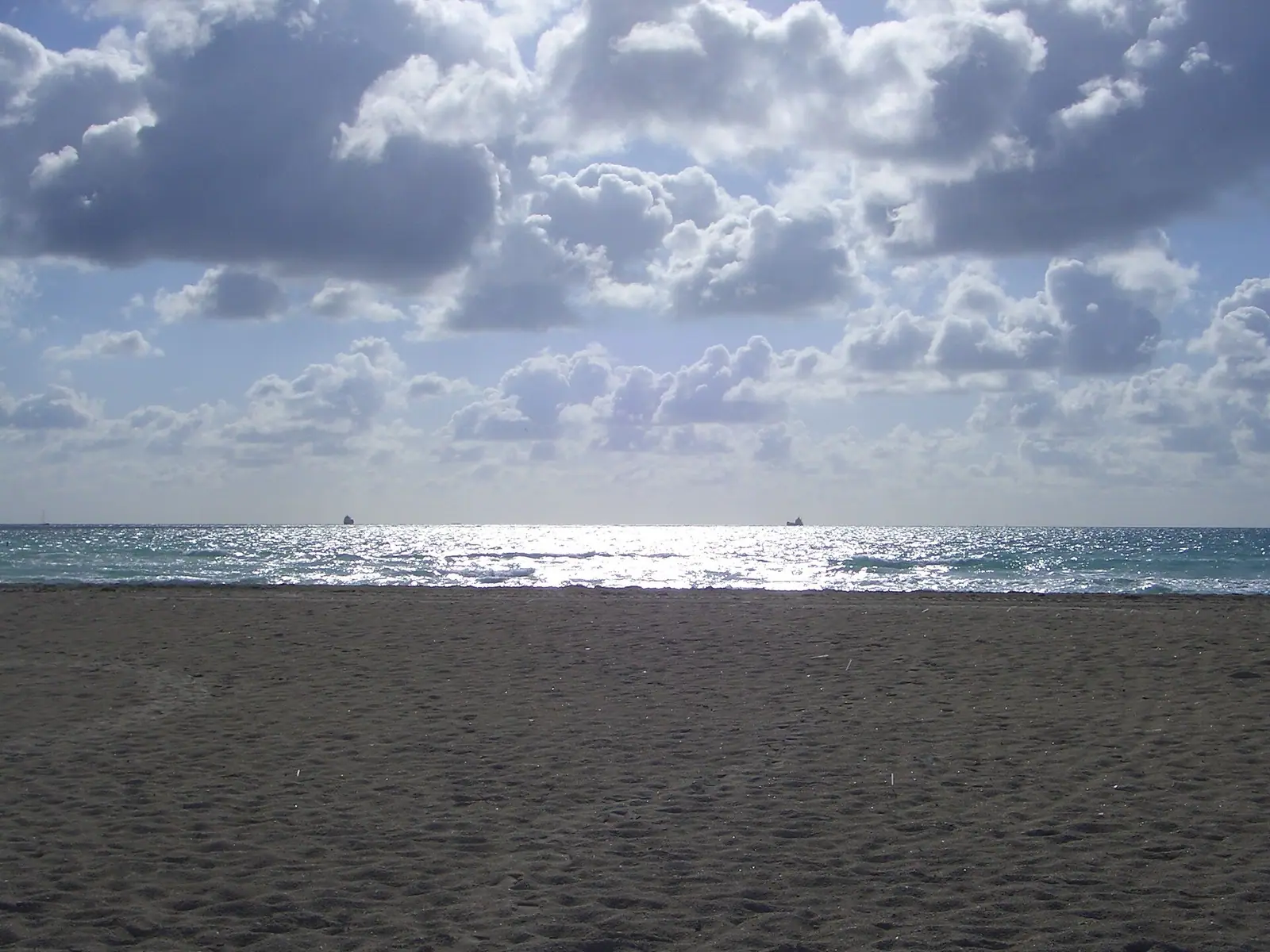
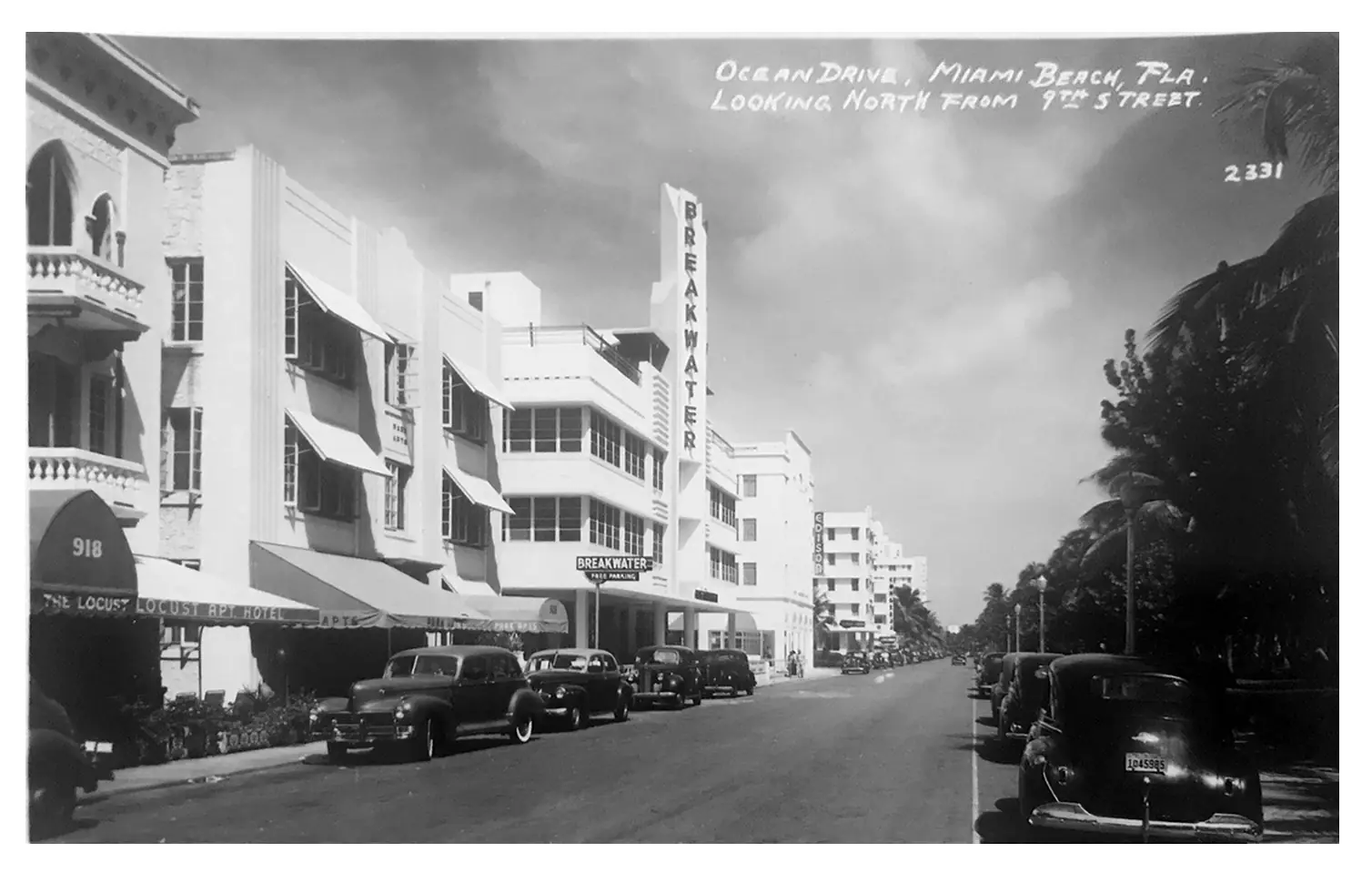
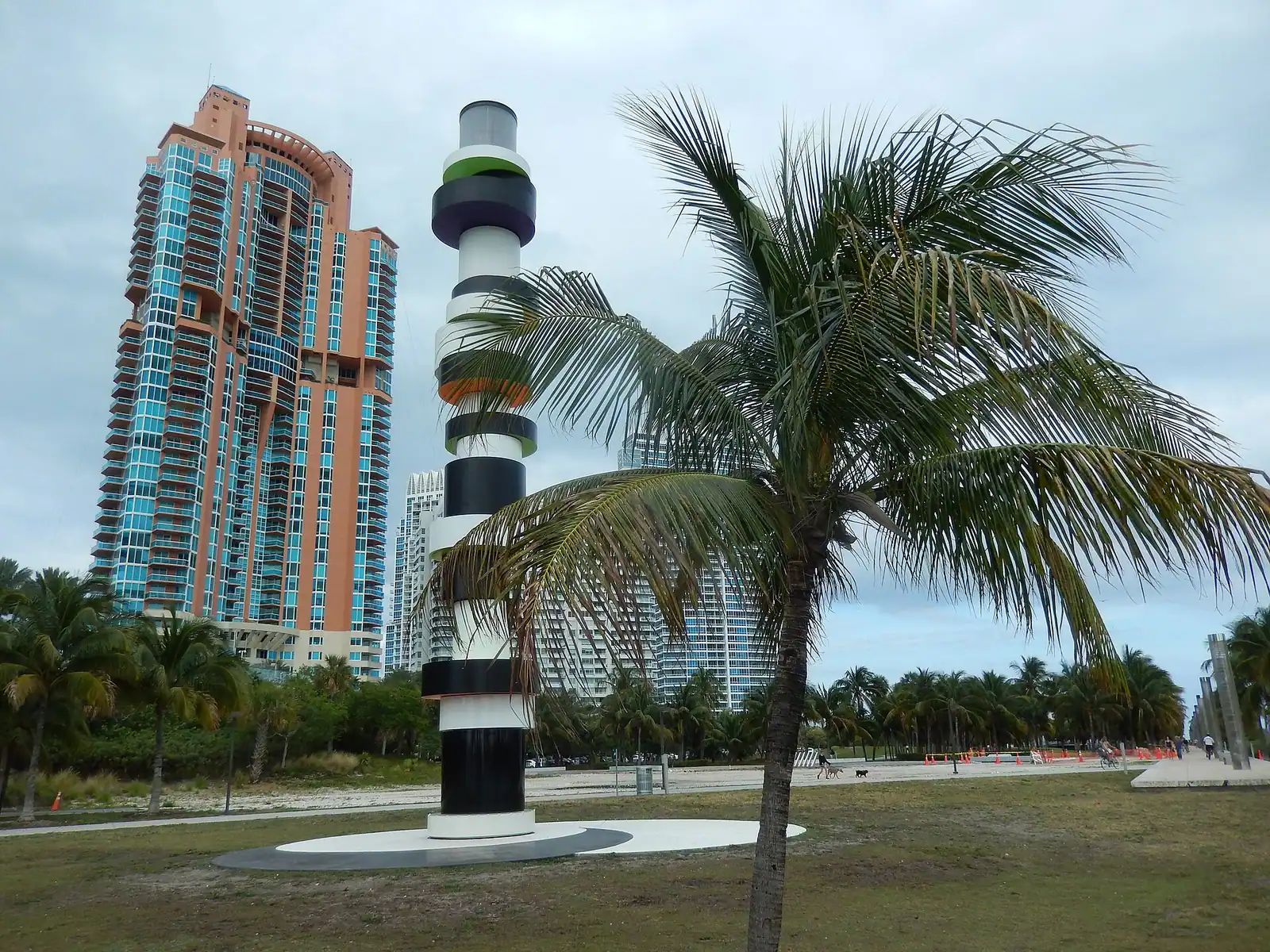
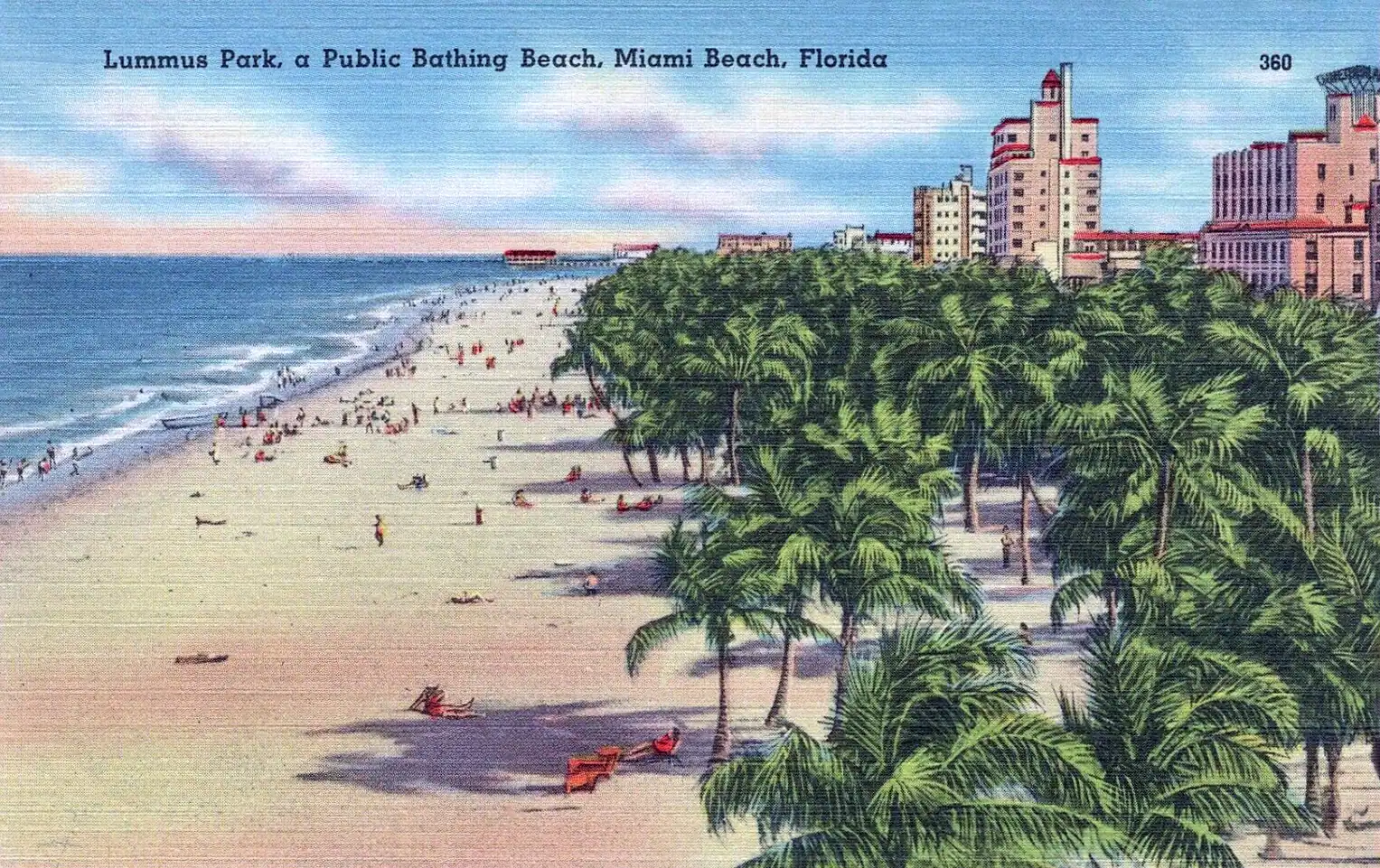
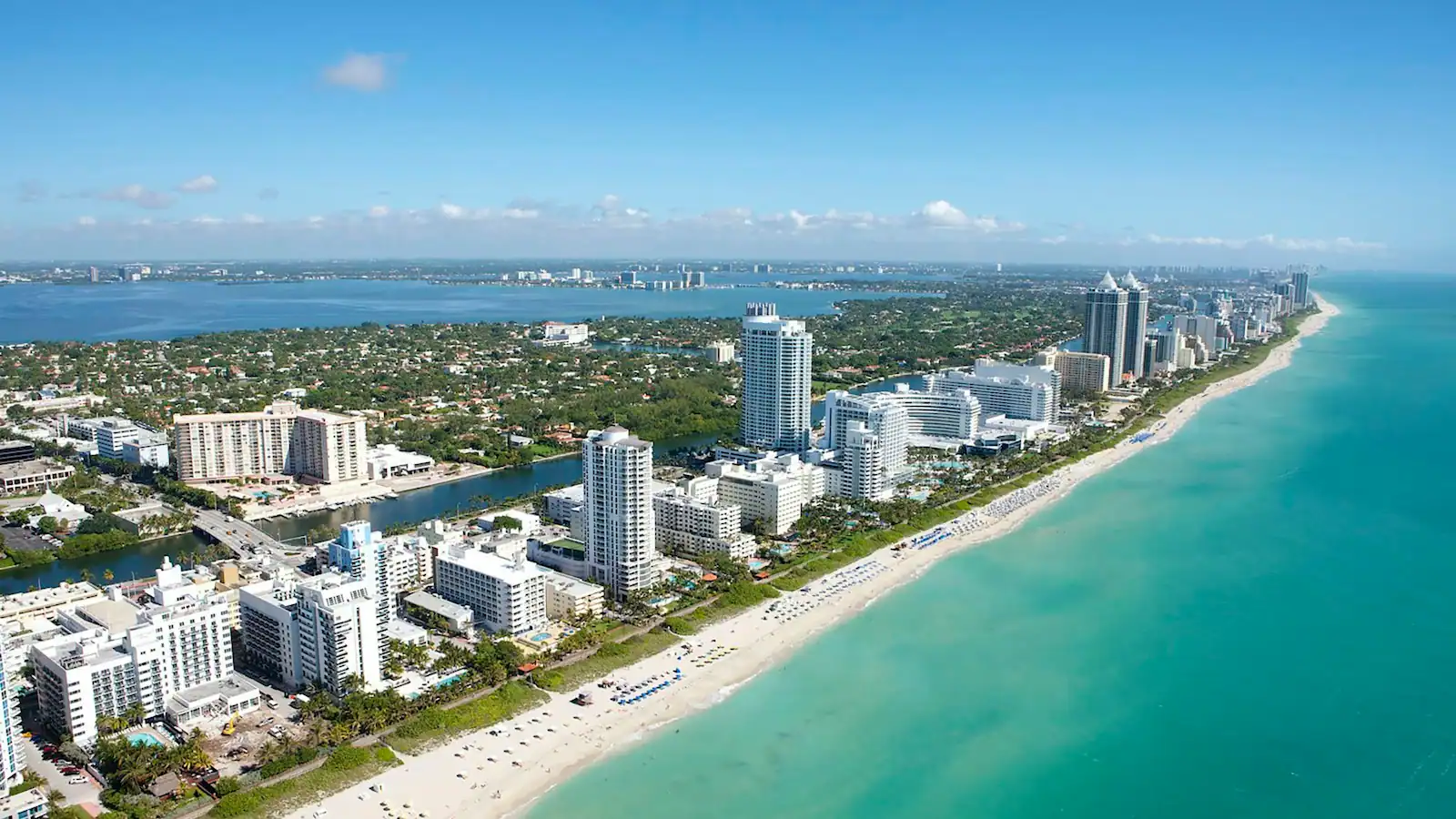
The sand is not original. By the early 1970s erosion had taken the beach back to the buildings, and along parts of Collins Avenue the Atlantic was washing against hotel foundations and through parking garages. From the mid-1970s the Army Corps of Engineers dredged offshore borrow areas and pumped the sand back, roughly fourteen million cubic yards along the six miles of Miami Beach, and what it built was a beach around three hundred feet deep. That number is the first practical fact of a day here. From the sea-grape hedge at the back of Lummus Park to the waterline is a real walk across open sand with no shade anywhere on it, and at two in the afternoon in July it is the hardest four minutes of the day. Visitors underestimate it every single afternoon.
The second fact is that all of it is free. The dry sand in front of Lummus Park is city park land and the wet sand below the high-water line belongs to the state of Florida. You can put a towel down anywhere outside a hotel's permitted concession footprint, walk on from the end of almost any numbered street between 5th and 15th, and use the showers and public restrooms without buying anything at all. The money on this beach is in the loungers, the umbrellas, the daybeds and the drinks, every bit of it optional. Most of what follows is about telling the free part and the sold part apart, because on this stretch of sand the two are deliberately laid out to look like one thing.
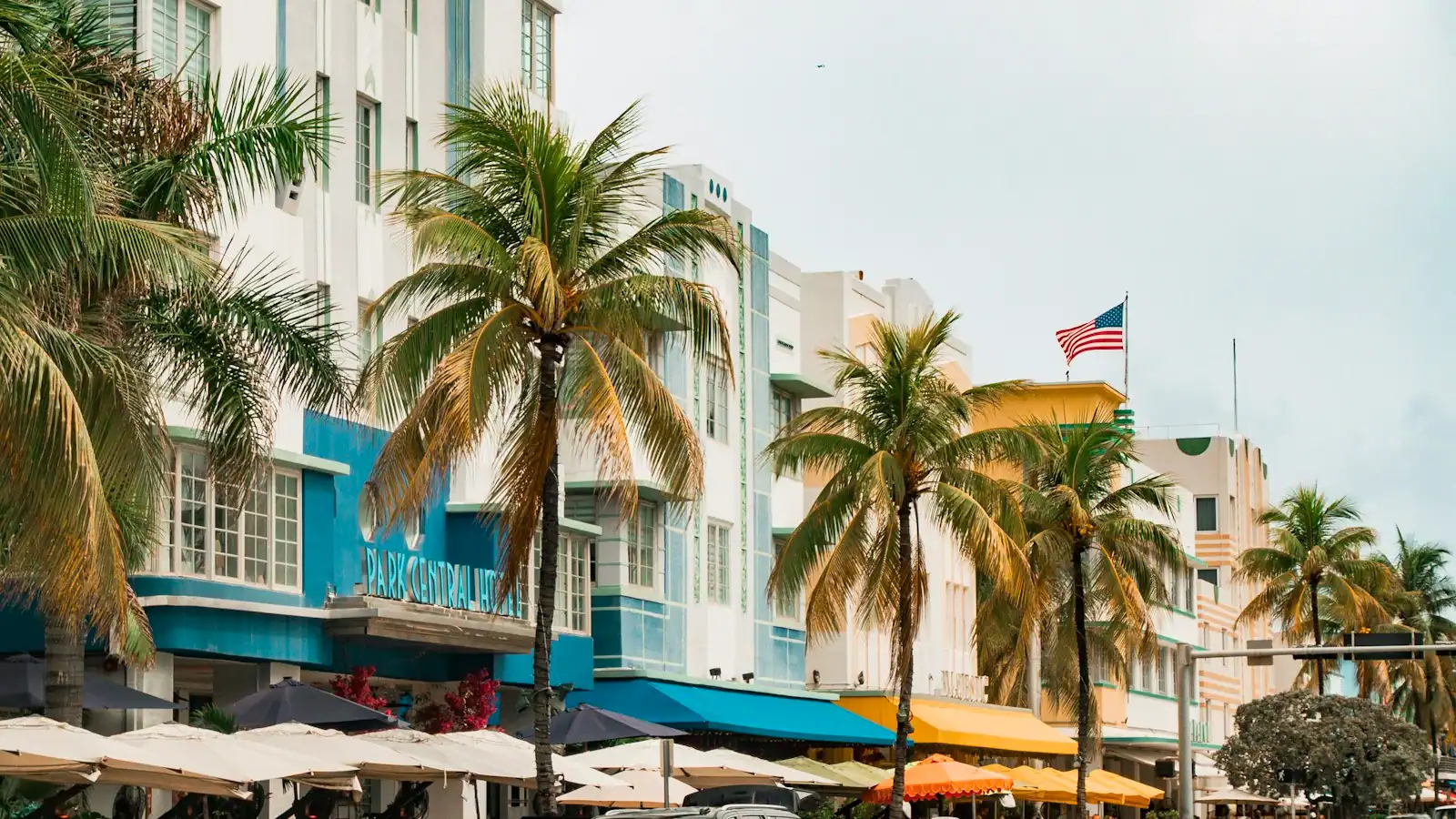
The strip is short, which is the point of this site. From South Pointe at the tip of the island to 23rd Street at the northern edge of the Art Deco district is a bit over a mile and a half, and it changes character every few blocks. The quiet end is 5th to 8th. The concession core, where the loungers are racked three deep and someone will reach you within a minute of sitting down, runs from about 8th to 12th. The 12th Street tower has been the centre of the gay beach since the 1980s, when the crowd from the Palace across the road claimed it. North of 15th the park runs out, the Beachwalk takes over, and the crowd thins faster than anyone expects.
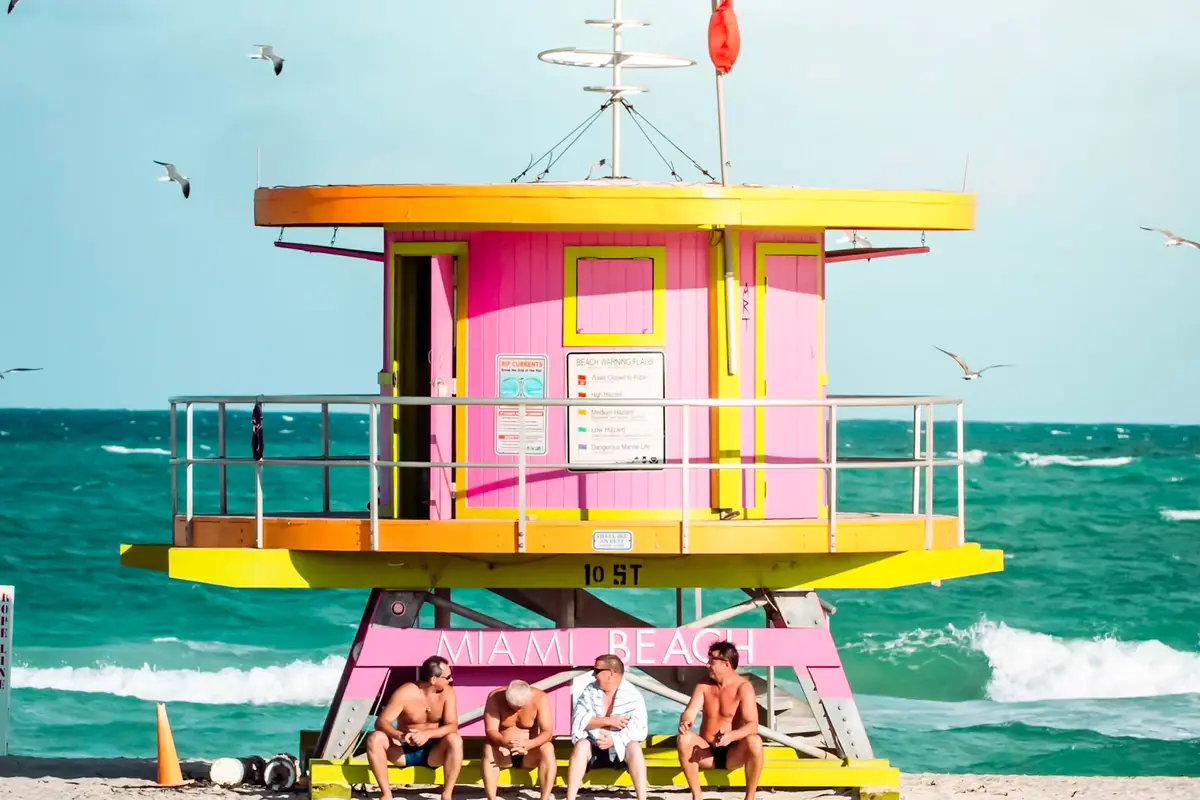
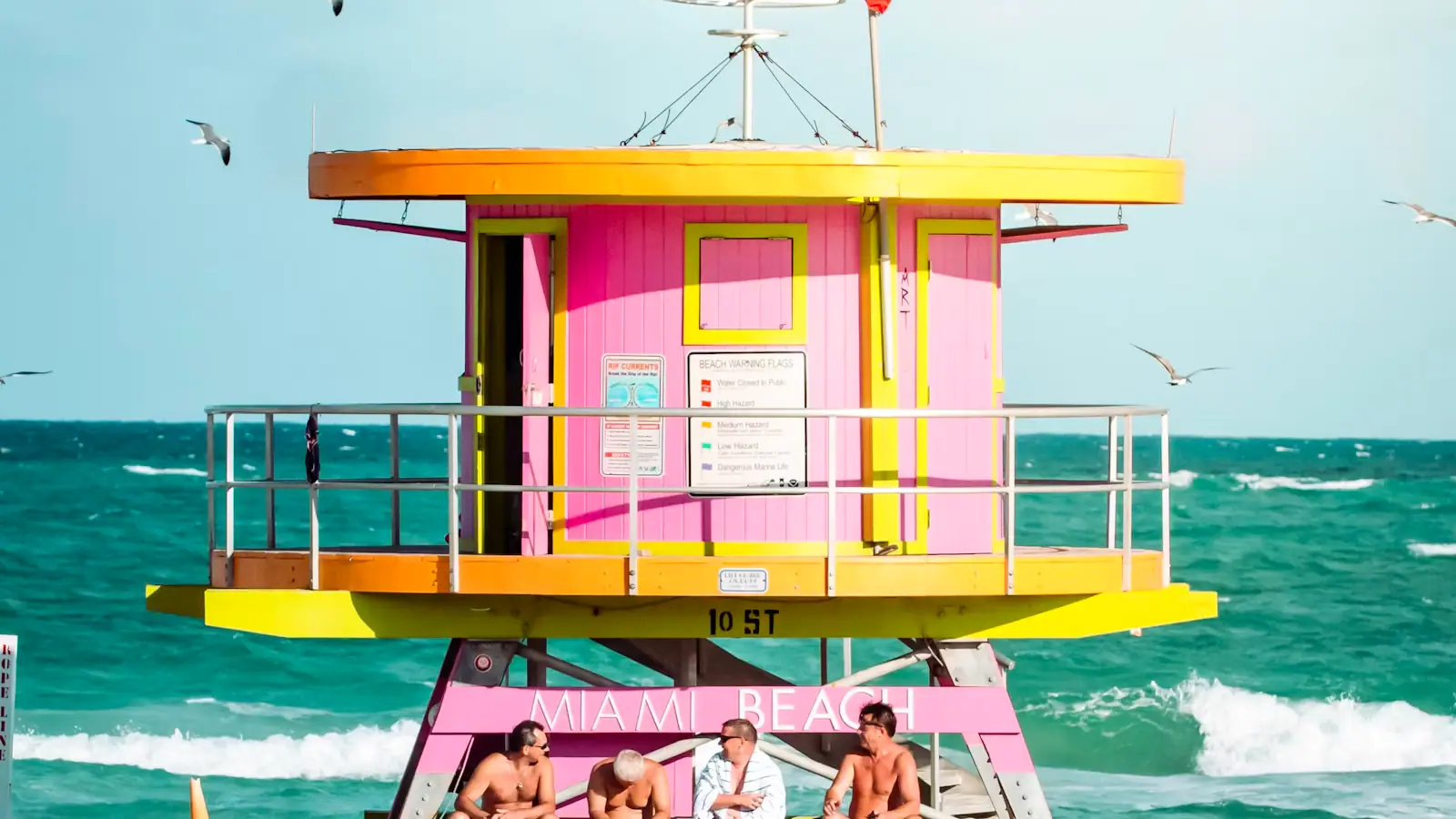
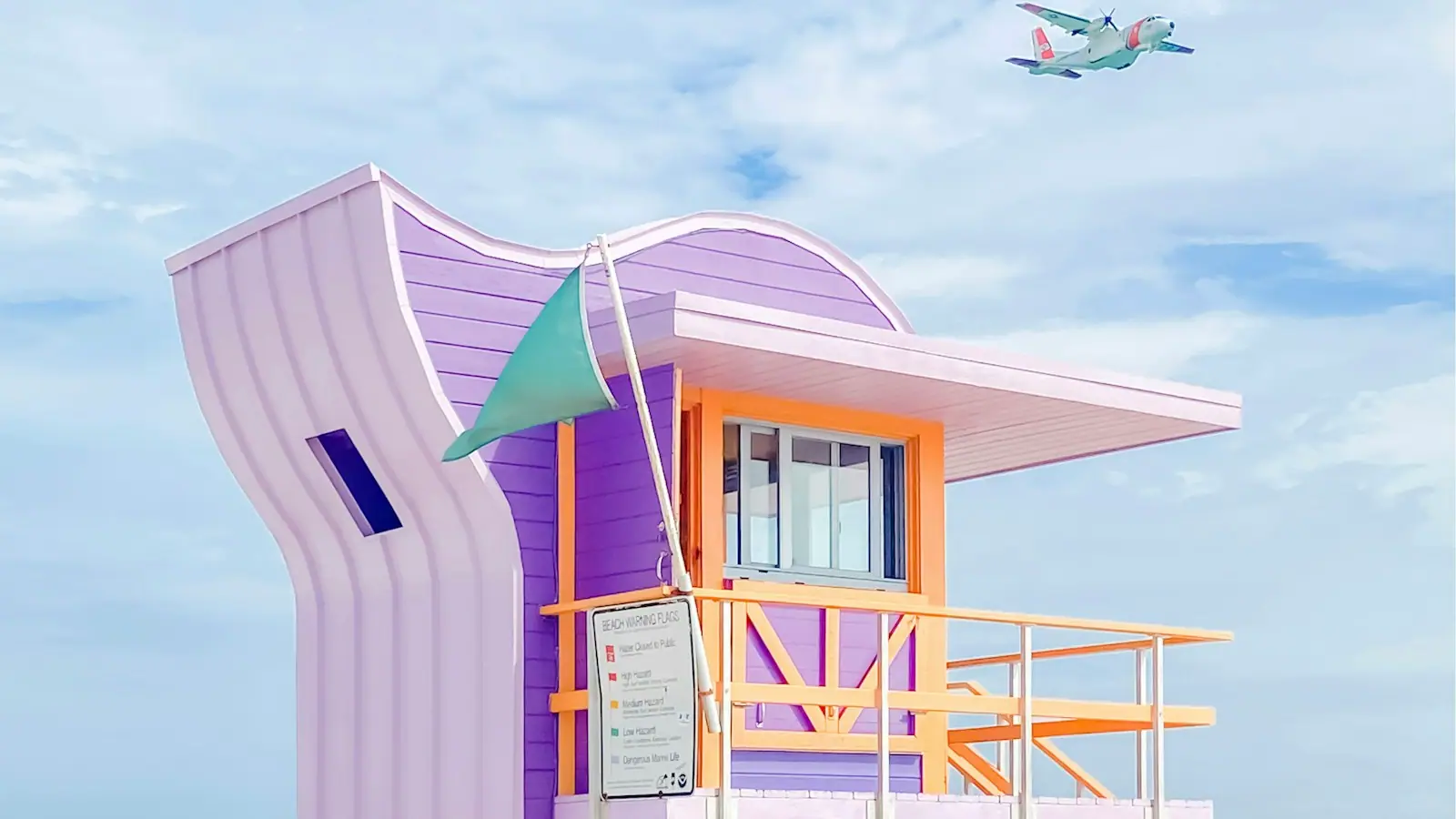
Navigate by the towers. There are around three dozen lifeguard stands along Miami Beach, each one individually designed and painted, standing at intervals along the numbered streets from South Pointe up to 87th. On an unbroken flat of pale sand they are the only landmarks there are, which is why locals give directions by them. Meet me at the 10th Street tower is an address. North of the tower, thirty yards up is a seat number.
Two honest warnings before you book a beach week. Sargassum, the brown Atlantic seaweed, lands on this coast from roughly late spring through the summer, and 2026 was a record year across the whole Atlantic basin with heavy landings from May onwards. And March is spring break, which on this particular beach is a genuinely different month rather than a slightly busier one.
What follows is the beach the way people who use it describe it: by block, by tower, by what it costs and by what the ordinance actually says.