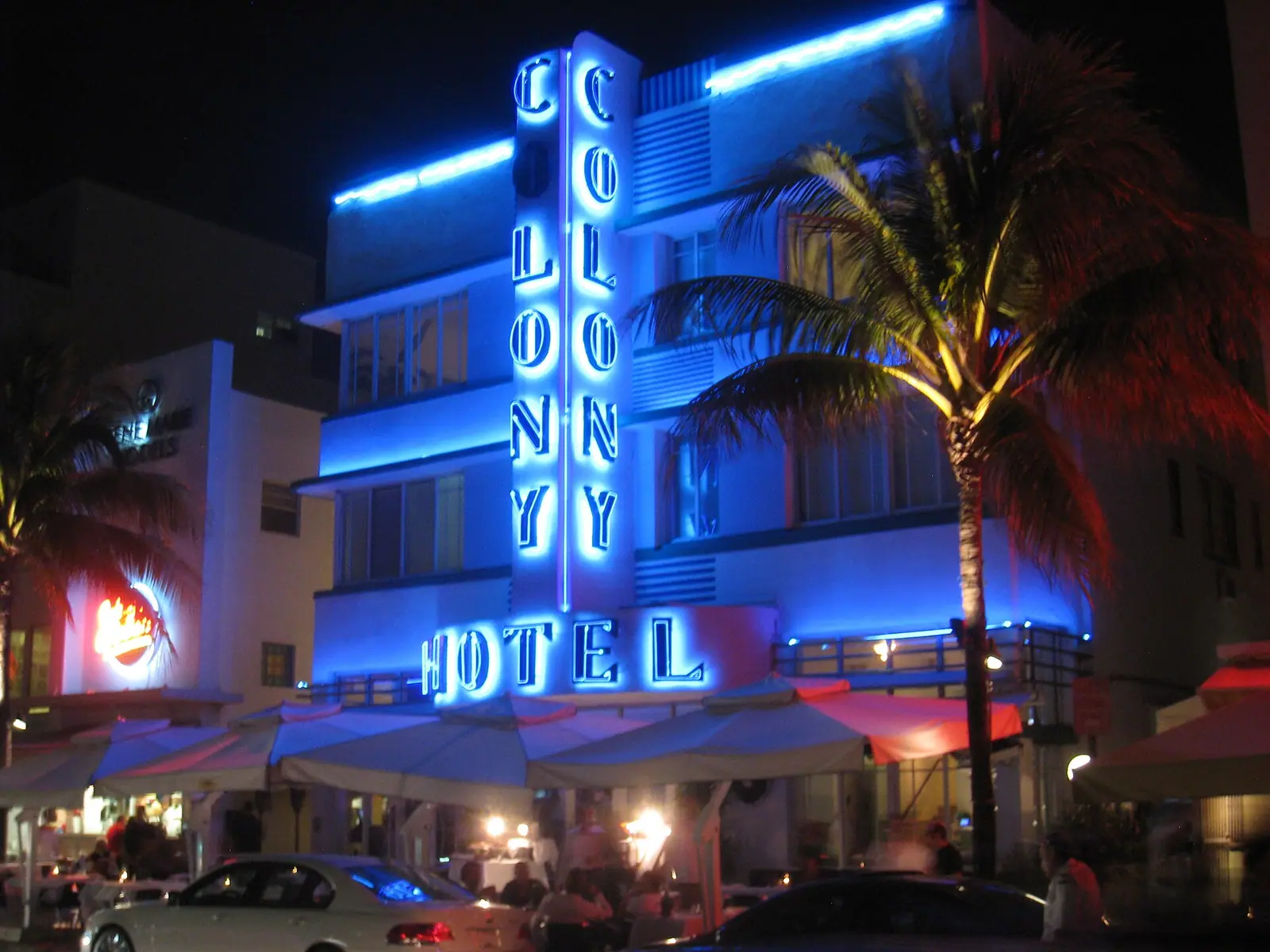
If you have seen one photograph of South Beach you have seen this building, and there is a reasonable chance you could not name it. The Colony stands at 736 Ocean Drive, between 7th and 8th Streets, and its vertical neon name sign is the single most reproduced object in the Art Deco Historic District.
It is a Henry Hohauser design with plans completed in July 1935, which puts it at the very front of the deco wave on this street. Hohauser was the most prolific architect of the district — he is responsible for a substantial share of what you walk past here — and the Colony is frequently described as the first streamline-modern building on Ocean Drive, the point at which the street stopped being Mediterranean and started being modern.
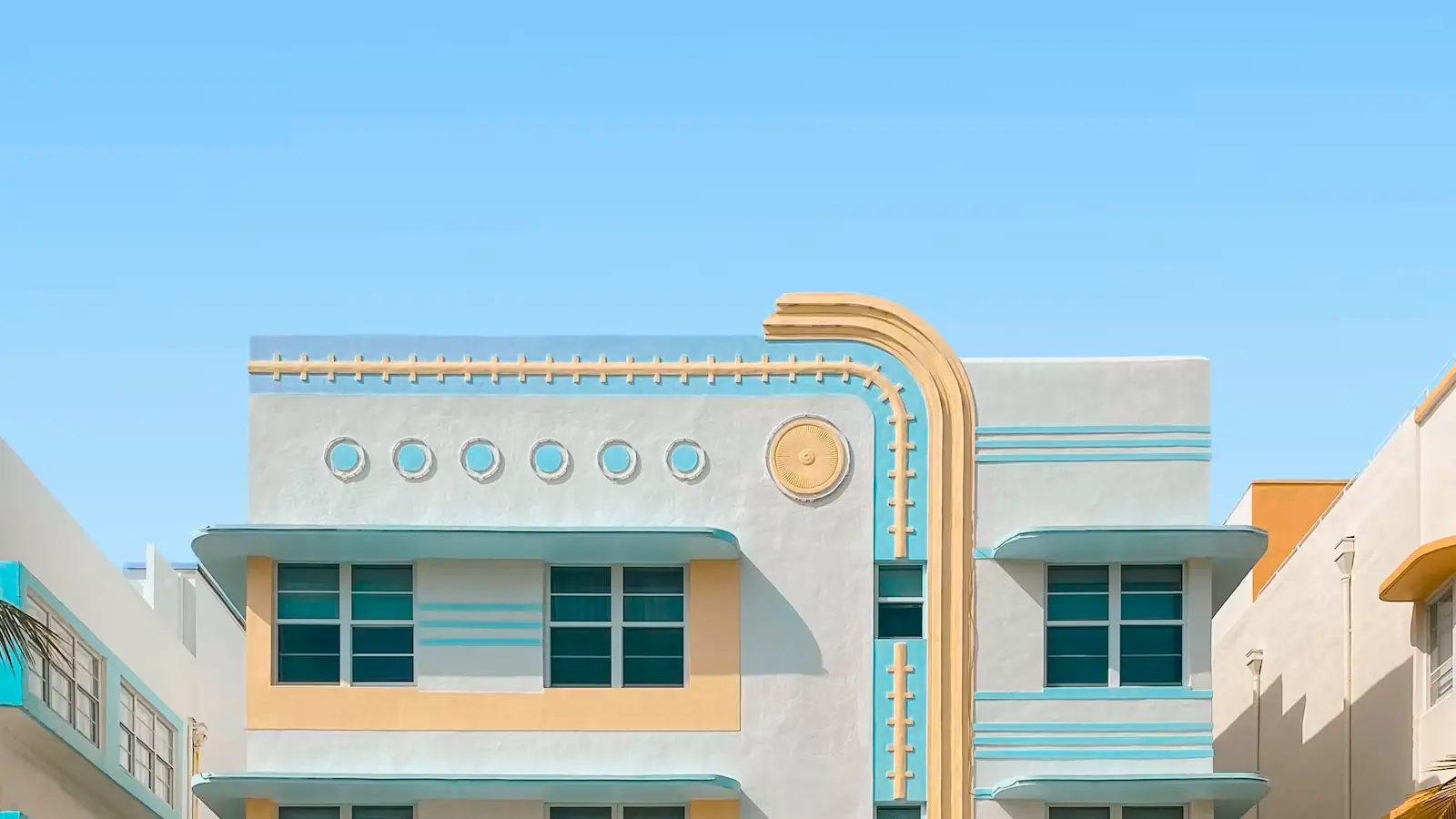
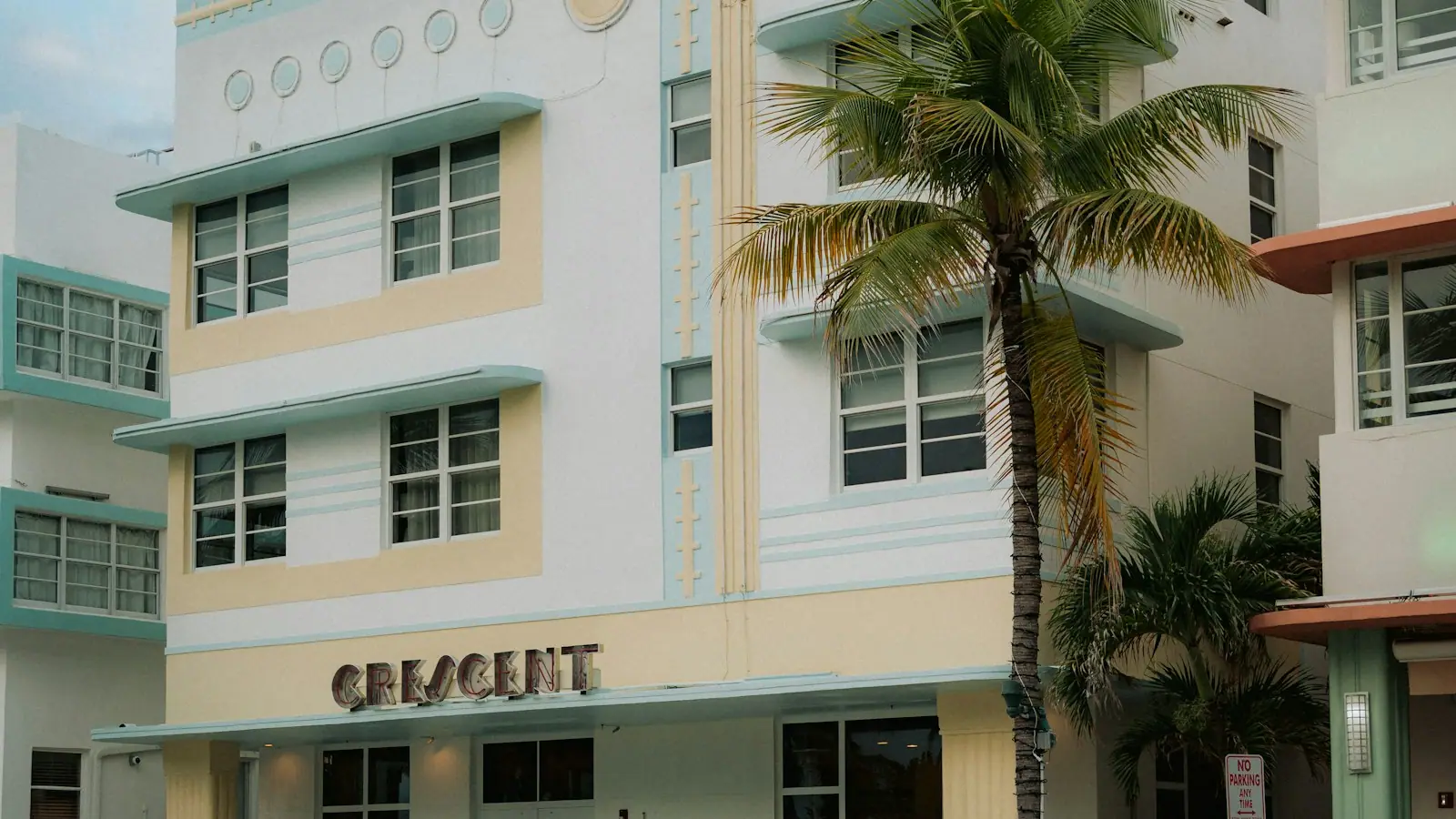
What makes it work is discipline. The building is three storeys and not especially large. It has no ornament in the carved or applied sense at all. Everything it does, it does with proportion, banding and one vertical accent:
Three horizontal bands of glazing, each a wide run of windows rather than punched openings, which is the streamline move — it makes a small building read as horizontal and fast.
Colour banding that runs unbroken across the façade and turns the corners, tying the three floors into one object.
A single vertical element, the projecting fin above the entrance carrying the hotel name in neon, which supplies the whole composition's counterweight. The fin sits on an inverted T, so that the horizontal base and the vertical sign form one figure.
That is it. Three bands, one fin, and a flat parapet. The reason it photographs so well is that there is nothing in the frame that is not doing a job.
Practically, it is a small working hotel with a front desk immediately inside the door and a terrace on the pavement. It is not a museum, and what you can see of the inside is limited.