Skip to content
Menu

These earn us a commission through Viator. Same price for you, and the commission had no hand in the order.

Search
A paved shoreline walkway running between planted borders with the ocean on one side
Unsplash

Trail

Miami Beach Boardwalk

Last updated

Seven continuous miles of shoreline path from South Pointe to the Surfside line, with almost none of the timber the name promises.

Everyone in Miami Beach calls it the boardwalk. There are almost no boards.

The original raised timber walkway ran roughly from 23rd Street to 46th, a narrow elevated structure that a generation of visitors remember for the sound it made underfoot. It was hot, splintery, hard to maintain on a salt coast and impossible to use with a wheelchair. It was replaced in stages, and the final segment of its successor was finished in June 2022: a wider, level, accessible paver promenade that completed a continuous route along the whole ocean edge of the city.

What exists now runs from South Pointe Park at the southern tip, north to the Surfside border — about seven miles of unbroken pedestrian shoreline. It changes surface and character as it goes, but you never have to leave it and you never have to cross a road. For anyone on foot, on a run, on a bike or pushing anything with wheels, it is the single most useful piece of infrastructure in Miami Beach and it is entirely free.

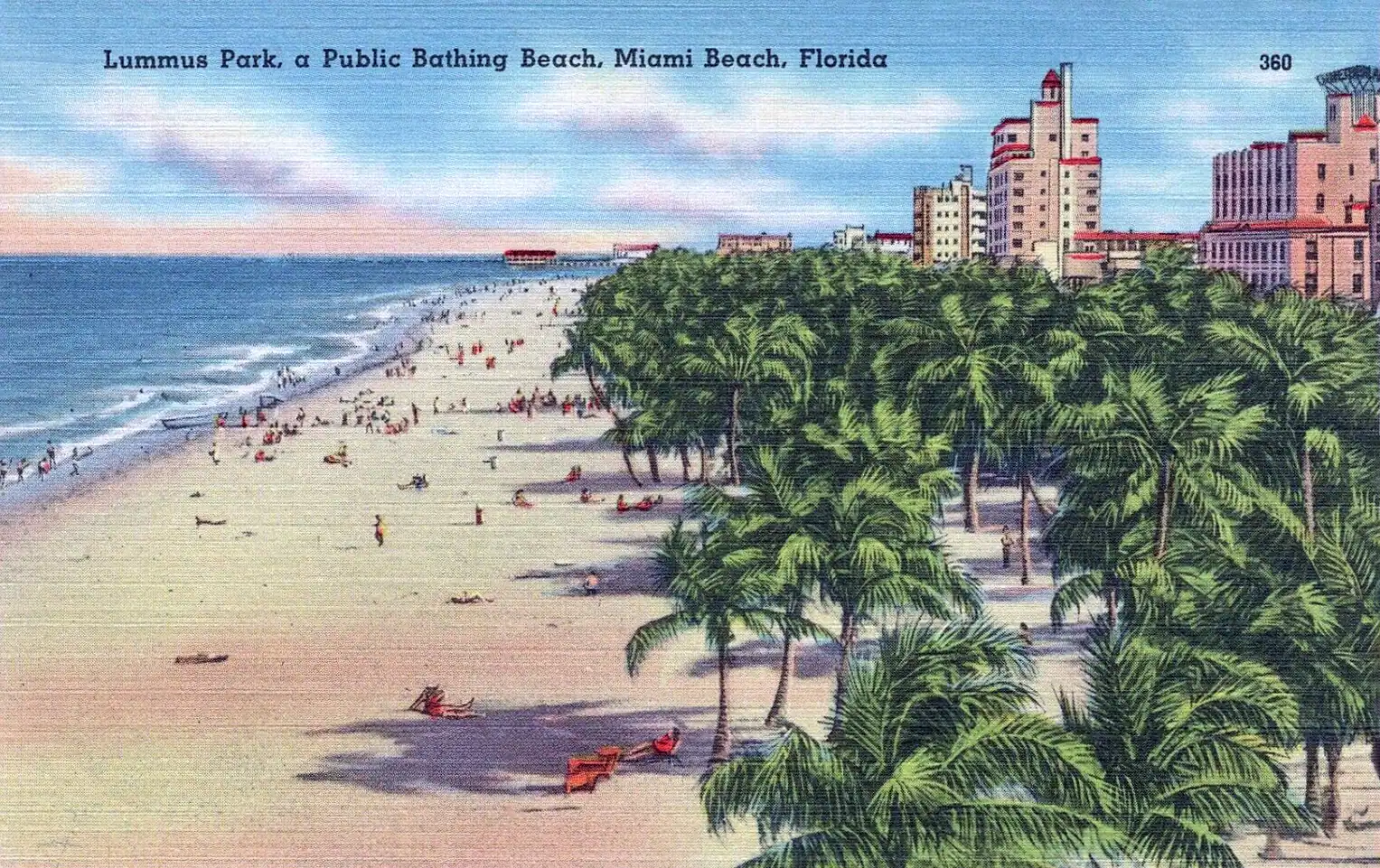
Through South Beach the route is the paved path inside Lummus Park, running behind the dune from 5th Street to 15th. North of 15th it continues as a paved promenade, and from around 21st Street it becomes the wide paver beachwalk that carries on through Mid-Beach and North Beach.

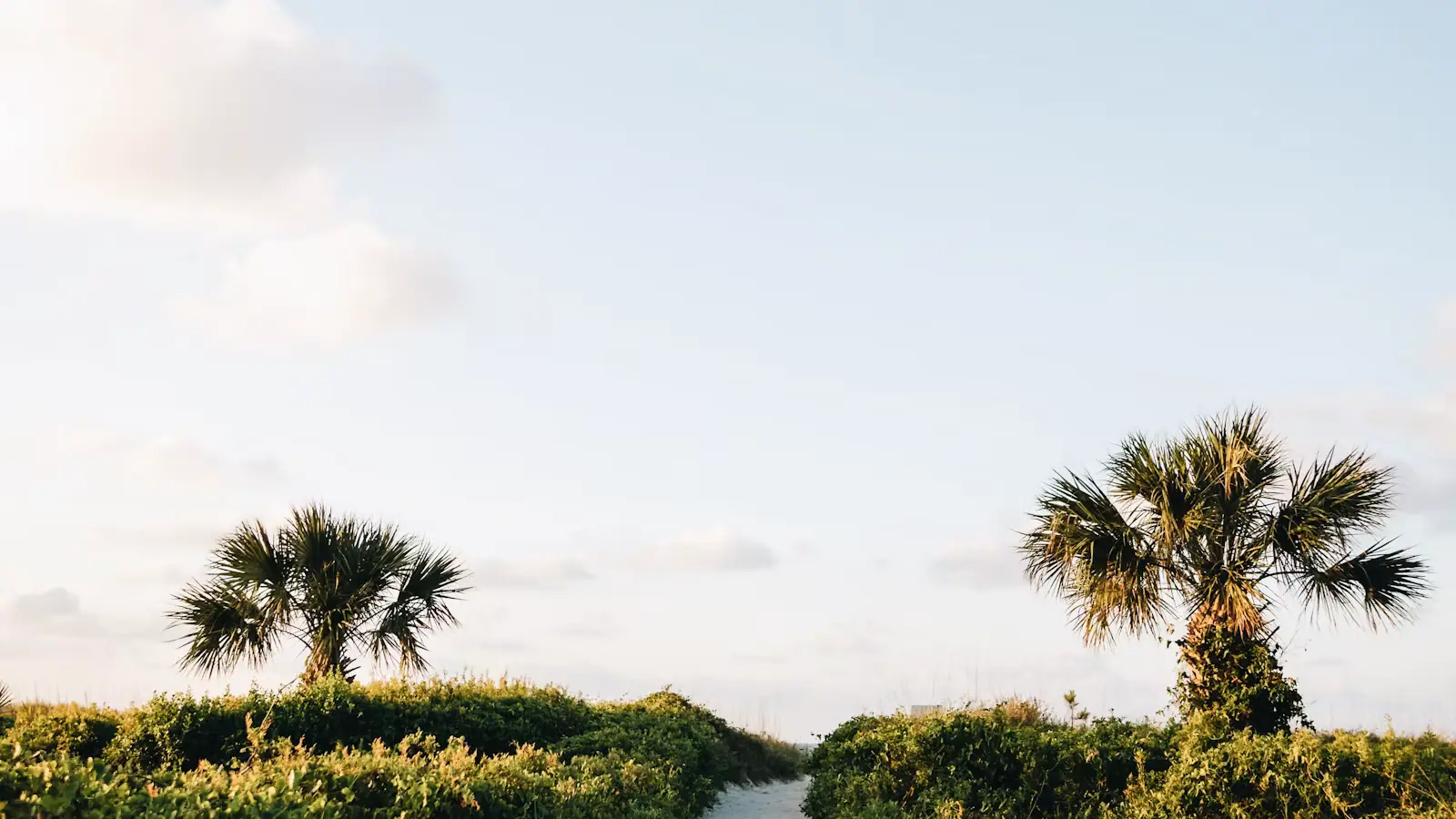
The other thing it gives you is the dune. The whole route runs behind a planted ridge of sea oats, sea grape and beach sunflower, fenced and signposted, which is both the island's first line of storm defence and, from May to October, sea turtle nesting habitat. You are kept off it deliberately, and there are marked walkovers where you cross to the sand.

Start at South Pointe, walk north, and stop whenever you like. The trolley runs back.
Getting there and parking

The route runs the entire ocean edge of Miami Beach and you can join it at almost any numbered cross street.

From the deco district, the natural entry points are the beach access paths through Lummus Park between 5th and 15th Streets. North of 15th, join the promenade at any cross street; the 21st Street entrance is the usual start for the Mid-Beach segment.

From South Pointe Park, the southern terminus, walk in from Washington Avenue or Ocean Drive at the island's tip.

Parking. The municipal garages around Washington Avenue between 7th and 17th Streets serve the southern half. For the Mid-Beach segment, the 21st Street and 22nd Street parking areas near the convention centre and the Bass are the practical options.

By trolley and bus. The free Miami Beach trolley and the South Beach Local run parallel to the route a few blocks west along Washington and Collins, which is what makes a one-way walk practical: go north on the path, ride back on the trolley.

Bikes. Cycling is permitted on some segments and restricted on others, and the rules are posted at the entrances. Read the sign where you join.

There is no rail to Miami Beach; the mainland rail network stops on the other side of Biscayne Bay.

The distances, and where the surface changes

Useful numbers for anyone planning a run, a walk or a ride. All are approximate but close enough to plan on.

SegmentRoughlySurface
South Pointe Park to 5th Street0.4 milesPark walkways and street
5th to 15th Street0.8 milesPaved path through Lummus Park, behind the dune
15th to 21st Street0.4 milesPaved promenade
21st to 46th Street1.7 milesWide paver beachwalk, the former timber boardwalk route
46th Street to the Surfside linearound 3.5 milesContinuous beachwalk through Mid-Beach and North Beach

Which makes the obvious out-and-back distances easy. South Pointe to 15th Street and back is about two and a half miles. South Pointe to 23rd Street and back is about four. The full length one way is about seven, which is a solid morning's walk or a straightforward hour on a bike.

Two practical points. There is no shade on most of the route north of 15th Street — the beachwalk runs between the dune and the hotel line, and neither casts anything useful. And the trolley and the South Beach Local run parallel a few blocks west, which means you can walk one way and ride back, which is what most people should do.

Water fountains and public restrooms are at the Lummus Park facility blocks and at intervals along the northern segments, not continuously.

Running it, cycling it, and the rules that vary

This is the best flat run in Miami-Dade and it is not close. Seven miles, no road crossings, no gradient worth the name, a sea breeze the whole way and a surface that is kind to knees.

Best hours to run. Before eight in the morning, year round. From May to September the humidity makes anything after nine genuinely unpleasant, and there is nowhere to hide from the sun. Sunrise over the Atlantic on the first mile is the compensation.

Cycling. The route is heavily used by cyclists, but the rules are not uniform along it. Some segments are shared-use, some restrict bicycles, and the restrictions are posted at the entrances. Read the signs where you join rather than assuming the rule you saw a mile back still applies. Where cycling is permitted, pedestrians have priority and the etiquette is to call before you pass.

Scooters and e-bikes are a live enforcement issue in Miami Beach and the rules have changed more than once. Check before you rent.

Dogs are not allowed on the public beach, and rules on the path vary by segment. The dog park is at South Pointe.

Lighting. The southern segments through Lummus Park are lit but not brightly. The northern beachwalk is lit more consistently. Between May and October coastal lighting is restricted for sea turtle nesting, so expect the route to be darker than you would like in summer and plan accordingly.

Surface hazards. Blown sand across the pavers after a windy night, particularly on the Mid-Beach segments. It is slippery under a running shoe and worse under a bike tyre.

The dune, and why you are fenced off it

The ridge of vegetation between the path and the sand is not landscaping. It is the reason the buildings behind it are still there.

Miami Beach sits a few feet above sea level on a barrier island, and the planted dune is the first thing standing between a storm surge and the hotel line. Sea oats hold the sand with deep root systems, sea grape and beach sunflower stabilise the face, and the whole ridge is allowed to move and rebuild in a way that a seawall cannot. Walking across it kills the plants and opens a blowout, which is why it is fenced and signposted and why you cross at the marked walkovers.

From 1 May to 31 October the dune and the sand in front of it are sea turtle nesting habitat. Loggerheads and green turtles nest along this coast, hatchlings orient themselves towards the brightest horizon, and artificial light from the buildings behind draws them inland instead of out to sea. That is why coastal lighting is restricted through the season, why beachfront properties shield or shut off seaward-facing lights, and why you will occasionally see staked and taped-off nests on the sand. Leave them alone, do not use a torch or a phone light near the dune after dark, and do not put anything in the marked zones.

For a visitor this mostly translates into small courtesies. Cross at the walkovers. Fill in any large holes you dig on the beach before you leave, because hatchlings and nesting females fall into them. Take your beach furniture off the sand overnight. None of it costs you anything, and it is the difference between a shoreline that works and one that is being managed around its visitors.

What you pass, going north

Walked northbound from the southern tip, the route reads as a compressed history of the island.

South Pointe to 5th Street is the park, the channel and the quiet residential end.

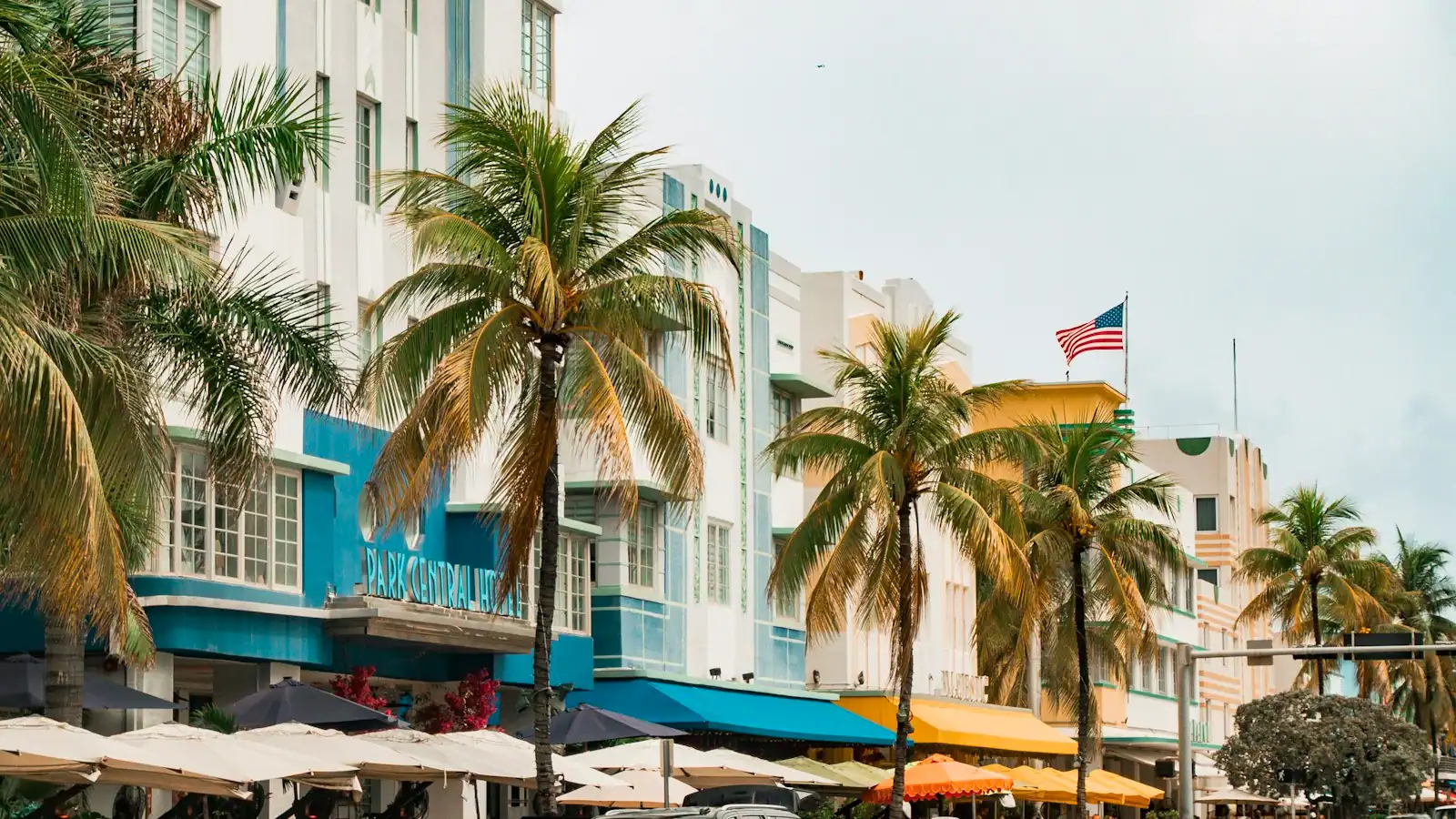
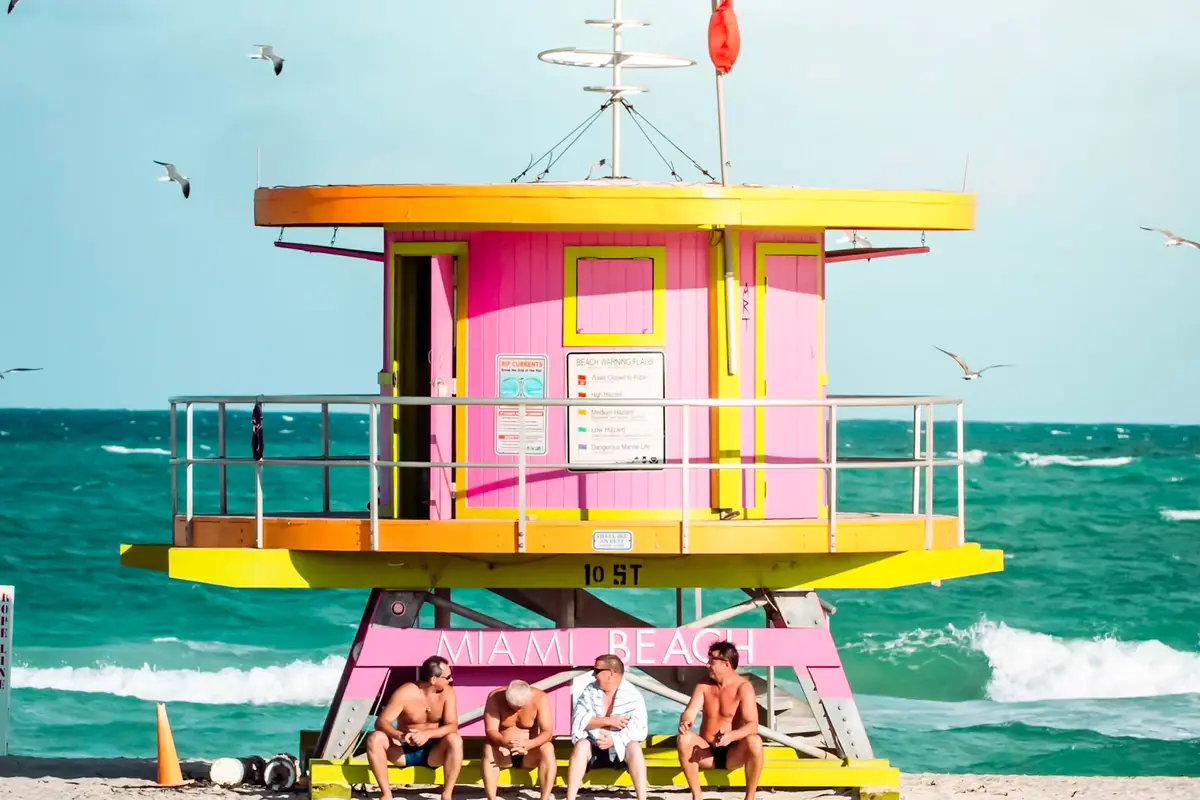
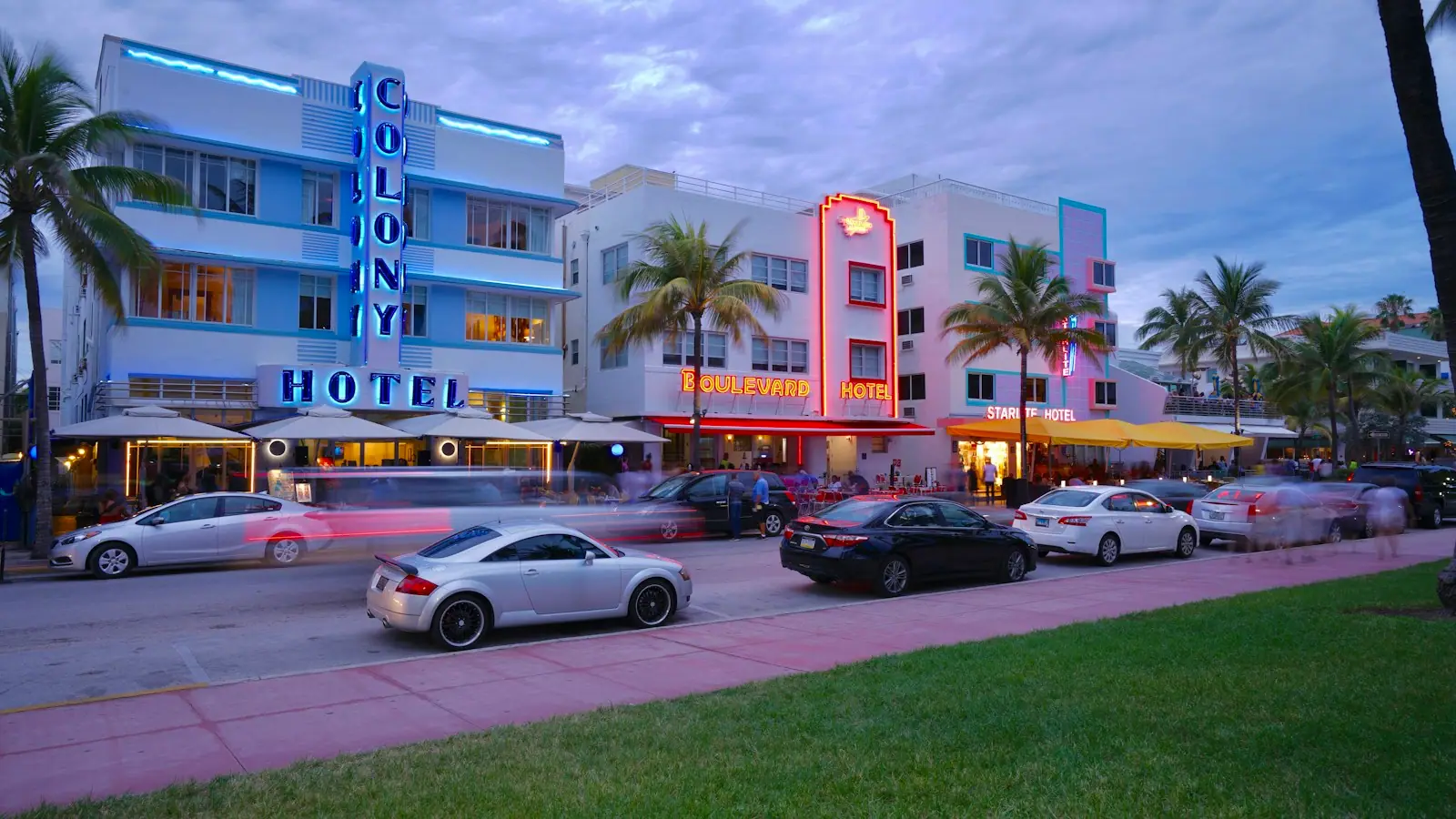
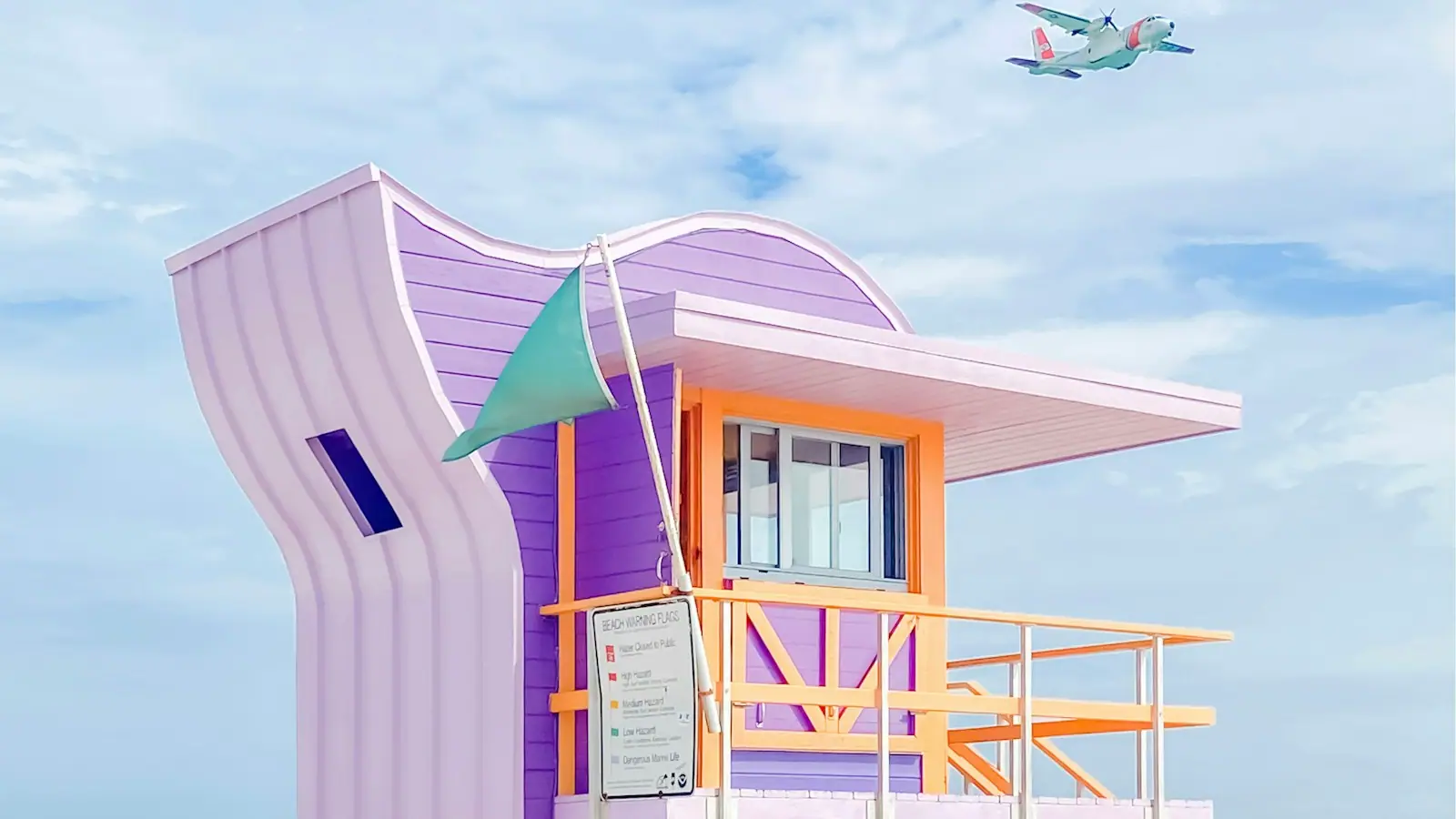
5th to 15th is the deco district: Lummus Park on your left, the Ocean Drive hotel row behind it, the numbered lifeguard stands on your right, and the busiest sand in Florida in between.

15th to 21st takes you past the larger hotels at the top of South Beach and the point where the deco district runs out.

Around 21st to 23rd is the cultural corner of the island, a block or two inland: the Bass Museum of Art in a 1930 building, the Holocaust Memorial, the botanical garden and the convention centre, all within a few minutes' walk west of the path.

23rd to 46th is Mid-Beach, and the architecture changes completely. This is Miami Modern territory, the postwar resort era of curved slabs and porte-cochères, including the two enormous 1950s hotels at the northern end of the segment that defined what a Florida resort looked like for a generation.

North of 46th the crowd thins to almost nothing and the beach widens. North Beach and its 1950s low-rise blocks are quieter than anything to the south, and the path continues to the Surfside line.

The return trip is the trolley, and it is free.

Tours that visit The Beachwalk

Operators run these trips past The Beachwalk, or stop there as part of a longer route. We list what the booking data supports — not everything that mentions the name.

These earn us a commission through Viator. Same price for you, and the commission had no hand in the order.

Private and small-group departurespriced per boat or per vehicle, not per person

Near The Beachwalk

Straight-line distances, so allow more on the road — the island is long and has one main parkway.

  • Early morning sun rising out of the Atlantic over an empty stretch of sand

    Beach

    South Beach

    Free

    Free, public, and about three times wider than it was fifty years ago, because most of it was pumped there on purpose.

    1.5–6 hoursFree. The entire beach is public. Loungers, umbrellas and the concession rows are not.0.6 mi away

  • Curving paved walkways running through low coastal planting in a landscaped seafront park

    Park

    Lummus Park

    Free

    Ten blocks of palm, path and free outdoor gym, and the decision that kept anyone from building between Ocean Drive and the Atlantic.

    0.5–3 hoursFree. The park, the outdoor gym, the volleyball courts, the restrooms and the beach access cost nothing.0.9 mi away

  • A public pier running out over the water with a city skyline behind it at dusk

    Park

    South Pointe Park

    Free

    Fifteen minutes south of the Ocean Drive crowd, the island stops at a shipping channel and everything gets quieter.

    1–3 hoursFree. The park, the pier, the splash pad, the playground, the dog park and the beach access cost nothing.1.8 mi away

  • Rows of simple beach cabanas and painted shelters set back behind a line of palms

    Landmark

    South Beach Lifeguard Stands

    Free

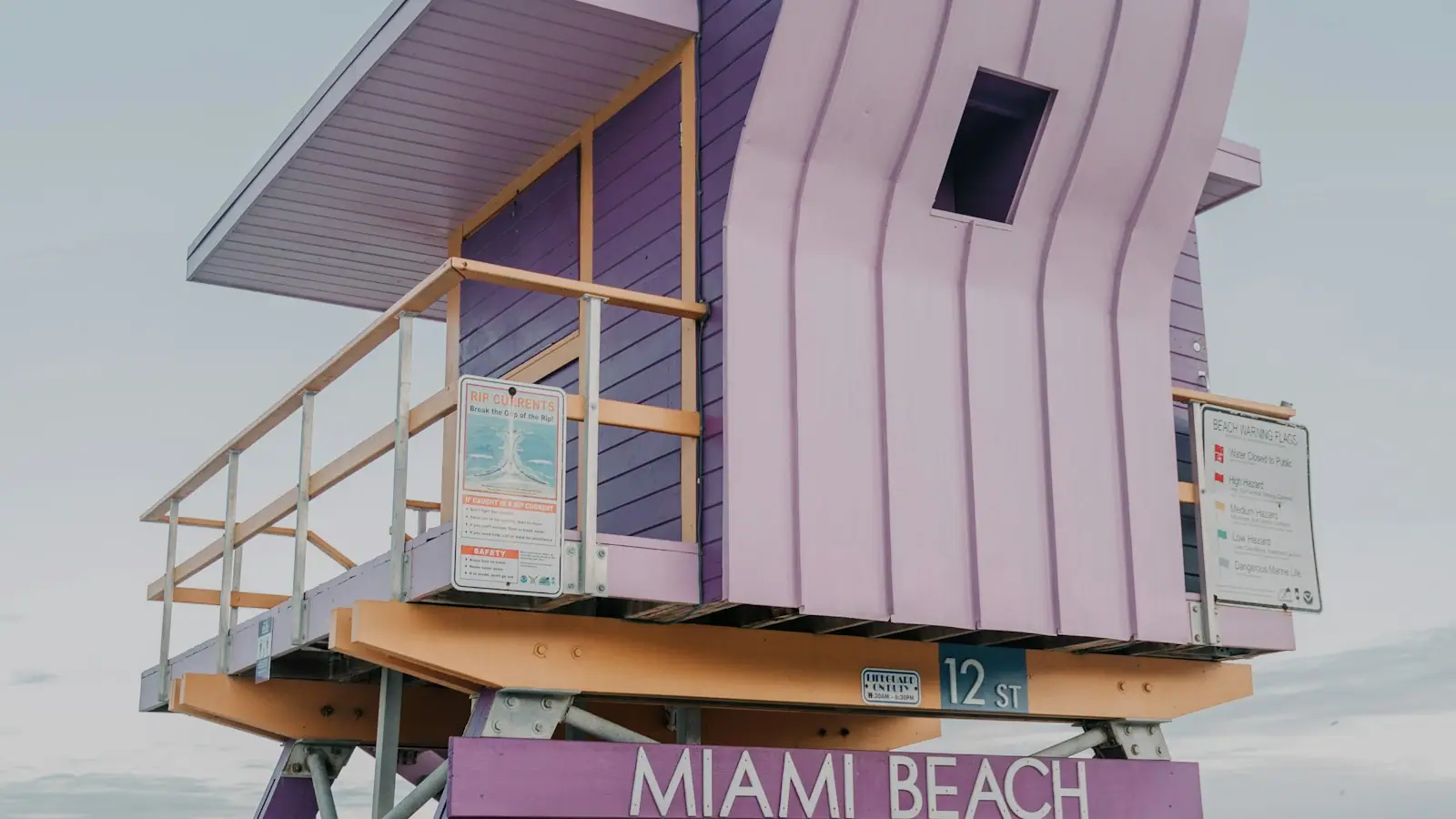
    Around three dozen individually designed towers along Miami Beach, each known by the street it stands at rather than by a number.

    0.5–1.5 hoursFree. The beach, the accesses and the towers cost nothing.0.9 mi away

The Beachwalk: common questions

Is the Miami Beach boardwalk still made of wood?

Almost none of it. The original raised timber walkway ran roughly from 23rd Street to 46th and was replaced in stages by a wider, level, accessible paver promenade, with the final segment completed in June 2022. The name stuck. What exists now is a continuous paved route from South Pointe Park north to the Surfside border, about seven miles, with no road crossings anywhere along it.

How long is the Miami Beach boardwalk?

Roughly seven miles from South Pointe Park at the southern tip to the Surfside border in the north. Useful shorter versions: South Pointe to 15th Street and back is about two and a half miles, and South Pointe to 23rd Street and back is about four. The free Miami Beach trolley runs parallel a few blocks west, so the sensible plan is to walk one way and ride back.

Can you cycle on the Miami Beach boardwalk?

On some segments, yes, and on others bicycles are restricted. The rules are not uniform along the route and are posted at the entrances, so read the sign where you join rather than assuming. Where cycling is allowed, pedestrians have priority. Scooter and e-bike rules in Miami Beach have changed repeatedly, so check before you rent. Blown sand on the paver sections after a windy night is slippery under a tyre.

Why can't you walk on the dune at Miami Beach?

Because the planted ridge is the island's first line of defence against storm surge, and because from 1 May to 31 October it is sea turtle nesting habitat. Sea oats hold the sand with deep roots, and foot traffic kills them and opens a blowout. Cross at the marked walkovers, avoid torches and phone lights near the dune after dark in nesting season, and fill in any large holes you dig on the sand before you leave.

Where is the best place to run in South Beach?

The beachwalk, before eight in the morning. Seven miles of flat, continuous, traffic-free path with a sea breeze and no road crossings, which makes it the best flat run in Miami-Dade. Head north from South Pointe so the sunrise is over the Atlantic on your right. After about nine in the morning between May and September there is no shade anywhere on the route and the humidity makes it hard work.