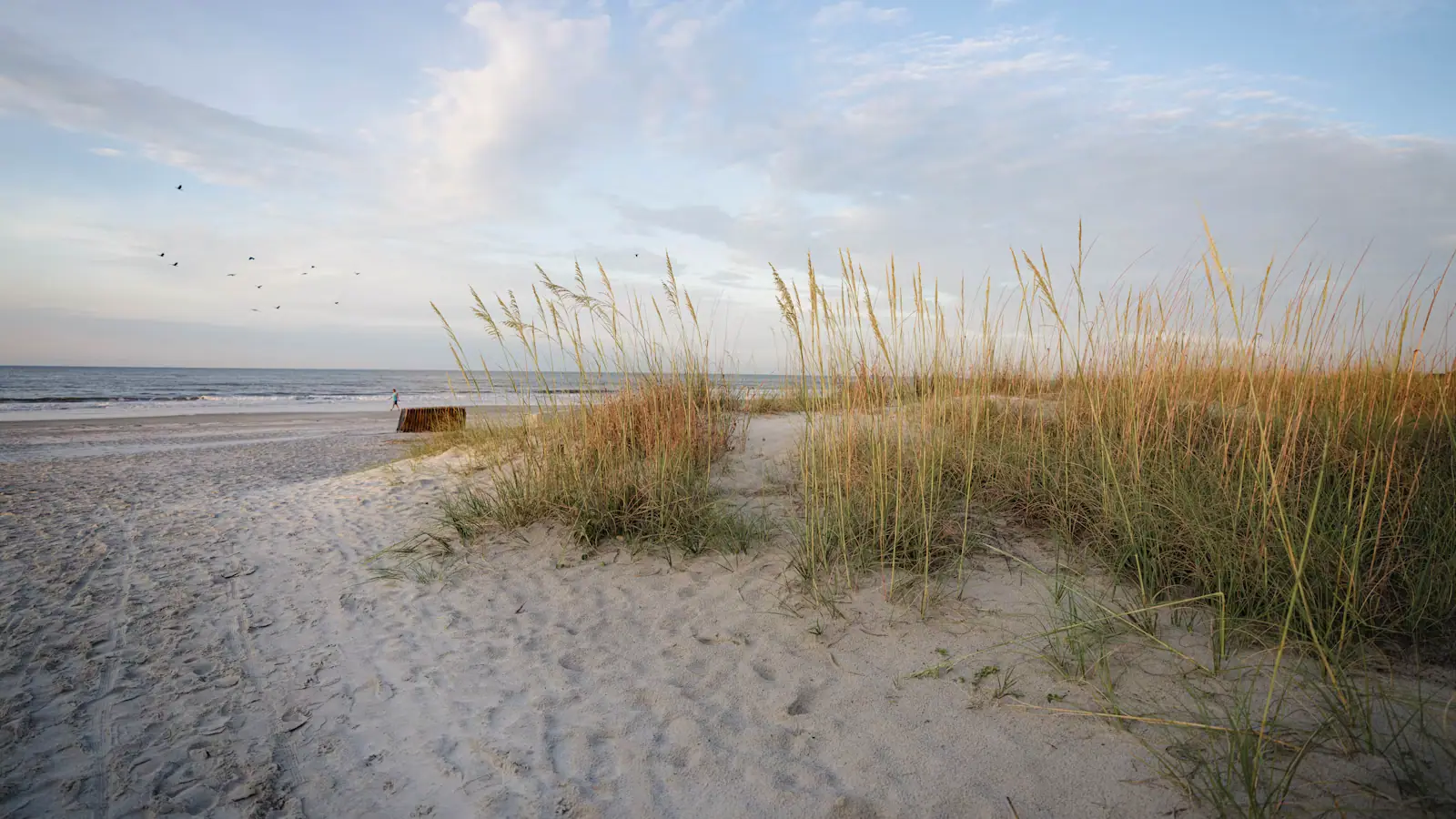
Sargassum is a floating brown algae that drifts across the Atlantic in a belt stretching from West Africa to the Caribbean, and reaches South Florida on the Gulf Stream. On this coast it generally starts appearing from around April and can persist through the summer.
Recent years have brought record quantities into the Atlantic basin. Satellite monitoring showed unusually high biomass early in 2026, with forecasts suggesting the summer could exceed previous records.
What it is actually like
In the water it is harmless. It is floating weed, and the water beyond the wrack line is usually clear.
On the sand it is less pleasant. Fresh sargassum is brown and springy. Within a day or two of sitting in the sun it darkens, dries and begins to release hydrogen sulphide, which smells of rotten eggs. It also attracts sand fleas. Neither is dangerous for a healthy adult, though people with respiratory conditions sometimes notice it.
Which blocks get cleared
The City of Miami Beach mechanically grooms the beach, and the busy tourist blocks in front of Ocean Drive between roughly 5th and 15th Streets are cleared most mornings. The quieter stretches north of 16th Street and the far southern end get less frequent attention.
So the practical advice is the reverse of the usual: in sargassum season, the crowded blocks have the cleanest sand, and going early means going after the tractors rather than before them.
Whether it should change your plans
Almost never. A sargassum summer is still a swimmable summer, and the heaviest arrivals are patchy rather than continuous. Winter and early spring are usually clear, which is one more reason the December-to-March window is the island's high season.
If a specific photograph matters to you, go in the morning to a groomed block, and check a current beach condition report rather than a forecast written months ahead.